


Donald Trump said he expects a rapid end to the war between the United States and Iran as Tehran reviews a new American peace proposal aimed at formally ending the conflict. The proposal comes after months of military escalation, rising tensions in the Gulf, and severe disruption to global energy markets.
According to sources familiar with the mediation efforts, the proposed agreement would begin with a one page memorandum designed to halt the conflict and pave the way for broader negotiations. The discussions would reportedly focus on reopening the Strait of Hormuz, easing sanctions on Iran, and setting limits on Iran’s nuclear activities.
However, the proposal does not directly address several longstanding American demands, including restrictions on Iran’s missile programme and an end to Tehran’s support for proxy groups across the Middle East.
Iranian officials reacted cautiously to the latest developments. A spokesperson for Iran’s foreign ministry said Tehran would respond through official channels, while Iranian lawmaker Ebrahim Rezaei dismissed the proposal as unrealistic and heavily tilted toward American interests.
Stay ahead of the geopolitical week.
MD Briefing delivers expert analysis across five global fronts — the Indo-Pacific, energy, geoeconomics, European security, and the Middle East — every Monday morning. Free.
Meanwhile, Iran’s parliament speaker Mohammad Baqer Qalibaf mocked reports suggesting a breakthrough was close, accusing Washington of attempting to create political momentum after failing to reopen the Strait of Hormuz through military means.
Trump Signals Optimism Over Peace Talks
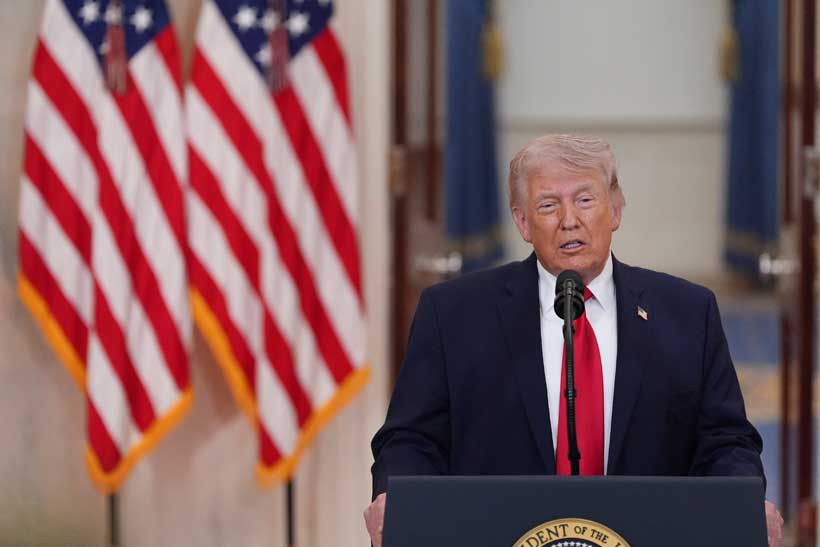
Trump told reporters at the Oval Office that negotiations with Iran had progressed significantly over the previous twenty four hours and suggested that a deal could be reached quickly. His comments reinforced growing speculation that both sides may be searching for a way to de escalate the conflict after months of confrontation.
The American president also paused a naval mission that had been launched to reopen shipping lanes in the Strait of Hormuz. The operation had aimed to protect commercial vessels trapped by the ongoing blockade and restore confidence in one of the world’s most important energy corridors.
Reports later indicated that Saudi Arabia opposed the operation and warned Washington against using Saudi bases or airspace for military activities connected to the mission. The White House has not publicly commented on those reports.
Oil Prices Fall as Markets React to Deal Hopes
Financial markets responded positively to signs of possible diplomatic progress. Global oil prices dropped sharply on expectations that tensions in the Gulf could ease and shipping routes may eventually reopen.
Benchmark Brent crude briefly fell to a two week low before recovering above the one hundred dollar mark. Investors also pushed global stock markets higher while bond yields declined amid optimism that a wider regional conflict could be avoided.
Market analysts said investors were encouraged less by the actual contents of the proposal and more by the belief that further military escalation may not occur in the near future.
Strait of Hormuz Remains a Central Issue
The Strait of Hormuz remains at the heart of the conflict. Before the war began in February, the narrow waterway handled nearly one fifth of global seaborne oil and gas supplies.
The United States has maintained pressure on Iranian shipping in the region, while Iran continues to use its strategic position in the Gulf as leverage during negotiations.
American military forces reportedly disabled an Iranian flagged tanker that was attempting to move toward an Iranian port in violation of the blockade, underscoring the fragile security situation despite renewed diplomatic efforts.
Key Disputes Still Unresolved
Although negotiators appear closer to a temporary understanding, major disagreements remain unresolved. Washington continues to seek broader restrictions on Iran’s nuclear programme, missile development, and regional influence, while Tehran insists on protecting its sovereignty and strategic interests.
The proposed memorandum may serve as a starting point for thirty days of detailed negotiations, but analysts caution that reaching a final agreement will require difficult compromises from both sides.
For now, hopes of diplomacy are competing with deep mistrust, leaving the future of the conflict uncertain despite renewed momentum toward peace.
With information from Reuters.
