


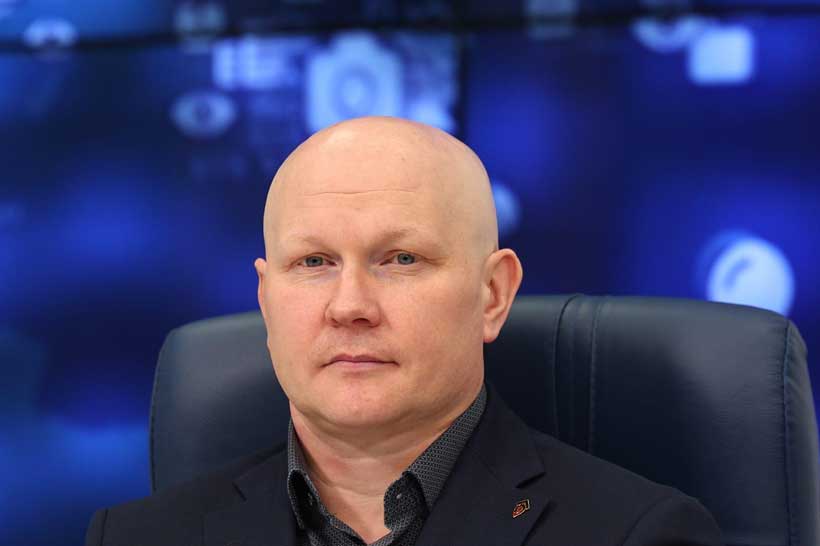
In this conversation, the founder and chief executive director of the Voluntary Resettlement Assistance Center, “The Way Home,” and co-partner of the Repatriate Initiative, Anatoly Vasilievich Bublik, talks about an initiative to attract outstanding minds, creators, and talents from around the world. The BRIDGE Awards 2026—Bridge of Friendship is intended to become an institutional instrument for recognizing foreign citizens’ and repatriates’ invaluable contributions to the development at the levels of state and society.
According to his explanation, this initiative will strengthen business and cultural ties. It is designed as a platform for promoting public and cultural diplomacy while supporting the smooth integration of foreigners and their family members into Russian society. The Russian Ministry of Foreign Affairs acts as the information partner for the awards with partner organizations—the Moscow government and the Agency for Strategic Initiatives. Here are the interview excerpts:
Why was there a need for this strategic program? Is it related to geopolitical changes and the need to reposition Russia in this context?
Anatoly Bublik: This direction is quite new for contemporary Russia. Over the last 500 years, there have been many waves of immigration to Russia by specialists from other countries, but they all occurred under a completely different political and economic environment in the world. For the first time in world history, we are observing a huge interest in immigration to a country that has tried to isolate the countries we are used to calling “developed.”
Stay ahead of the geopolitical week.
MD Briefing delivers expert analysis across five global fronts — the Indo-Pacific, energy, geoeconomics, European security, and the Middle East — every Monday morning. Free.
This has been a consequence of the fact that a section of Western countries made a choice in favor of neoliberal values affecting world order and the basics of civilization building. This phenomenon has become a surprise not only for the countries from which specialists leave, but also for our country. In order to adequately react to what’s happening, Russia had to react quickly.
The necessary legal instruments in the Russian Federation were not available, so new instruments regulated by the decrees of the President of the Russian Federation were introduced: Decree 702 and Decree 883 have similar views on human values with us while addressing one of the issues faced today by all countries, namely the shortage of qualified personnel and the small number of initiatives.
How would you like to give dynamics to the initiative to attract foreign talent to Russia?
Anatoly Bublik: It is too early to talk about any dynamics, because this initiative began to act a couple of weeks ago. It is impossible to determine the development of demand in the short term. But we’re more than sure the demand will be and will be great. Judging by the data, which was published a week after the launch of this process, more than 200 applicants have already applied. After all, how many citizens in any country have such an opportunity? Know few.
This is where we can help and spread information to the maximum audience. So, similarly, we necessarily collect feedback, identify all shortcomings and roughness, and transfer this data in the organization, directly engaged in this algorithm. Information videos were filmed and distributed in all social networks.
We have thoroughly studied the whole process of resettlement according to this algorithm and advise all interested in the hotline. In addition, we are in direct contact with the direct implementers of this initiative and exchange information.
How would you assess its importance for the development of the country?
Anatoly Bublik: Given that our country has a huge potential for development both in terms of technology and culture and art, then by hiring a large number of people with certain skills, we can contribute more to industries and the country at large. At the same time, we will be able to help realize the potential of those who, for one reason or another, decided to leave their country and realize their projects and dreams in our country.
Your initiative targets foreigners from the US and Europe. And what about Asia and Africa and Latin American countries?
Anatoly Bublik: Nowhere! This initiative is intended for citizens of all states. Absolutely every citizen of any state has the right to file documents on this initiative. And citizens of Asia and Africa will, in some cases, even have an easier time. After all, between us remained air traffic and data exchange and even money transfers between banks. And given that many citizens of these regions received education in the USSR or in the Russian Federation, it definitely facilitates their integration in our country. It should also be taken into account that on our initiative we are ready to accept not only engineers or architects but also athletes, artists, scientists, and doctors. And a very large number of representatives of these professions are outsiders, precisely from Asian and African countries.
Will the “Bridge” award become an institutional tool of recognition of the invaluable contribution of foreigners to the development of the country? What are the categories and priority regions?
Anatoly Bublik: There are no priority regions. Foreigners will be evaluated not on the basis of their origin, but on the basis of their contribution to our country. Applications can be submitted in the following categories: (i) Architecture and Construction (ii) Business and entrepreneurship adaptation (iii) Culture and the arts (iv) Media and communications (v) Medicine and health (vi) Science and innovation (vii) Education and training (viii) Public activity and charity (ix) Sports and health (x) Image and health values (xi) Tourism and hospitality
To talk about an institutional tool is premature. The event of this format is held for the first time. It is necessary first to hold an event, to collect feedback, and to analyze and only then to talk about the next steps. Russian diplomacy does not always look adequate against the backdrop of what is happening in the world.
We believe too strongly in rules and follow them even if we’re the only ones those rules stick to. And soft power and public diplomacy, we don’t involve to solve any complex international problems. We believe data directions are called upon to serve only to exchange ideas in the cultural or public realm, while our competitors use all available tools to inflict maximum damage on our allies and partners.
