


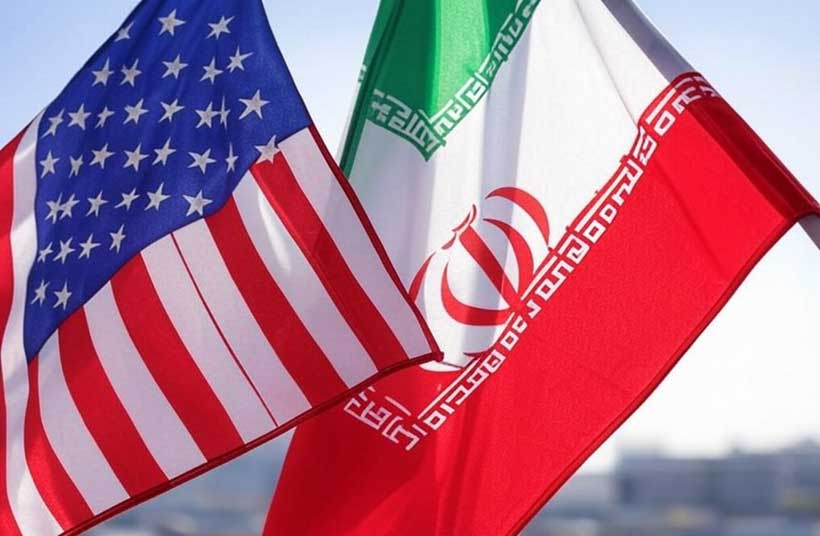
Global financial markets wavered as escalating hostilities between the United States and Iran rattled investor sentiment. While oil prices eased slightly after a sharp surge, they remained elevated above 100 dollars per barrel, reflecting deep concerns over supply disruptions.
At the center of the crisis lies the Strait of Hormuz, a critical chokepoint for global energy flows. Renewed military exchanges and competing maritime blockades have intensified uncertainty, threatening a fragile truce and amplifying risks for global trade and energy markets.
Stocks Slide Across Regions
Equity markets across Asia declined as investors reacted to the deteriorating geopolitical environment. Major indices in Hong Kong and across the Asia Pacific region registered losses, while European futures also pointed lower.
Stay ahead of the geopolitical week.
MD Briefing delivers expert analysis across five global fronts — the Indo-Pacific, energy, geoeconomics, European security, and the Middle East — every Monday morning. Free.
Trading volumes remained thin due to market holidays in Japan and South Korea, but the downward trend reflected a broader risk averse mood. Investors moved cautiously, weighing geopolitical risks alongside ongoing corporate earnings announcements.
Oil Prices Remain Elevated
Despite a modest pullback, oil prices continued to trade at elevated levels, underscoring persistent fears of supply constraints. Both benchmark crude prices remained well above recent averages after surging in response to escalating tensions.
The Strait of Hormuz plays a pivotal role in global energy supply, carrying a significant share of the world’s oil and gas. Any disruption, whether through direct conflict or precautionary shipping delays, has immediate implications for pricing and availability.
Shipping and Strategic Movements
Amid rising tensions, major shipping operations have adapted to the heightened risk environment. A vessel operated by Maersk successfully exited the Gulf under military escort, highlighting the extent of security concerns in the region.
Efforts by Donald Trump to facilitate safe passage for stranded ships have yet to produce a stable resolution, as Iranian resistance signals a prolonged standoff rather than a quick de escalation.
Currency Volatility and Safe Haven Demand
Currency markets also reflected the uncertainty. The Japanese yen experienced sharp fluctuations, fueling speculation about potential intervention by authorities in Japan. Meanwhile, the United States dollar strengthened as investors sought safe haven assets.
Gold prices edged higher, remaining within recent ranges but benefiting from ongoing geopolitical instability.
Economic Signals and Market Expectations
Beyond geopolitics, investors are closely monitoring corporate earnings and economic indicators. Strong earnings performance in the United States has provided some support to markets, particularly in sectors driven by technological innovation.
At the same time, expectations for monetary policy remain influenced by the broader energy shock. Elevated oil prices continue to pose inflationary risks, complicating decisions for central banks, including the Federal Reserve.
Analysis
The current market environment reflects a convergence of geopolitical tension and economic uncertainty. The conflict between the United States and Iran has introduced a significant risk premium into energy markets, with oil prices acting as the most immediate barometer of instability.
While equities have reacted negatively, their decline has been measured, suggesting that investors are not yet pricing in a full scale disruption. However, the persistence of elevated oil prices indicates that underlying concerns remain unresolved.
A key challenge lies in the unpredictability of the situation. With no clear resolution in sight, markets are likely to remain sensitive to developments in the Strait of Hormuz. Even minor escalations could trigger disproportionate reactions across asset classes.
Ultimately, the crisis highlights the interconnected nature of modern markets, where geopolitical events can rapidly influence financial systems. Stability in energy flows remains central to global economic confidence, and until tensions ease, volatility is likely to persist.
With information from Reuters.
