


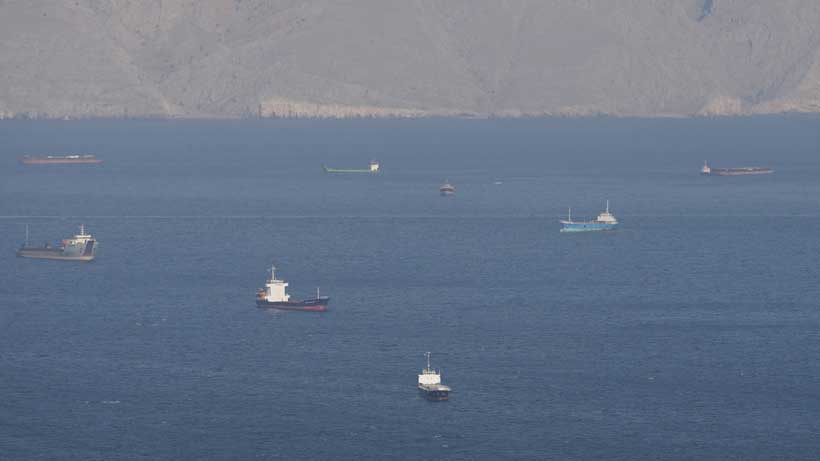
Donald Trump said the United States will help ships stuck in the Strait of Hormuz after weeks of conflict linked to the Iran war.
Many ships have been unable to pass through this key route, which is important for global oil and trade. A recent report also said a tanker was hit by unknown projectiles, raising fresh concerns about safety.
Ships and Crews Stuck at Sea
According to the International Maritime Organization, hundreds of ships and around 20,000 sailors are trapped in the area.
Many are running low on food and basic supplies after being unable to move for weeks.
Stay ahead of the geopolitical week.
MD Briefing delivers expert analysis across five global fronts — the Indo-Pacific, energy, geoeconomics, European security, and the Middle East — every Monday morning. Free.
US Plan to Help Shipping
Trump said the US will guide ships safely out of the restricted waters so they can continue their journeys.
The United States Central Command will support the plan with:
- 15,000 troops
- Over 100 aircraft
- Warships and drones
The operation aims to protect ships and keep global trade moving.
Rising Security Risks
Soon after the announcement, the United Kingdom Maritime Trade Operations reported that a tanker was attacked.
- The incident happened near Fujairah
- All crew were reported safe
- Details of the attack are still unclear
This shows how dangerous the situation has become.
Iran’s Role in the Crisis
Iran has been blocking most ships from passing through the Gulf for over two months.
- Some ships have been fired upon
- Others have been seized
- Oil and gas flows have been disrupted
In response, the US has also placed limits on ships linked to Iran.
Global Oil and Trade Impact
The Strait handles about 20% of the world’s oil and gas.
Because of the crisis:
- Oil prices have risen above $100 per barrel
- Global markets are uncertain
- Fuel prices are rising in many countries
Peace Talks Still Unclear
Iran says it is reviewing a US response to its peace proposal, which was shared through Pakistan.
However:
- No new talks have started
- There is disagreement over nuclear issues
- Both sides have set tough conditions
The US wants strict limits on Iran’s nuclear program, while Iran wants sanctions removed first.
Political Pressure in the US
Trump is also facing pressure at home.
Higher fuel prices could hurt his party in upcoming elections. This adds urgency to solving the crisis in the Strait.
Analysis
This situation is not just about one conflict it is about control of a key global trade route. The Strait of Hormuz is vital for energy supply, so any disruption quickly affects the whole world.
The US move to help ships shows it wants to keep trade flowing and reduce pressure on oil prices. But the lack of clear details suggests the plan may face challenges, especially without full international support.
At the same time, attacks on ships and ongoing blockades show the risk of further escalation. Even a small incident can push tensions higher.
Peace talks remain uncertain, with both sides sticking to their demands. Until there is real progress, the crisis is likely to continue affecting global markets, shipping, and political stability.
With information from Reuters.
