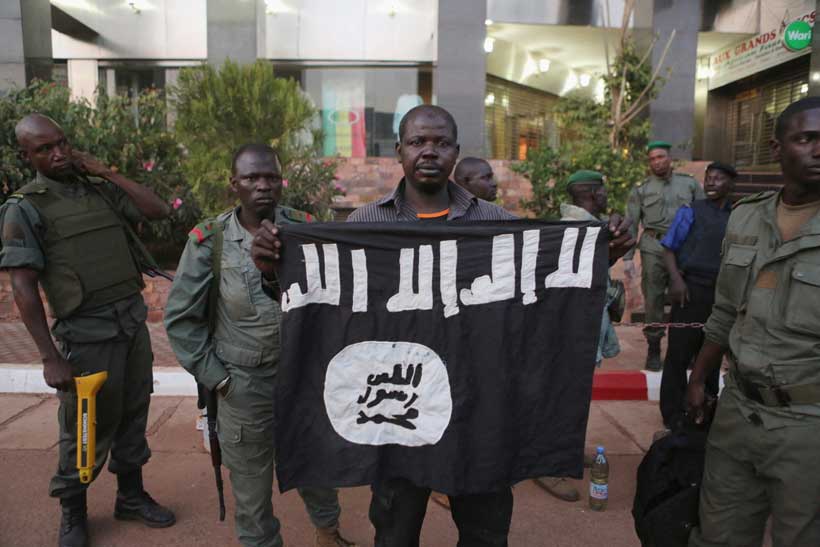
Mali’s government is facing difficulties in maintaining power following coordinated attacks by insurgents which killed the defense minister and targeted the main army base near the capital. These attacks involved collaboration between al Qaeda affiliates and a Tuareg rebel group, raising concerns about the government’s claim of restoring order.
The first main group involved is Jama’at Nusrat al-Islam wal-Muslimin (JNIM), which formed in 2017 from a merger of several militant groups after an ethnic Tuareg uprising began in 2012. JNIM is led by Iyad Ag Ghaly, who was previously the head of the Islamist group Ansar Dine. His deputy is Amadou Koufa from the Macina Liberation Front. JNIM has been active near Bamako for nearly a year and is focused on destabilizing the government more than capturing the city. The group had previously announced a fuel blockade as part of its strategy to encircle urban areas and has attacked Bamako before, including a significant assault in September 2024. JNIM is believed to have around 6,000 fighters and also operates in neighboring Burkina Faso and Niger.
The second group, the Azawad Liberation Front (FLA), arose from ongoing Tuareg rebellions that have plagued Mali since its independence in 1960. The Tuaregs seek an independent homeland called “Azawad. ” The National Movement for the Liberation of Azawad (MNLA) initially aimed for independence in 2012 but was overtaken by Islamist factions, prompting Mali to request French military support. In 2015, Mali and Tuareg separatists signed a peace agreement, but tensions reignited in 2024 when the military-led government withdrew from this agreement after expelling foreign forces. In July 2024, clashes resulted in numerous casualties among Malian and Russian troops, with suggestions of foreign involvement in the rebellion.
The third group, the Islamic State in the Sahel Province (ISSP), is an affiliate of the Islamic State that split from Al-Mourabitoun in 2015. ISSP is JNIM’s main rival, and since 2019, confrontations between the two have resulted in over 2,000 deaths. ISSP gained notoriety for the 2017 killing of four American soldiers and has recently escalated attacks in Niger, raising concerns over civilian safety. The group aspires to create an Islamic caliphate in the Sahel but is known to be less engaged with local populations compared to JNIM.
With information from Reuters