


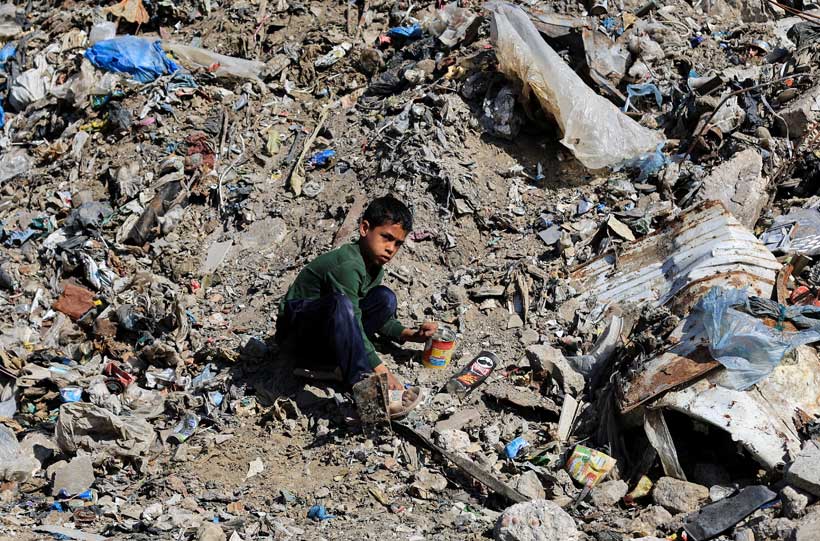
A conflict that has lasted nearly eight decades may require an approach different from the recurring cycles of war that all parties have pursued. The war in Gaza following the October 7 attack demonstrated that making life unbearable for Gaza’s civilians will not end this long-standing conflict. On the contrary, it has strengthened Palestinian resilience while generating unprecedented global disapproval of the State of Israel. The crisis demands a new approach—one grounded in offering Palestinians a dignified life rather than continual hardship.
Ironically, Israel’s prime minister, whose foremost responsibility is to protect his citizens, failed to prevent the October 7, 2023 attack by Hamas. Instead of being held politically accountable for this failure, he successfully positioned himself as a wartime leader determined to destroy the attackers—a goal that remains unfulfilled for more than thirty months later. Politicians often act to preserve their political survival, and the continuation of the Gaza war has enabled Benjamin Netanyahu to remain in power while postponing legal and political challenges. This dynamic has been reinforced by unwavering Western support, particularly from the United States.
Since its founding, Israeli citizens have sought a secure state accepted by the hundreds of millions of Arabs surrounding it. Successive Israeli governments, despite possessing advanced intelligence capabilities, sophisticated technology, and military superiority, have failed to achieve this objective. Instead, partial diplomatic arrangements—such as the Abraham Accords—have created the appearance of regional normalization without realizing a true peace. Perhaps what Israel requires today is not military escalation but a fresh mindset.
Understanding the Middle East dynamics is essential. Israel is a new state, yet a technologically advanced one, and its need for stability and security is indisputable. Meanwhile, many Arab societies face socioeconomic challenges marked by marginalization, poverty, political exclusion, and widespread frustration. Such conditions can easily fuel spontaneous unrest, especially in an era shaped by unrestricted social media narratives. Whereas governments on both sides have been exploiting their hardliners to justify repression of their adversaries and continue conflict.
Stay ahead of the geopolitical week.
MD Briefing delivers expert analysis across five global fronts — the Indo-Pacific, energy, geoeconomics, European security, and the Middle East — every Monday morning. Free.
Moreover, there is a fundamental difference between the doctrine of the Israeli army and that of Palestinian resistance groups. Israeli soldiers are citizens temporarily mobilized to defend their country and ultimately wish to return home to their normal lives. Palestinian resistance groups, however, have a liberation mission, one for which individuals are willing to sacrifice their lives—an ideology that strengthens their endurance. Offering Palestinians a dignified, self-ruled state—rather than externally imposed political arrangements, such as Trump’s Board of Peace—will certainly weaken the appeal and legitimacy of militant resistance.
In essence, opposing factions need one another to offer a sustainable solution. It may therefore be necessary, at least temporarily, to marginalize leaderships that have offered little beyond violence escalation. A bottom-up approach could instead focus on citizens themselves: persuading Israelis that a dignified and self-ruled Palestinian state would enhance Israel’s long-term security, while conveying to Palestinians that their statehood is subject to a permanent termination of violence. If widely embraced by both societies, such a vision could eventually induce political leaders to adopt it.
Western nations often frame the world in terms of good versus evil, seeking to eliminate what they perceive as evil. Yet these definitions may appear reversed in other cultural contexts. The real challenge, therefore, is not to destroy what is labeled as “evil” but to transform it into something constructive through peaceful means. Moreover, it is unrealistic to expect that Western nations will be able to uplift the economy of millions of Arab citizens through promises tied solely to normalization with Israel—a fragile proposition that frequently benefits engrained interests and crony networks more than ordinary people.
Some argue that Israel’s territorial expansion since its founding demonstrates strategic success. In purely possessive terms, this claim may hold. Yet, it has come at the cost of enduring conflict, enormous civilian suffering, and growing international isolation. Israel’s complete regional integration won’t happen until true peace is realized—similar to its most durable peace agreement with Egypt, which was achieved through the complete withdrawal from occupied Egyptian territories.
Meanwhile, regional wars—such as the current attack on Iran—are intensifying the normalization of violence in the Middle East. Renewed military confrontations risk deepening hostility toward both Israel and the United States, reinforcing the dangerous belief among many that violence is the only remaining path to resolving the Arab–Israeli conflict. Dismantling Israel’s illegal settlements in the occupied West Bank and East Jerusalem — widely considered violations of international law under multiple UN resolutions — would enable the Palestinians to establish their state on these territories. Such a step could also significantly help reduce regional tensions, particularly in volatile arenas such as Lebanon, Iran, and Yemen.
The hardship imposed on Palestinians has fostered a condition in which many feel they have nothing left to lose—a reality that prolongs resistance rather than eliminates it. Establishing a self-ruled Palestinian state capable of providing dignity, stability, and job opportunities would create something worth protecting. This proposition must incorporate security arrangements designed to ensure Israel’s long-term safety. Such a transformation could offer a genuine pathway toward resolving one of the world’s most enduring crises. It is essential to demonstrate to Israeli citizens that they are better off living alongside dignified Palestinians.
