


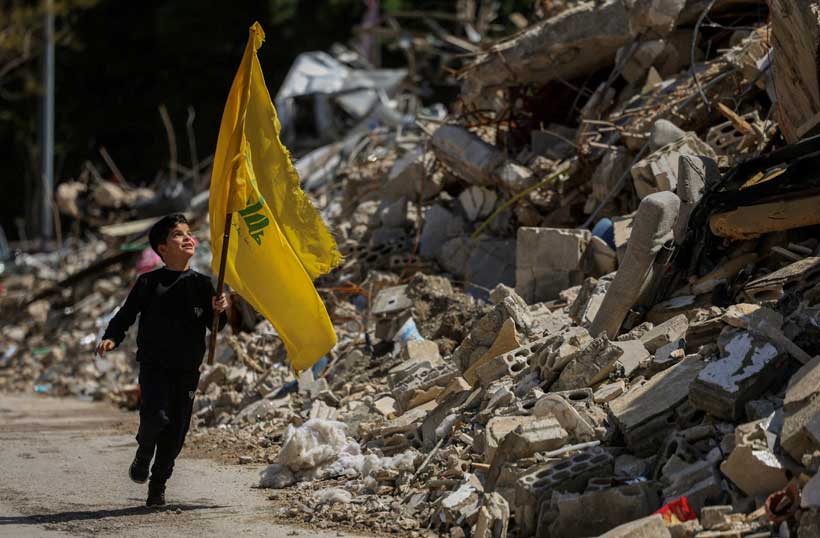
The United States is hosting a second round of talks between Lebanese and Israeli envoys as efforts intensify to extend a ceasefire between Israel and Hezbollah. The meeting comes as violence continues despite the agreement and tensions remain high in southern Lebanon.
The talks are part of a U.S. mediated process involving Marco Rubio and are taking place in Washington with both sides represented at ambassador level.
Escalation on the Ground Continued Strikes
Although the ceasefire has reduced large scale fighting, attacks have not stopped entirely. Israeli strikes in southern Lebanon recently killed at least five people including journalist Amal Khalil according to local officials and her employer.
Wednesday was reported as the deadliest day since the ceasefire began in April.
Stay ahead of the geopolitical week.
MD Briefing delivers expert analysis across five global fronts — the Indo-Pacific, energy, geoeconomics, European security, and the Middle East — every Monday morning. Free.
Why Lebanon Wants an Extension
Lebanon is seeking to extend the ceasefire which is set to expire on Sunday. Officials say the priority is to prevent further escalation and to stabilize the situation before moving to broader negotiations.
Beirut is also pushing for
An end to Israeli demolitions in southern villages
A halt to continued cross border attacks
A framework for later talks on border demarcation and detainees
Lebanese President Joseph Aoun has stated that the extension is necessary before any deeper negotiations can take place.
Israel’s Position Security and Hezbollah
Israel argues that its military presence in southern Lebanon is intended to protect its northern border. It currently maintains control over a buffer zone extending several kilometers into Lebanese territory.
Israeli officials also say their broader objectives include
Weakening Hezbollah
Preventing future rocket attacks
Creating conditions for a long term peace agreement
Hezbollah which is backed by Iran rejects Israeli presence and says it retains the right to resist what it considers occupation.
Conflict Background Heavy Human Cost
Since hostilities escalated in March nearly 2500 people have been killed in Lebanon according to local authorities. The fighting began when Hezbollah launched attacks in support of Iran during wider regional tensions.
The current ceasefire emerged separately from broader Iran related diplomacy but remains influenced by the wider regional conflict.
Diplomatic Efforts Rare Direct Engagement
The Washington talks represent one of the most significant diplomatic contacts between Lebanon and Israel in decades. Earlier meetings between both sides were also hosted in the United States marking a rare channel of communication despite ongoing conflict.
The United States has denied that these talks are directly linked to negotiations over the Iran conflict although regional dynamics continue to overlap.
Competing Narratives Over the Ceasefire
Lebanon views the ceasefire as a necessary step to reduce violence and eventually secure Israeli withdrawal from occupied areas.
Israel sees the process as an opportunity to restructure security conditions in southern Lebanon and limit Hezbollah’s military influence.
Hezbollah argues that the ceasefire is the result of regional pressure rather than diplomatic agreement and maintains that resistance remains legitimate.
Analysis A Temporary Pause Not a Resolution
The current situation reflects a ceasefire that has reduced but not ended conflict
Violence continues at a lower intensity
Both sides maintain opposing strategic goals
Trust between parties remains extremely limited
This creates a situation where even small incidents risk triggering renewed escalation.
Conclusion A Fragile Diplomatic Opening
The US hosted talks offer one of the few active diplomatic channels between Lebanon and Israel but the gap between their positions remains wide.
Without agreement on core issues such as border control armed groups and territorial presence the ceasefire remains fragile and highly vulnerable to collapse.
With information from Reuters.
