


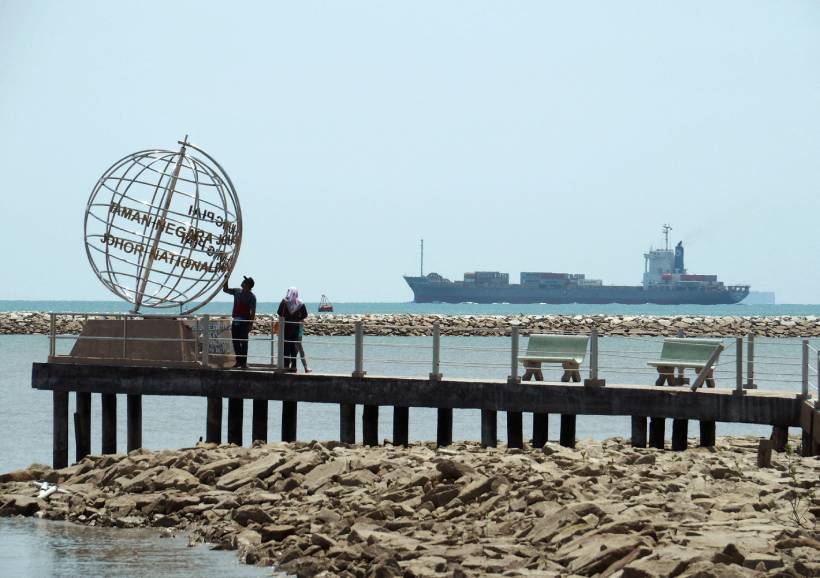
The ongoing disruption in the Strait of Hormuz has pushed governments and analysts to reassess the vulnerability of other major global trade routes. Attention is now shifting to the Strait of Malacca one of the most important and congested shipping lanes in the world.
What Is the Malacca Strait
The Strait of Malacca is a narrow sea passage about 900 kilometers long located between Indonesia Malaysia and Singapore. It connects the Indian Ocean with the Pacific Ocean and provides the shortest sea route between East Asia and markets in the Middle East and Europe.
It is a vital artery for global trade carrying roughly 22 percent of world maritime commerce. It is also the main route for energy shipments heading to major Asian economies including China Japan and South Korea.
A Critical Energy Corridor
The strait is the most important oil transit chokepoint in the world alongside Hormuz
Stay ahead of the geopolitical week.
MD Briefing delivers expert analysis across five global fronts — the Indo-Pacific, energy, geoeconomics, European security, and the Middle East — every Monday morning. Free.
Around 23 million barrels of oil pass through it daily
Nearly 29 percent of global maritime oil flows move through this route
China alone depends on it for roughly three quarters of its seaborne crude imports
Although some vessels can reroute around Indonesia such alternatives significantly increase travel time and cost.
Why It Is Vulnerable
Despite its importance the Malacca Strait has several structural risks
At its narrowest point it is only about 2.7 kilometers wide creating a natural bottleneck
Shallow waters limit the passage of the largest vessels
Heavy traffic increases the risk of collisions and environmental disasters
The strait has also experienced piracy and maritime crime in the past although incidents have declined in recent years due to coordinated patrols.
Strategic Importance in Global Power Politics
The Strait of Malacca is especially important for China given its reliance on imported energy. Any disruption would have immediate economic and strategic consequences for Beijing.
At the same time analysts warn that tensions in regions such as the South China Sea or the Taiwan Strait could indirectly threaten shipping stability in Southeast Asia adding another layer of geopolitical risk.
Regional Concerns and Governance
Officials in Southeast Asia have stressed that the strait must remain open to all international shipping
Singapore has reaffirmed that freedom of navigation is guaranteed and opposed any idea of tolls or restrictions
Malaysia Indonesia and Thailand coordinate joint patrols to secure the waterway
Indonesia’s finance minister recently suggested exploring toll systems but later acknowledged such measures are not feasible
The consensus among regional states is that no single country can control or restrict access to the strait.
Analysis A Single Point of Global Fragility
The current focus on Hormuz has revealed a broader truth about global trade systems
Major economies depend on a small number of maritime chokepoints
Disruption in one region forces pressure onto others
There are few truly safe alternative routes at scale
The Malacca Strait stands out because it combines high traffic volume extreme narrowness and deep geopolitical importance making it a potential pressure point in any future global conflict scenario.
Conclusion A System Built on Vulnerable Routes
The crisis in Hormuz has highlighted how dependent the global economy is on a few narrow maritime corridors. The Strait of Malacca is now under renewed scrutiny not because it is currently unstable but because it represents what could happen if another chokepoint comes under stress.
Together these routes show that global trade is efficient but structurally fragile relying on a small number of critical sea passages that remain essential but exposed.
With information from Reuters.
