


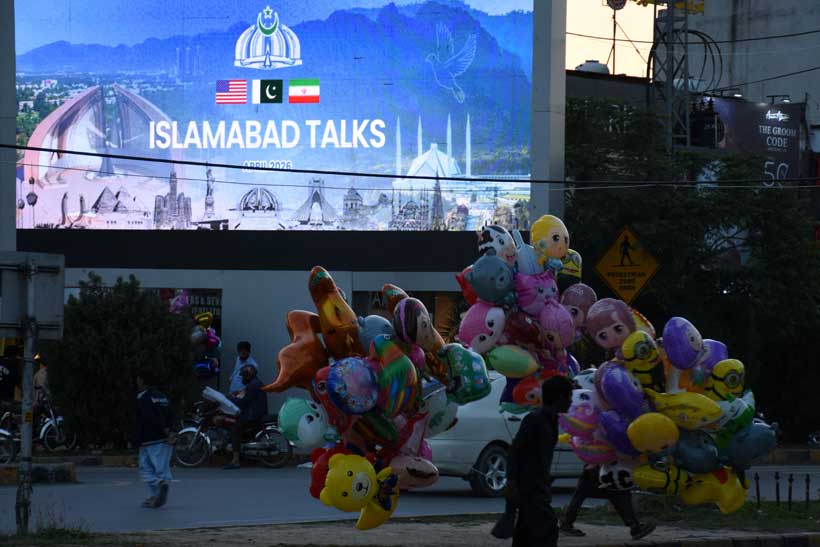
Negotiators from the United States and Iran are expected to return to Islamabad for another round of talks later this week, following a first high level meeting that ended without a breakthrough.
The previous round marked the most significant direct engagement between the two sides in over a decade and the highest level contact since the Iranian Revolution. While no formal date has been set, both sides are reportedly keeping the weekend open for renewed negotiations.
What is at stake
The talks are focused on multiple critical issues tied to the ongoing Iran war. These include tensions around the Strait of Hormuz, Iran’s nuclear programme, and the future of international sanctions.
The Strait remains a central concern, as disruptions there have already impacted global energy flows. The United States has signalled it wants to restore full navigation, while Iran maintains leverage over the route.
Stay ahead of the geopolitical week.
MD Briefing delivers expert analysis across five global fronts — the Indo-Pacific, energy, geoeconomics, European security, and the Middle East — every Monday morning. Free.
Key players
The last round of talks was led by JD Vance and Mohammad Baqer Qalibaf, highlighting the seriousness of the negotiations.
Pakistan is playing a quiet but important mediating role, facilitating communication and hosting the discussions at a sensitive geopolitical moment.
Why it matters
A second round of talks signals that both sides are still open to diplomacy despite rising tensions and recent military escalation. Even limited progress could ease pressure on global oil markets and reduce the risk of wider regional conflict.
Conversely, another failed round could deepen instability, especially around energy routes and sanctions enforcement.
Analysis
The willingness to return to the table suggests neither Washington nor Tehran is ready to abandon negotiations entirely. However, positions remain far apart, particularly on sanctions relief and security guarantees.
The US framing of its proposal as a “final offer” indicates urgency, but also limits flexibility. Iran, on the other hand, may seek concessions that go beyond what Washington is prepared to grant.
Pakistan’s role as host adds a neutral platform, but the outcome will ultimately depend on whether both sides see more benefit in compromise than confrontation.
If talks resume over the weekend, they will test whether the initial meeting laid any real groundwork for progress. Markets and global policymakers will be watching closely for signals on de escalation, especially regarding the Strait of Hormuz and oil flows.
Even a partial agreement could mark a turning point, but the risk of stalemate remains high.
With information from Reuters.
