


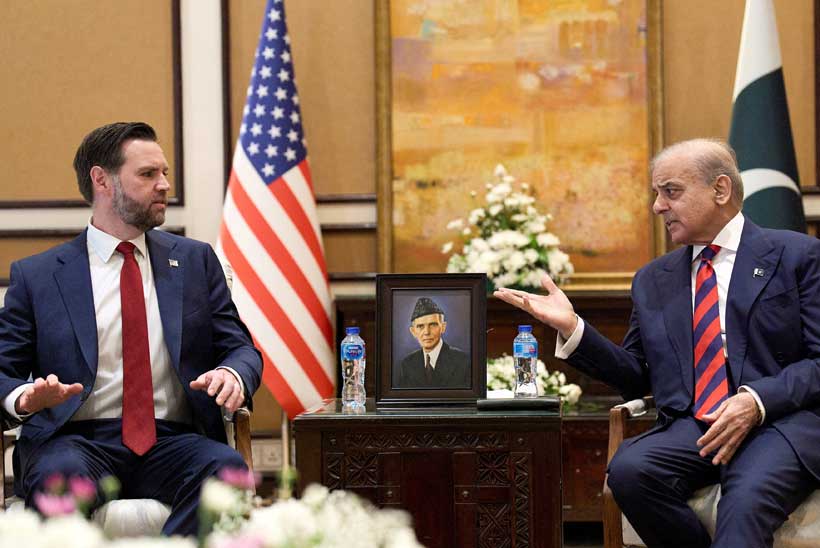
Negotiations between Iran and the United States have reached a deadlock due to differing demands. Washington seeks a narrow agreement concerning maritime security in the Strait of Hormuz, while Tehran demands a complete lifting of sanctions and international guarantees, a demand China considers legitimate within the context of the balance of power. US President Trump directly warned China against providing military support to Iran, threatening that such action would create big problems for Beijing if it were proven that China sent weapons or military aid to Tehran following the collapse of the Tehran-Washington talks. The United States is also attempting to target Chinese trade, with the US administration considering linking the breakdown of Iranian-American negotiations to increased tariffs or sanctions on Chinese companies that help Iran circumvent sanctions and the economic embargo. The failure of the last round of negotiations between Iran and the United States in Washington in April 2026 has had direct strategic and economic consequences for China, primarily increased US pressure on Beijing for its support of Tehran and a deepening of interdependence between China and Iran in the energy and defense sectors. China adopted a stance focused on diplomatic mediation and warnings against military escalation following the collapse of Iranian-American negotiations in Washington in April 2026. Therefore, Beijing seeks to maintain a delicate balance that protects its economic interests in the Gulf while providing political support to its ally, Tehran.
In this context, China is attempting to present itself as an alternative mediator between Iran and Washington, promoting its policy of new diplomacy with major characteristics of China in the new era, based on the principle of a shared future for mankind. China positions itself as a more stable and rational international partner compared to the United States, with Chinese President Xi Jinping seeking to play the role of a peaceful mediator to fill the diplomatic vacuum left by the failure of Washington’s talks with Tehran.
China links the failure of US negotiations with Iran to its direct repercussions on regional and global energy security and oil supplies, as this threatens global trade routes. The deadlock in negotiations regarding the status of the Strait of Hormuz threatens the stability of oil supplies to China, which imports approximately 1.4 million barrels per day from Iran (representing more than 80% of Tehran’s oil exports). Furthermore, continued tension between Iran and the United States could lead Iran to seek alternative currencies, potentially requiring payment in Chinese yuan as a condition for transit through the Strait of Hormuz. This would bolster the international standing of the Chinese currency despite the security risks. The failure of US-Iranian negotiations would also strengthen the Beijing-Tehran geopolitical axis. US intelligence reports indicate that China might exploit the stalled peace process with Iran to supply it with portable air defense systems, thus enhancing its declining defense capabilities. China is expected to exploit the US preoccupation with the stalled negotiations with Iran to ensure the United States remains bogged down in Middle Eastern conflicts. This serves China’s strategy of easing US military pressure in the Indo-Pacific region, encompassing the Indian and Pacific Oceans, the South China Sea, and Taiwan.
Currently, China is pursuing several approaches to negotiations between Tehran and Washington, most notably calling for a return to the diplomatic track through its emphasis on the Five-Point Initiative. China continues to promote its joint initiative with Pakistan to restore peace and stability in the Gulf, which calls for a halt to attacks on energy infrastructure and peaceful nuclear facilities. The Chinese Foreign Ministry has stressed that force cannot solve the problem and urged both sides to exercise restraint and return to the negotiating table to prevent the situation from spiraling out of control. Simultaneously, China is keen to provide political support to Iran, backing its legitimate and legal right to the peaceful use of nuclear energy, while opposing Tehran’s acquisition of nuclear weapons to avoid a regional arms race. While condemning the escalation against Iran, Beijing described the US military strikes against Iran as a violation of international law and criticized Washington’s fight while negotiating policy. China prioritizes strategic and economic considerations when dealing with the Iranian issue, particularly regarding energy security. China fears any escalation that could lead to the closure of the Strait of Hormuz, through which approximately 40% of its oil imports pass. This compels China to push for de-escalation to ensure the flow of supplies. China remains committed to the 25-year Comprehensive Strategic Partnership Agreement with Iran, maintaining its substantial investments (potentially reaching $400 billion) in the Iranian economy in exchange for stable oil supplies.
Stay ahead of the geopolitical week.
MD Briefing delivers expert analysis across five global fronts — the Indo-Pacific, energy, geoeconomics, European security, and the Middle East — every Monday morning. Free.
This coincided with an escalation of US threats against China following the failure of US negotiations with Iran. China faced direct threats from President Trump, who explicitly warned of big problems for China if it were proven that it had sent weapons to Tehran, a claim categorically denied by the Chinese embassy in Washington. Beijing continued to criticize the US’s unilateral sanctions policy, deeming it an obstacle to reaching a final agreement. Therefore, the most prominent feature of China’s current position is its support for regional mediation efforts. Beijing continues its official backing of Islamabad’s tireless efforts to de-escalate tensions, believing that regional stability is in the interest of all parties. With China providing qualitative military support to Iran, according to recent US intelligence reports, China is accused of preparing to supply Iran with man-portable air defense systems, known militarily as MANPADS. This is expected to occur in the coming weeks following the failure of negotiations, in a move aimed at bolstering Tehran’s defense capabilities after diplomatic efforts led by Pakistan, Egypt, Turkey, Saudi Arabia, and other regional actors faltered.
This summarizes China’s position after the failure of political negotiations between Iran and the United States in Washington in April 2026. China adopted a stance combining diplomatic support for Pakistani mediation with strategic action to support Iran militarily and politically to counter US pressure, following the collapse of the last round of negotiations in the Pakistani capital, Islamabad, in April 2026. Therefore, Beijing continues to push for a political solution, with the Chinese Foreign Ministry calling on all parties to exercise maximum restraint and resolve disputes through political channels while warning of the repercussions of escalation on global energy markets, particularly in the Strait of Hormuz. As China intensifies its contacts with Pakistan to ensure that communication channels remain open between Washington and Tehran, Beijing believes that successful mediation would bolster its role as a constructive international player in contrast to the US maximum pressure policy.
