


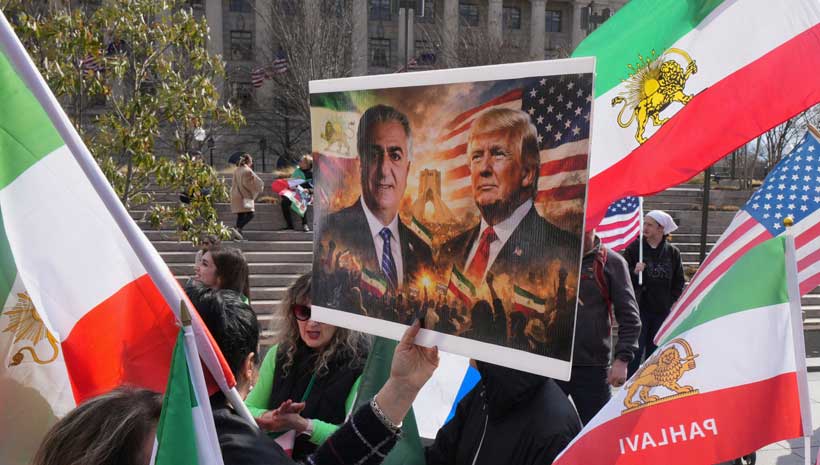
The war launched on February 28 by the United States under Donald Trump in coordination with Israel was aimed at dismantling Iran’s military and nuclear capabilities.
Now entering its fifth week, the conflict has caused regional instability, rising global oil prices, and increasing domestic pressure within the United States to end the war.
Trump’s Claims of Military Success
In his speech, Trump emphasized that the US had achieved major battlefield victories. He claimed Iran’s navy and air force had been destroyed and its missile and nuclear programs severely weakened.
This narrative is designed to project strength and justify the continuation of military operations. It also aims to reassure the American public that progress has been made.
Stay ahead of the geopolitical week.
MD Briefing delivers expert analysis across five global fronts — the Indo-Pacific, energy, geoeconomics, European security, and the Middle East — every Monday morning. Free.
However, such claims contrast with ongoing Iranian attacks across the region, suggesting that Iran retains significant retaliatory capability.
Lack of Clear Exit Strategy
Despite highlighting military gains, Trump failed to provide a concrete timeline or roadmap for ending the war. He stated that the conflict would end “very fast” but gave no specific plan.
This creates uncertainty at multiple levels. Allies remain unsure of US intentions, markets react negatively, and domestic audiences grow increasingly frustrated.
The contradiction is clear. On one hand, the US claims near victory. On the other, it continues to escalate operations.
Contradictions in Strategy
Trump’s messaging reveals strategic inconsistency. At different points, he has suggested both winding down the war without a deal and intensifying attacks if Iran does not comply.
He also portrayed Iran as weakened while simultaneously threatening further large scale strikes over the next two to three weeks.
This dual approach reflects a broader uncertainty within the administration about whether to prioritize quick disengagement or total strategic victory.
The Strait of Hormuz Issue
A major unresolved issue is the status of the Strait of Hormuz, a key global energy route that Iran has effectively restricted.
Trump downplayed concerns by saying the strait would reopen naturally after the war. However, this lacks strategic clarity. Control over this chokepoint remains one of Iran’s strongest leverage tools.
Without a clear plan to secure it, global energy markets remain vulnerable.
Economic and Market Reactions
Financial markets reacted negatively to Trump’s speech. Stocks declined, oil prices rose, and the dollar strengthened.
These reactions reflect investor concern that the war may continue longer than expected. Rising fuel prices are already affecting American consumers, increasing domestic political pressure on the administration.
Domestic Political Pressure
Public opinion in the United States is increasingly against the war. A majority of voters disapprove of the conflict and want it to end quickly, even if objectives are not fully achieved.
This creates a political dilemma for Trump. Ending the war too soon risks appearing weak, while continuing it risks further loss of public support.
Potential Escalation Options
The administration is still considering aggressive options, including targeting Iran’s energy infrastructure and even launching ground operations to seize strategic locations.
There are also discussions about securing Iran’s enriched uranium stockpiles, which would mark a significant escalation beyond airstrikes.
The movement of additional troops to the Gulf indicates that the US is keeping all options open.
Regional Reality Check
Despite US claims of dominance, Iran continues to demonstrate its ability to strike targets across the region, including areas like Doha and Tel Aviv.
This highlights a key reality. Military superiority does not automatically translate into total control or immediate victory.
Analytical Perspective
From a neorealist perspective, the situation reflects the limits of military power in achieving political objectives.
While the US may achieve tactical success by destroying military assets, it has not yet secured a strategic outcome. Iran’s ability to endure and retaliate keeps the conflict unresolved.
The absence of a clear endgame risks turning a short war into a prolonged conflict, similar to past US engagements in Iraq and Vietnam.
Conclusion
Trump’s speech projects confidence but lacks clarity. The gap between claims of success and the absence of an exit plan raises serious questions about the future of the conflict.
Without a defined strategy for ending the war, the United States risks being drawn into a longer and more complex confrontation with uncertain outcomes.
With information from Reuters.
