


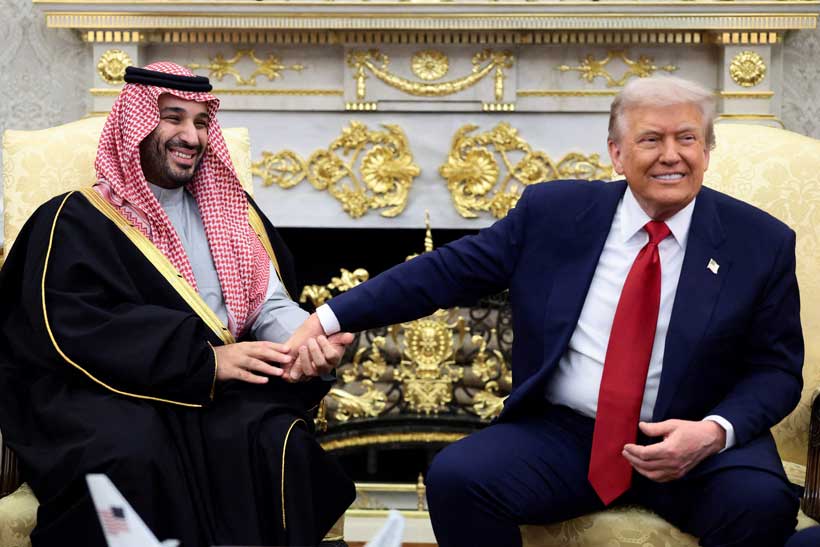
The Act and the Reality
There is a performance happening in capitals across the world, and most audiences are only watching one half of it. The domestic half is loud: nationalist speeches, civilizational rhetoric, a leader who speaks directly to the people over the heads of institutions, courts, press, and every other mediating layer that used to sit between a government and its citizens. The foreign policy half is quieter, and considerably more interesting. Because behind the theater of national greatness, the same leaders are making deals, cutting compromises, and sitting across tables from the very rivals their rhetoric has spent years demonizing.
This is the defining political style of the current moment. Call it the strongman paradox. The leaders with the most aggressive domestic postures, MBS freezing rents and opening Saudi Arabia to foreign property ownership while running one of the world’s most repressive states, Modi presiding over Hindutva nationalism at home while courting Putin, Trump, and the EU simultaneously, Erdogan invoking Ottoman civilization in his speeches while brokering grain corridors for Moscow — are often the most transactional and flexible in practice. Nationalism is the product. The pragmatism is how the business actually runs.
to read the full analysis, please subscribe here
Stay ahead of the geopolitical week.
MD Briefing delivers expert analysis across five global fronts — the Indo-Pacific, energy, geoeconomics, European security, and the Middle East — every Monday morning. Free.
