


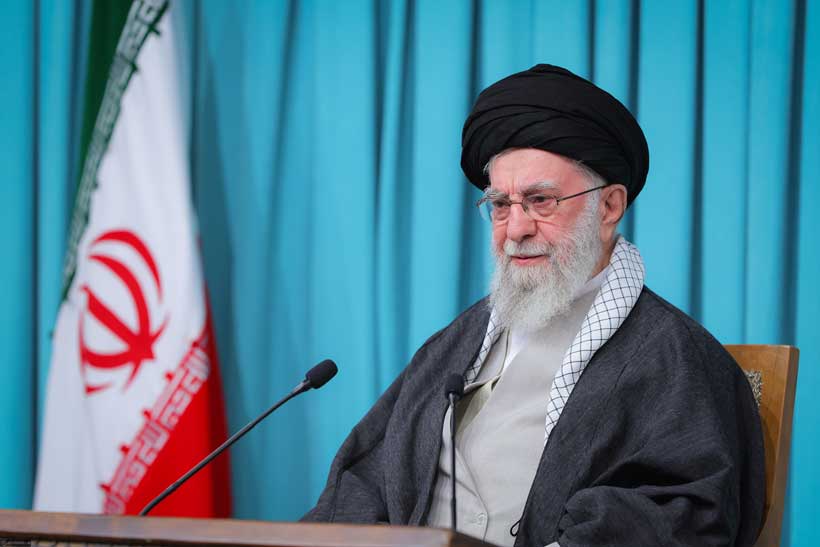
Since February 28, coordinated strikes by the United States and Israel have targeted the upper ranks of Iran’s leadership, marking one of the most significant assaults on the Islamic Republic in decades. Carried out during nuclear talks mediated by Oman, the attacks have hit political, military and security elites in Tehran, disrupting command structures and escalating regional tensions.
Supreme Leader
At the apex of Iran’s system, Ali Khamenei was killed in a February 28 air strike. In power since 1989, he held ultimate authority over the state, military and judiciary, and shaped Iran’s regional posture and adversarial stance toward the United States and Israel. His death represents an unprecedented break in Iran’s political order.
Core Political and Security Figures
Ali Larijani, secretary of the Supreme National Security Council, was killed on March 17 alongside close aides. A veteran powerbroker and former nuclear negotiator, he played a key role in shaping Iran’s foreign and security policy.
Ali Shamkhani, a senior adviser to Khamenei and long-time architect of defence and nuclear strategy, was also killed in the February 28 strikes.
Stay ahead of the geopolitical week.
MD Briefing delivers expert analysis across five global fronts — the Indo-Pacific, energy, geoeconomics, European security, and the Middle East — every Monday morning. Free.
Their deaths remove experienced figures who linked Iran’s political leadership with its strategic and security decision-making.
Military Command Hit
The strikes also targeted the top tier of Iran’s military leadership, particularly within the Islamic Revolutionary Guard Corps.
Mohammad Pakpour, commander-in-chief of the IRGC, was killed in the initial wave of strikes. The IRGC oversees Iran’s missile programme and regional proxy networks.
Abdolrahim Mousavi, chief of staff of Iran’s armed forces, was killed during a high-level meeting in Tehran. He was responsible for coordinating between the IRGC and the regular army.
Aziz Nasirzadeh, a senior air force officer and defence minister, was also killed in the same strikes.
These losses disrupted both operational command and strategic coordination across Iran’s military institutions.
Internal Security Leadership
Gholamreza Soleimani, head of the Basij paramilitary force, was killed on March 17. The Basij plays a central role in internal security and state enforcement, particularly during crises.
His death weakens Iran’s domestic control apparatus at a time of heightened external pressure.
Broader Impact
Beyond these figures, multiple senior commanders from the IRGC, army and intelligence services were reportedly killed, particularly in the February 28 strike that targeted a gathering of top leadership. The pattern suggests a deliberate effort to cripple Iran’s decision-making core rather than isolated targeting.
What’s Next
Iran is expected to rapidly appoint replacements across its political and military hierarchy, but restoring coordination among institutions will take time. In the near term, decision-making may become less centralized, increasing the risk of miscalculation or escalation. At the same time, regional powers are likely to intensify diplomatic efforts to contain the conflict, even as the possibility of further high-level strikes remains.
With information from Reuters.
