


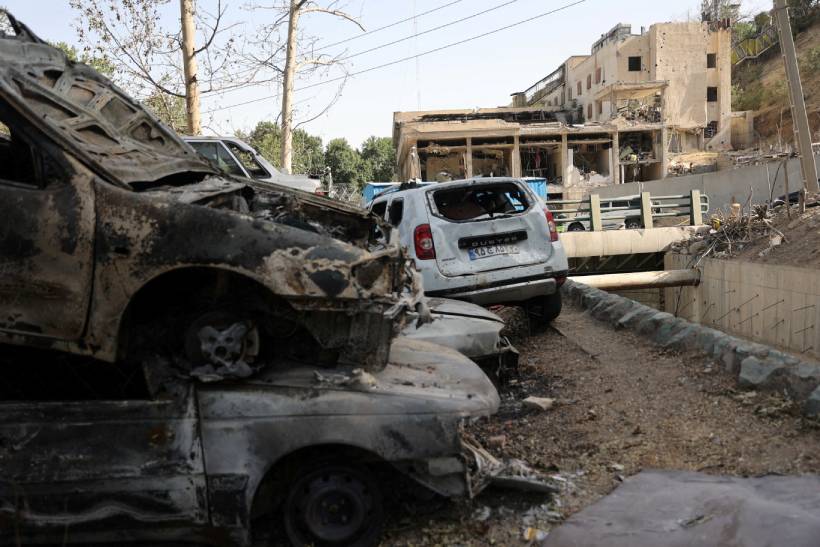
The United Nations has formally flagged an airstrike carried out by Israel on Evin prison last June as a war crime. The facility, which houses political prisoners, was hit during the broader U.S.-Israeli bombing campaign against Iran, killing over 70 people, including women and a child, according to U.N. investigators.
The report, presented to the U.N. Human Rights Council, was compiled using witness interviews, satellite imagery, and other documentation. Investigators warned that ongoing airstrikes risk exacerbating repression inside Iran, potentially endangering detainees, some of whom are foreign nationals.
Allegations and evidence
Sara Hossain, chair of the Independent International Fact-Finding Mission on Iran, stated that “reasonable grounds” exist to believe Israel intentionally targeted a civilian object, constituting a war crime. The report identified 80 casualties from the June strike, including eight women and one child.
Stay ahead of the geopolitical week.
MD Briefing delivers expert analysis across five global fronts — the Indo-Pacific, energy, geoeconomics, European security, and the Middle East — every Monday morning. Free.
Israel’s Defense Forces responded that the strike targeted intelligence operations within the prison, including counter-espionage activities, and claimed the attack was designed to minimize civilian harm. Israel has also disengaged from the Human Rights Council, leaving its seat vacant.
Humanitarian and political implications
UN investigators stressed that external military action risks intensifying domestic repression rather than achieving accountability or reform. Following last year’s strikes, Iran reportedly increased executions, heightening fears for current detainees, particularly those detained during mass protests earlier this year.
Mai Sato, a U.N.-appointed rights expert, noted that prisoners’ families are increasingly unable to contact relatives, while food and medical supplies are running short. The continued bombing campaigns raise concerns over both the physical safety of detainees and the potential for further human rights violations.
Analysis
The designation of the Evin prison strike as a war crime underscores the blurred line between military objectives and civilian protection in contemporary conflicts. Targeting facilities that hold civilians even under claims of intelligence operations carries both legal and moral consequences, exposing states to international scrutiny and potential sanctions.
The UN report also signals the wider consequences of ongoing U.S.-Israeli military actions in Iran. Civilian casualties and infrastructure destruction can deepen domestic repression, undermining the intended political or security goals. The findings serve as a reminder that military campaigns may amplify rather than alleviate human suffering, particularly in contested environments with sensitive civilian populations.
For policymakers, this raises difficult questions about balancing strategic objectives with international legal obligations and humanitarian considerations, especially when detainees, political prisoners, and foreign nationals are involved.
The report could influence future international oversight of the conflict, shaping both diplomatic responses and potential accountability mechanisms, although enforcement remains challenging in the absence of cooperation from the targeted state or its allies.
With information from Reuters.
