


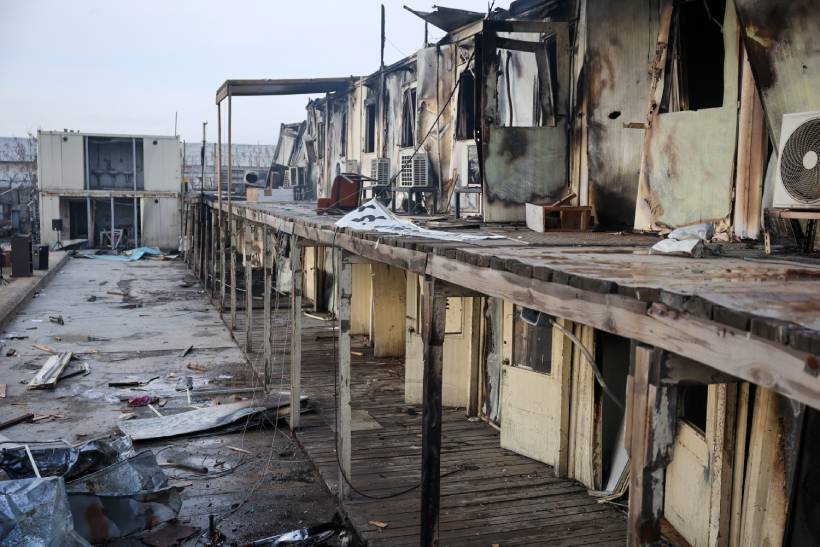
A sharp escalation in tensions between Afghanistan and Pakistan has followed claims by the Afghan Taliban that a Pakistani air strike killed at least 400 people at a drug rehabilitation hospital in Kabul.
Islamabad has firmly rejected the accusation, insisting its strikes targeted militant infrastructure and not civilians. The conflicting accounts highlight the fog of war that has defined a conflict now entering its most dangerous phase, with independent verification of casualties proving difficult.
The incident comes amid a broader regional crisis, with the war involving Iran, the United States and Israel adding pressure to an already volatile neighbourhood.
A strike and two narratives
Stay ahead of the geopolitical week.
MD Briefing delivers expert analysis across five global fronts — the Indo-Pacific, energy, geoeconomics, European security, and the Middle East — every Monday morning. Free.
At the center of the crisis are two sharply opposing versions of events. Afghan authorities say the strike hit a large civilian medical facility, causing mass casualties and widespread destruction. Eyewitness accounts describe scenes of devastation, with fires engulfing buildings and victims trapped under rubble.
Pakistan, by contrast, maintains that the operation was precise and aimed at militant targets. Officials point to secondary explosions as evidence that the site housed ammunition or militant infrastructure rather than purely civilian functions.
This divergence is not unusual in modern conflict, but the scale of the alleged casualties and the nature of the target make this episode particularly sensitive. If confirmed, a strike on a hospital would represent a serious escalation with significant legal and humanitarian implications.
Conflict reignites despite mediation efforts
The latest violence comes after a brief period of de escalation driven in part by diplomatic efforts from China, which has urged both sides to return to negotiations.
That momentum now appears to have collapsed. The renewed fighting, just days before the Eid al-Fitr, underscores how fragile the ceasefire environment was and how quickly tensions can resurface.
The conflict itself marks the most intense confrontation between the two neighbours in decades. Once close allies, Kabul and Islamabad are now locked in a cycle of accusation and retaliation that shows little sign of stabilising.
The militancy fault line
At the core of the dispute lies a long standing disagreement over militancy. Pakistan accuses Afghanistan of providing safe haven to armed groups that carry out cross border attacks. Afghan authorities deny this, arguing that militancy within Pakistan is a domestic issue.
This unresolved tension has repeatedly triggered military responses. Pakistan’s air strikes are framed as counterterrorism operations, while Afghanistan views them as violations of sovereignty and attacks on civilians.
The absence of a shared framework for addressing these concerns means each incident risks spiralling into broader confrontation, as seen in the current escalation.
Humanitarian and legal stakes
The reported scale of casualties has drawn concern from international observers. Richard Bennett called for restraint and emphasised the need to protect civilians and civilian infrastructure.
Hospitals occupy a protected status under international law, and any confirmed strike on such a facility would intensify scrutiny on Pakistan’s conduct. At the same time, the lack of independent verification leaves room for competing claims to persist, complicating accountability.
For civilians, however, the distinction matters little in immediate terms. The accounts from survivors point to a worsening humanitarian situation, with rescue efforts ongoing and fears that the death toll could rise further.
Analysis
This episode reflects a conflict that is becoming increasingly difficult to contain. The combination of disputed narratives, unresolved militancy concerns and weak mediation mechanisms creates a volatile environment where escalation can occur rapidly.
For Pakistan, the challenge lies in balancing its security objectives with the risk of international backlash. Even if strikes are aimed at militant targets, the perception of civilian harm carries significant diplomatic costs.
For Afghanistan, highlighting civilian casualties serves both a domestic and international purpose, drawing attention to sovereignty violations and seeking external pressure on Islamabad.
The broader concern is that this bilateral conflict is unfolding within a region already under strain. With overlapping crises and limited diplomatic bandwidth, the risk is not just continued fighting but deeper instability across South and West Asia.
What happens next will depend on whether external actors can revive mediation efforts and whether both sides see value in restraint. For now, the trajectory points in the opposite direction, toward further escalation and entrenched mistrust.
With information from Reuters.
