


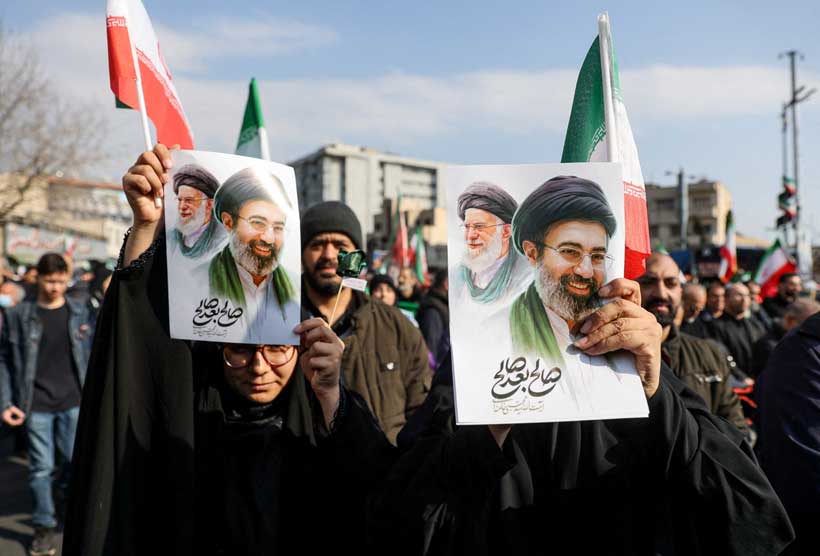
Ayatollah Mojtaba Khamenei has rejected proposals aimed at reducing tensions or pursuing a ceasefire with the United States, according to a senior Iranian official. The proposals were reportedly conveyed via two intermediary countries, but Tehran’s new leadership has signaled an uncompromising approach.
The war, now in its third week, has already claimed at least 2,000 lives. The Strait of Hormuz remains effectively closed, as U.S. allies have declined requests from Donald Trump to help reopen the critical waterway, adding upward pressure on energy prices and stoking global inflation fears.
Unyielding policy direction
According to the official, Khamenei’s first foreign policy session emphasized a posture of revenge against the U.S. and Israel. The leader reportedly declared that “it is not the right time for peace until the United States and Israel are brought to their knees, accept defeat, and pay compensation.” The statement underscores a continuation of hardline policy under the new leadership, prioritizing confrontation over diplomacy.
Stay ahead of the geopolitical week.
MD Briefing delivers expert analysis across five global fronts — the Indo-Pacific, energy, geoeconomics, European security, and the Middle East — every Monday morning. Free.
The official did not specify whether Khamenei attended the session in person, but the message sent a clear signal to both domestic audiences and international interlocutors that Tehran will not entertain ceasefire proposals at this stage.
Diplomatic efforts stall
Earlier attempts by Middle Eastern allies to broker negotiations between the U.S. and Iran have reportedly been rebuffed by the Trump administration. Sources cited by Reuters on March 14 indicated that Washington has resisted efforts to engage in early diplomacy, leaving the conflict without meaningful channels for negotiation.
Analysis
Khamenei’s uncompromising stance suggests that the war will likely continue to intensify before any diplomatic breakthrough. The closure of the Strait of Hormuz amplifies the economic and strategic risks, affecting global energy markets and supply chains.
The situation highlights the interplay of domestic politics, leadership transitions, and regional security calculations. By framing the conflict in terms of revenge and compensation, Iran’s new supreme leader is solidifying a position that leaves little room for compromise, making international mediation increasingly difficult.
In practical terms, the escalation indicates that short-term energy shocks and military confrontations are likely to persist, while diplomatic solutions will require sustained pressure, multilateral engagement, and perhaps recalibration of U.S. strategy in the region.
With information from Reuters.
