


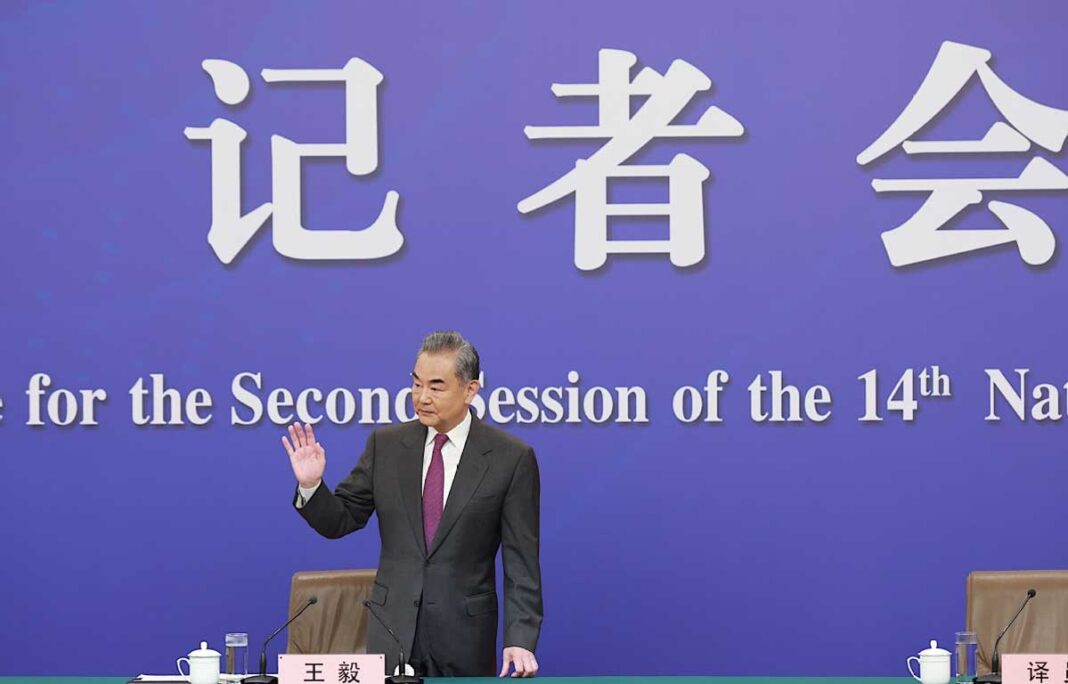
Amid intensifying strategic competition between the United States and China, Southeast Asia has emerged as one of the most important geopolitical arenas in the evolving international order. Vietnam has increasingly become a strategic crossroads as it maintains deep and multifaceted relations with both major powers. Reports suggesting that Chinese Foreign Minister Wang Yi may visit Vietnam in March 2026 at the same time when Trump may also visit officially to China have therefore attracted considerable attention from international observers. This article analyzes the geopolitical context leading to the visit, the strategic objectives of Beijing, and Vietnam’s growing role in the regional balance of power.
A Volatile International Environment
At the beginning of 2026, the global security environment has been marked by significant turbulence. In the Middle East, tensions between Israel and Iran escalated following multiple rounds of airstrikes and retaliatory military operations. These developments have not only altered the regional security balance but also generated significant volatility in global energy markets.
Meanwhile, the conflict between Russia and Ukraine continues to drag on, contributing to prolonged instability in the European security order.
Within this broader context, strategic competition between the United States and China has increasingly become the central axis shaping the global balance of power. After returning to the White House, Donald Trump has continued to pursue a firm policy toward China, including tariffs and measures aimed at restricting Beijing’s economic and technological influence. Many analysts view these policies as a continuation of the comprehensive strategic rivalry that has defined U.S.–China relations in recent years.
Stay ahead of the geopolitical week.
MD Briefing delivers expert analysis across five global fronts — the Indo-Pacific, energy, geoeconomics, European security, and the Middle East — every Monday morning. Free.
As a result, China faces a range of economic and geopolitical challenges, particularly the risk of a narrowing strategic space within global supply chains. According to reports by the news agency Reuters, China’s relations with several economic partners have come under pressure due to U.S. export controls and technological restrictions. This has prompted Beijing to search for new avenues of cooperation in strategically important regions, including Southeast Asia.
For China, Southeast Asia represents not only a crucial economic partner but also a strategic buffer zone in its competition with the United States. Strengthening ties with key countries in the region—particularly Vietnam—has therefore become an important priority in Beijing’s foreign policy.
U.S.–China Relations and Signs of Strategic Confrontation
In recent years, competition between the United States and China has expanded beyond trade into technology, military affairs, and geopolitics.
Strategic initiatives from Washington, such as the Free and Open Indo-Pacific Strategy, emphasize enhanced cooperation with regional partners to balance China’s growing influence. Meanwhile, Beijing has sought to strengthen networks of economic and political cooperation in order to mitigate the effects of U.S. containment policies.
Many analysts argue that U.S.–China competition now extends far beyond bilateral relations and has become a defining feature of the evolving global order. Foreign Minister Wang Yi himself has described 2026 as a crucial year not only for U.S.–China relations but also for global stability. While acknowledging deep differences between the two powers, he has emphasized the importance of maintaining dialogue.
At the end of March 2026, President Donald Trump is expected to make an official visit to China. However, many observers believe that the visit will largely be symbolic and unlikely to break the current stalemate in bilateral relations.
Meanwhile, tensions in the Middle East have introduced another layer to great-power rivalry. Reports indicate that China has quietly provided military assistance to Iran in order to strengthen its deterrence capabilities against Israel and the United States. According to several sources, this assistance has included advanced unmanned aerial vehicles and anti-ship cruise missiles such as the CM‑302 anti‑ship cruise missile, as well as hypersonic missile technology.
China has also condemned what it described as attempts to instigate a “color revolution” in Iran and declared that “fists cannot replace the rule of law,” emphasizing that people in the Middle East should determine their own political future.
These statements have been widely interpreted as a direct message to Washington, particularly as the Trump administration has revived the doctrine of “peace through strength” as a central pillar of its foreign policy.
In addition, satellite imagery released by the Chinese private satellite company MizarVision reportedly revealed damage at the Ali Al Salem Air Base in Kuwait following Iranian retaliatory strikes on February 28. The release of such information has been interpreted by some analysts as a subtle indication of China’s support for actions that could stretch U.S. strategic resources.
Since returning to power, Donald Trump has also revived a concept he referred to as “Donroe,” drawing inspiration from the historic Monroe Doctrine. Traditionally associated with American isolationism, this doctrine historically aimed to shield the Western Hemisphere from external influence. In its contemporary reinterpretation, however, it appears to involve isolating rival powers through economic and military pressure rather than withdrawing from global engagement altogether.
For China, the Israel–Iran confrontation highlights the possibility that the United States may attempt to economically isolate Beijing through disruptions in energy supply chains.
China currently imports approximately 503 million barrels of oil from Iran annually, accounting for roughly 13.4% of its total seaborne oil imports of about 10.27 million barrels per day and representing nearly 80% of Iran’s exported oil. Attacks on Iranian oil storage facilities by Israel and the United States have therefore triggered rapid increases in global energy prices, posing a significant threat to China’s economic stability.
These developments have heightened Beijing’s interest in strengthening partnerships with countries in other regions, particularly Southeast Asia.
Vietnam: A Strategic Intersection
In recent years, Vietnam has emerged as one of the increasingly influential actors in the regional geopolitical landscape. With its strategic geographic position, rapidly growing economy, and flexible foreign policy, Vietnam has become an important partner for both the United States and China.
Relations between Vietnam and the United States have advanced significantly, particularly after the two countries upgraded their ties to a Comprehensive Strategic Partnership in 2023. Cooperation has expanded across a wide range of areas, including trade, investment, high technology, and supply chain resilience.
At the same time, relations between Vietnam and China remain deeply interconnected, especially in trade and economic connectivity. However, bilateral relations also contain complex elements, including territorial disputes and strategic mistrust.
According to assessments by Reuters, China and Vietnam maintain close cooperation despite a long history of strategic suspicion and unresolved territorial disputes. As a result, the bilateral relationship continues to be characterized by a dual dynamic of cooperation and competition.
In this context, Vietnam’s foreign policy is often described by scholars as a strategy of flexible balancing, aimed at maintaining stable relations with major powers while safeguarding national interests.
Strategic Significance of Wang Yi’s Visit
Against the backdrop of intensifying U.S.–China competition, the prospect of Chinese Foreign Minister Wang Yi visiting Vietnam carries several strategic implications.
Firstly, the visit would reaffirm the importance of China–Vietnam relations within Beijing’s broader diplomatic agenda. For China, Vietnam is not only a major economic partner in Southeast Asia but also a key actor in the region’s security architecture.
Secondly, the visit could serve as a preparatory step for future high-level exchanges. In diplomatic practice, visits by foreign ministers often play an important role in setting the agenda for upcoming meetings between national leaders.
Thirdly, Beijing may seek to strengthen political trust with Hanoi at a time when strategic competition between great powers continues to intensify. In Chinese diplomatic discourse, the phrase “enhancing political trust” frequently appears in discussions about strengthening bilateral relations.
Some observers also believe that the visit may be connected to existing bilateral mechanisms, including diplomatic and security dialogues between the two countries.
Vietnam’s Role in the Regional Order
Another important factor is Vietnam’s increasingly prominent role in the regional balance of power.
Amid intensifying great-power competition, many Southeast Asian countries are attempting to maintain balanced foreign policies in order to avoid being drawn into rival strategic blocs. Vietnam is widely viewed as one of the countries that has managed this balancing act relatively effectively.
By maintaining cooperative relations with both the United States and China, Vietnam has strengthened its strategic position within the region.
Some analysts argue that Vietnam may increasingly contribute to facilitating dialogue and reducing tensions among major powers. Although its capacity to act as a direct mediator between the United States and China remains limited, Vietnam could still play a role in maintaining channels of communication within the region.
According to several reports, Foreign Minister Wang Yi is expected to visit Vietnam this week. Sources suggest that the two countries will hold official consultations, a move that reflects a high level of political trust in international diplomacy.
Conclusion
As strategic competition between the United States and China continues to intensify, Southeast Asia remains a critical arena in the evolving regional power structure.
Vietnam, with its unique geopolitical position and flexible foreign policy, is becoming an increasingly influential actor in the region. If it takes place, the visit by Chinese Foreign Minister Wang Yi will not only reflect Beijing’s efforts to strengthen relations with Hanoi but also highlight Vietnam’s growing importance within the broader context of great-power competition.
In a rapidly changing international environment, maintaining a balanced and diversified foreign policy will remain essential for Vietnam in safeguarding its strategic interests and contributing to regional stability.
