


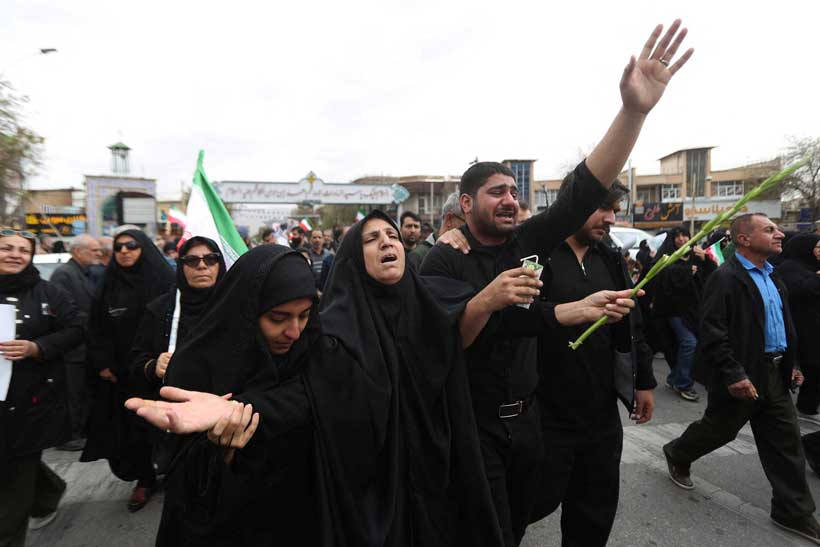
In the dawn of March 2026, the security architecture of the Middle East reached a nadir as the kinetic escalation between Israel and Iran, compounded by United States strategic intervention, intensified to unprecedented levels. Theoretically, a direct confrontation of this magnitude should have triggered a seismic shift in global public opinion and mobilized collective security mechanisms on a massive scale. However, reality on the ground reveals a disturbing anomaly. News of ballistic missile exchanges is now received by the global community not as a moral alarm, but as a mere routine digital notification. Amidst an instantaneous flood of information, a wide gap has emerged between the gravity of the geopolitical situation and the superficiality of the public’s emotional response. Humanitarian urgency is now frequently submerged in the cacophony of an ever-shifting daily information flow.
This phenomenon is a manifestation of fatigue of outrage—a condition where the capacity for collective empathy undergoes erosion due to exposure to consecutive crises. As noted in the Digital News Report 2024 by the Reuters Institute, there is a rising trend of selective news avoidance, where audiences begin to emotionally withdraw from news that triggers anxiety or feelings of helplessness. We are no longer in an era where outrage serves as the engine of change. Instead, we have entered a phase of systemic moral paralysis. The argument stands that the existential threat to world peace today is not merely the explosion of bombs in conflict zones, but the collective normalization of violence itself.
I. The Normalization of Anarchy in the Digital Landscape
In contemporary discourse, this moral fatigue is not simply a matter of individual psychology but a transformation in how the world constructs the reality of war. When interstate conflicts involving nuclear powers begin to be regarded as background noise, the international order is essentially facing a silent moral apocalypse. This normalization creates a vacuum for state actors to operate without significant public pressure, as they realize that global attention now has a remarkably short shelf life.
Stay ahead of the geopolitical week.
MD Briefing delivers expert analysis across five global fronts — the Indo-Pacific, energy, geoeconomics, European security, and the Middle East — every Monday morning. Free.
We are no longer in an era where indignation catalyzes reform; rather, we have transitioned into a state of systemic moral paralysis. The existential danger to global stability is no longer just the tactical strikes in disputed territories but the widespread normalization of such brutality. Under the shadow of a pseudo-stability, our informational and political ecosystems have gradually blunted the human conscience, turning tragedy into routine and transforming outrage into a quiet exhaustion.
II. The Anatomy of Conflict and the Paradox of Information Fatigue
The conflict between Israel and Iran is not merely a new chapter in Middle Eastern military history; it is an extreme test of global psychological resilience. Statistically, the volume of digital engagement regarding this escalation reaches its peak within mere hours of the first projectile’s launch, yet this engagement is notoriously ephemeral. This phenomenon aligns with research on the economics of attention, which indicates that while social media platforms facilitate instantaneous global reach, they also contribute to a decay of attention where public interest in geopolitical crises evaporates as quickly as it emerges. Yet, a troubling paradox exists in modern communication sociology. The exponential increase in information volume no longer correlates with the intensity of public emotional response. This aligns with the theory of psychic numbing proposed by psychologist Paul Slovic (2007), which argues that the larger the scale of a tragedy, or the more routinely we are exposed to it, the more our cognitive ability to respond to that suffering as a moral urgency diminishes.
In this context, the world’s collective fatigue is exacerbated by what may be termed as information inertia. This refers to a condition where an excessive flow of information actually inhibits an actor’s ability to make decisions or react. This concept is rooted in Alvin Toffler’s (1970) theory of information overload and redeveloped within the context of contemporary digital crises. As the global community is incessantly bombarded with overlapping images of destruction, from Ukraine to Gaza, and now Tehran, a process of emotional devaluation occurs for each event. War, in a saturated digital ecosystem, is no longer perceived as a unique humanitarian tragedy but has been reduced to a repetitive information commodity. As confirmed by the Reuters Institute, selective news avoidance has become a self-defense mechanism for 39% of global audiences who feel defeated by an information burden that triggers a sense of helplessness.
III. The Inertia Trap: Cold Logic Behind the Tragedy
Behind the lethargy of public response lies a fundamental shift in how conflict is constructed through language. The phenomenon of outrage fatigue does not occur in a vacuum; it is the product of a deepening collective acceptance of the logic that violence is a permanent fixture of the world order. When exchanges of fire between great powers are normalized as strategic calculations for survival, the humanitarian dimension is automatically marginalized. War is no longer understood as a civilizational failure to be halted but as a rational geopolitical routine. This acceptance reflects what classical realists like John Mearsheimer (2001) describe as the tragedy of great power politics, where empathy is often sacrificed for the sake of an illusory security stability.
This inertia is intensified by the linguistic constructs used by political elites and the media to frame violence in sterile terms. We are often presented with euphemisms designed to dull sensitivity, such as surgical strikes, strategic deterrence, or neutralizing assets. The use of such language constitutes a form of linguistic anesthesia—a concept rooted in George Orwell’s (1946) critique in his essay Politics and the English Language. Orwell argued that political speech is designed to make lies sound truthful and murder respectable. In a modern context, technical military jargon serves to distance the audience from the reality of blood and civilian suffering on the ground. By transforming human tragedy into mere statistical variables in geopolitical analysis tables, we gradually lose the ability to be disturbed.
IV. Cognitive Burden and the Death of Collective Action
Furthermore, we are trapped in what could be called an empathy logjam. The human psychological capacity has an inherent threshold for processing suffering, and when our information infrastructure imposes a burden beyond that limit, a degradation of emotional value occurs. This fatigue ultimately leads to fatalism, particularly when global mechanisms meant to safeguard peace appear paralyzed in providing tangible solutions. Data from the Global Conflict Tracker (2025) indicates that the effectiveness of the UN Security Council is increasingly hindered by great power polarization, with the frequency of UN Security Council veto usage reaching a decadal high.
This institutional deadlock signals to the public that their outrage is a futile emotional investment. When people see that waves of protest or digital condemnation no longer influence foreign policy or stop projectiles in the sky, they tend to withdraw as a form of psychological self-protection. In social psychology, this is closely linked to learned helplessness, a condition where individuals cease attempting to act because they feel they have no control over a dire outcome. The impact on the global structure is massive. Without consistent public pressure, policymakers lose the moral compass that usually serves as a brake on military ambition. We are facing a systemic bankruptcy of humanitarian values, where the world’s silence signifies not an agreement toward peace, but a resignation to recurring violence.
V. Conclusion: Refusing to be Ordinary
Ultimately, the greatest threat to humanity in the contemporary geopolitical landscape is not the sophistication of nuclear warheads or the precision of ballistic missiles, but the silence of the global conscience. The choice to no longer be shocked, to mute conflict notifications, or to simply regard war as inevitable background noise is a form of silent consent to anarchy. When we allow fatigue to overtake empathy, we are essentially surrendering our right to shape a more just world to those who only understand the language of power.
We stand at a crucial crossroads. The world can continue in this phase of moral exhaustion, or we can choose to reclaim our capacity to be disturbed. Moral outrage is not a futile emotional burden; it is the last fortress that distinguishes a civilized society from organized chaos. Diplomacy without empathy is merely a cold, soulless transaction, and an international order without public sensitivity is but a hollow shell waiting to collapse under its own weight. To refuse to be desensitized to violence is a revolutionary act in the digital age. We must demand transparency beyond the linguistic anesthesia of military elites and insist on effectiveness over paralyzed institutional rhetoric. If we continue to be too tired to be angry, then we must be prepared to accept that war is no longer an anomaly but a new norm. It is time to move from merely consuming information toward restoring the quality of care itself. For amidst the darkening storms of conflict, the only light that remains is our courage to remain uncomfortable in the face of injustice.
