


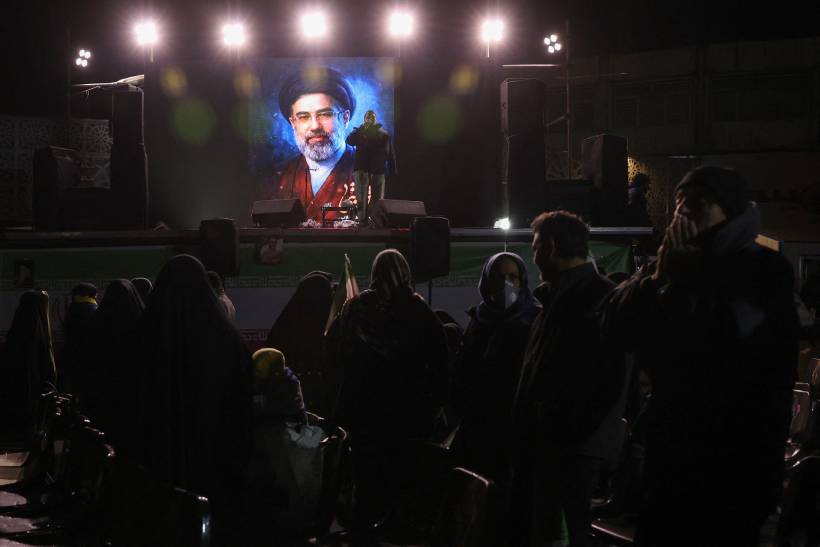
Iran on Monday named cleric Mojtaba Khamenei as the country’s new supreme leader, succeeding his father Ali Khamenei, who was killed during the opening phase of the ongoing U.S.–Israeli strikes against Iran. The decision, announced shortly after midnight in Tehran, signals the consolidation of hardline authority within the Islamic Republic at a moment of intense military and political crisis.
The appointment followed a vote by the Assembly of Experts, the 88-member clerical body constitutionally tasked with selecting Iran’s supreme leader. In a statement, the assembly declared Mojtaba Khamenei the “third Leader of the sacred system of the Islamic Republic of Iran,” granting him ultimate authority over the state’s military, political and judicial institutions.
Mojtaba, a cleric long believed to wield significant influence within the Islamic Revolutionary Guard Corps and Iran’s internal security apparatus, had been widely viewed by political insiders as a leading contender to succeed his father even before the current war erupted. His elevation effectively places the leadership of the Islamic Republic in the hands of a figure closely associated with the country’s most powerful security networks and economic institutions.
Escalation of the U.S.–Israel–Iran Conflict
The leadership transition comes amid an expanding conflict between Iran, Israel and the United States. Israeli and U.S. forces launched coordinated strikes on Iranian military and nuclear-related infrastructure more than a week ago, triggering a wave of Iranian retaliatory attacks across the region.
Stay ahead of the geopolitical week.
MD Briefing delivers expert analysis across five global fronts — the Indo-Pacific, energy, geoeconomics, European security, and the Middle East — every Monday morning. Free.
The death of Ali Khamenei in one of the initial strikes dramatically accelerated Iran’s succession process. Despite threats that the meeting could be targeted, the Assembly of Experts convened on Sunday to select a new leader.
Iranian officials quickly moved to project stability following the announcement. Senior commanders of the armed forces and the Islamic Revolutionary Guard Corps pledged allegiance to Mojtaba Khamenei, signalling that Iran’s powerful security establishment remains aligned behind the new leadership.
At the same time, tensions with Washington and Tel Aviv continue to intensify. U.S. President Donald Trump suggested over the weekend that Washington should have influence over Iran’s leadership transition, while Israeli Prime Minister Benjamin Netanyahu vowed to continue attacks against Iran’s ruling establishment.
Israel has also continued targeting senior Iranian officials. Israeli forces reported killing Abolqasem Babaian, recently appointed head of the supreme leader’s military office, in a strike on Saturday.
Oil Shock and Global Market Reactions
The widening war has begun to reverberate across global energy markets. Oil prices surged sharply on Monday amid fears of supply disruptions and potential threats to shipping through the strategically vital Strait of Hormuz, the narrow waterway through which roughly a fifth of the world’s oil passes.
Brent crude rose to more than $108 a barrel, while U.S. crude futures climbed more than 20 percent in early trading. The surge pushed oil above $100 for the first time since 2022, triggering declines in Asian equity markets and sending investors toward the dollar as a safe haven.
The spike reflects growing concerns that prolonged fighting could disrupt energy infrastructure across the Gulf region. Recent strikes have already damaged storage facilities and raised the risk of further attacks on refineries, pipelines and export terminals.
Regional Fallout and Diplomatic Strain
The conflict has also prompted security concerns across the Middle East. The United States ordered the departure of non-essential diplomatic staff from its embassies in several regional countries, including Saudi Arabia, Qatar, Kuwait, Jordan and Bahrain, citing heightened threats from Iranian retaliation.
Saudi authorities reported intercepting a drone targeting the diplomatic quarter in Riyadh, an area that hosts many foreign embassies. Meanwhile, Iran has continued launching missile and drone attacks against U.S. and allied facilities across the region in response to the strikes.
Iran’s foreign ministry condemned the latest attacks on oil storage facilities in Tehran as a “dangerous new phase” of the conflict, accusing Israel of committing war crimes.
Analysis: A Dynastic Turn and Hardline Consolidation
The elevation of Mojtaba Khamenei represents one of the most consequential political developments in Iran since the establishment of the Islamic Republic in 1979. While Iran’s constitution does not formally allow dynastic succession, the transition from Ali Khamenei to his son effectively introduces a quasi-hereditary element into the country’s leadership structure.
For decades, Mojtaba Khamenei has operated largely behind the scenes, cultivating relationships within the Revolutionary Guard, the Basij militia and the clerical establishment. His rise suggests that Iran’s security elite prioritised continuity and internal cohesion over broader political legitimacy during a moment of existential crisis.
The decision also indicates that hardliners remain firmly in control of Iran’s political system despite the shock of losing its long-serving supreme leader. Rather than opening space for moderates or reformists, the succession appears to strengthen the influence of the military-security establishment that has increasingly shaped Iran’s domestic and foreign policies.
Regionally, the leadership change could harden Iran’s strategic posture. Mojtaba is widely believed to support a more confrontational stance toward Israel and the United States, particularly through the use of regional proxy networks and asymmetric warfare.
At the same time, the succession occurs under extraordinary wartime conditions, meaning the new leader’s immediate legitimacy will depend heavily on his ability to maintain regime stability and manage the conflict. If the war escalates further or significantly damages Iran’s economy and infrastructure, the leadership transition could become a focal point for internal political tension.
Globally, the development underscores how the conflict is beginning to reshape geopolitical and economic dynamics beyond the battlefield. Rising oil prices, diplomatic evacuations and the possibility of disruptions in the Strait of Hormuz all point to the risk that a regional war could rapidly evolve into a broader international crisis.
In that sense, Mojtaba Khamenei’s appointment is not merely a domestic leadership change. It marks the beginning of a new and potentially more volatile phase in Iran’s political trajectory and the wider Middle Eastern security landscape.
With information from Reuters.
