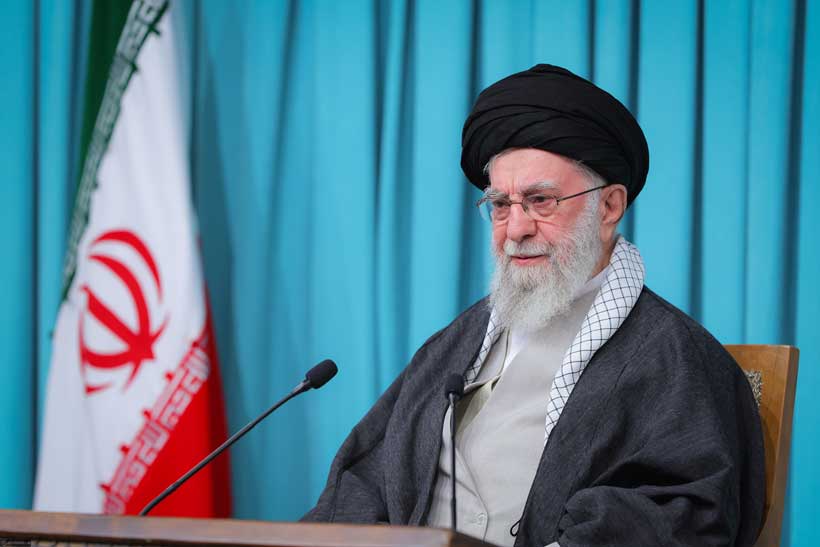
Iranian clerics are close to naming a successor to Ayatollah Ali Khamenei, who was recently killed in U. S.-Israeli strikes. The clerical body responsible for this decision is preparing for an announcement potentially as soon as Sunday. The situation is tense as both Israel and the U. S. have vowed to continue their operations and target anyone involved in selecting the new leader.
The supreme leader in Iran holds significant power, a position established after the 1979 revolution by Ayatollah Ruhollah Khomeini. This role is based on the principle of vilayat-e faqih, meaning that an experienced cleric should have control until the return of the missing Shi’ite Muslim 12th Imam. The new supreme leader, like previous ones, will need to be a senior cleric and will be the ultimate authority overseeing the elected president and parliament. However, the new leader will face immediate challenges in asserting authority due to the current instability.
The Iranian constitution requires a new leader to be chosen within three months. In the interim, a temporary leadership council comprising President Masoud Pezeshkian, Guardians Council member Ayatollah Alireza Arafi, and Judiciary chief Ayatollah Gholamhossein Mohseni-Ejei has been formed. The Assembly of Experts, made up of about 90 senior clerics, is responsible for choosing the new leader but has been conducting its discussions online due to ongoing strikes. The assembly’s choice will likely be influenced by the senior figures who have remained in power under Khamenei, particularly Ali Larijani, a significant powerbroker.
Several candidates have emerged for the leadership position. Mojtaba Khamenei, Ayatollah Khamenei’s son, is seen as a leading contender, despite the regime’s general opposition to hereditary succession. Hassan Khomeini, the grandson of the revolution’s founder, may appeal to those wanting a reformist approach. Other candidates include Arafi and Mohseni-Ejei, who are known for their hardline views, and senior clerics Ahmad Alamolhoda and Mohsen Araki, both influential in politics. Former president Hassan Rouhani could be a candidate but lacks support from hardliners.
The Islamic Revolutionary Guards Corps, which plays a crucial role in Iranian politics, is expected to influence the choice of the new leader. However, their capacity to assert power has been weakened by recent U. S. and Israeli strikes, which have decimated their leadership. The Guards, which differ from the regular military by answering only to the supreme leader, have both political and economic power in Iran.
Iranians do have a say in governance through elections for the president and parliament, who serve four-year terms. Nevertheless, trust in these electoral processes has eroded over time, and the selection of candidates is controlled by the Guardians Council, restricting options to those aligned with the ruling authorities. Thus, while President Pezeshkian is part of the interim leadership, his actual influence on the situation remains uncertain, particularly following a recent retraction regarding the war’s management. The ongoing conflict and clerical influences present a complicated landscape for the selection of the new supreme leader.
With information from Reuters