


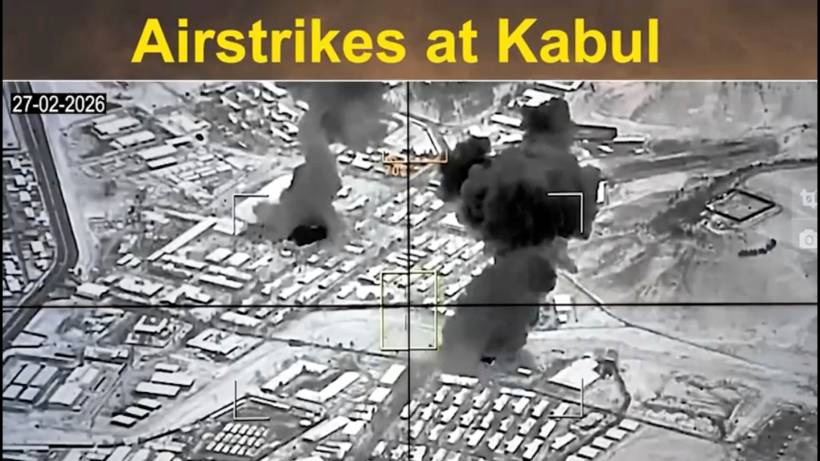
Heavy shelling and explosions along the Pakistan-Afghanistan border have pushed hundreds of families to flee their homes, as fighting between Pakistani and Afghan forces entered its seventh consecutive day on Wednesday. The conflict, the worst along the border in years, has compounded an already tense regional environment, exacerbated by U.S. and Israeli military actions in the Middle East and longstanding insurgent activity in both countries.
Historical Context of Border Tensions
The Pakistan-Afghanistan border, stretching roughly 2,600 km, has long been a flashpoint for military and militant clashes. Both countries accuse the other of harboring armed groups responsible for attacks across the border. Pakistan has consistently claimed that Taliban elements and other militant organizations in Afghanistan carry out raids and bombings in its northwest provinces. Afghanistan, now under Taliban governance, denies providing material support to these groups but insists on the sovereignty of its territory against cross-border incursions.
The current escalation follows Pakistani airstrikes on major Afghan cities last week, marking a sharp intensification in hostilities. Islamabad insists its operations aim to dismantle militant networks targeting Pakistan, while Afghan officials say the strikes constitute an unprovoked aggression. This cycle of accusation and retaliation has worsened after decades of fraught relations, contributing to a humanitarian crisis for border communities.
Impact on Civilians During Ramadan
The timing of the clashes has compounded human suffering. Residents report that fighting often intensifies in the evenings, coinciding with iftar, the breaking of the Ramadan fast. Families are forced to eat under the constant threat of shelling, and many have begun fleeing their homes in search of safety.
Stay ahead of the geopolitical week.
MD Briefing delivers expert analysis across five global fronts — the Indo-Pacific, energy, geoeconomics, European security, and the Middle East — every Monday morning. Free.
Farid Khan Shinwari, a resident of Landi Kotal near the Torkham crossing, described the ordeal: “There is complete silence in the day, but the moment we sit for iftar dinner, the two sides start shelling. We open our fast in extremely difficult situations, as you never know when a shell can hit your house.”
Reports indicate that more than 1,500 families have been displaced, many living under makeshift tents on open fields with minimal shelter. Afghan civilians have experienced similar upheavals, underscoring the cross-border human impact of the conflict.
Military Developments and Casualties
The week-long fighting has ebbed and flowed, with both sides claiming tactical gains and heavy losses inflicted on the other. Afghan forces report shooting down a Pakistani drone and capturing seven border posts, while Pakistan struck strategic Afghan military sites, including the Bagram air base north of Kabul, a facility central to U.S. operations during the 20-year war in Afghanistan.
Casualty figures vary. Afghanistan’s defence ministry reported 110 civilian deaths, including 65 women and children, and another 123 wounded. Pakistan’s Information Minister Attaullah Tarar rejected these numbers, asserting that airstrikes targeted only militants and critical infrastructure, with no civilian structures affected. Verification of these figures remains challenging due to restricted access in active conflict zones.
Diplomatic Efforts and Mediation
The violence has prompted international offers of mediation. Turkish President Recep Tayyip Erdogan contacted Pakistani Prime Minister Shehbaz Sharif to offer assistance in reinstating a ceasefire. This comes as other potential mediators have been preoccupied with conflicts in the Gulf region.
Despite such efforts, the fighting continued as both sides reinforced positions and exchanged heavy fire, highlighting the difficulty of immediate resolution. The conflict demonstrates the fragility of peace along the border and the potential for escalation into a broader regional crisis if mediation fails.
Analysis
The escalation along the Pakistan-Afghanistan border underscores the vulnerability of civilians in conflict-prone areas, especially amid overlapping regional crises. The timing during Ramadan adds a poignant dimension to the humanitarian toll, with families caught between religious observances and the dangers of military escalation.
Strategically, the fighting reflects the continuing challenge of controlling cross-border militancy, the limitations of traditional military responses, and the risk that local conflicts may be exacerbated by broader geopolitical tensions, including U.S. and Israeli strikes in the Middle East. The displacement of thousands of families not only threatens immediate survival but also strains social and economic structures in both Pakistan and Afghanistan.
Turkey’s offer to mediate may provide a diplomatic avenue to de-escalate the crisis, but the deep mistrust between Islamabad and Kabul, coupled with ongoing regional conflicts, suggests a durable ceasefire will require sustained international pressure and engagement. The current situation highlights how border disputes and proxy tensions can quickly spiral into large-scale humanitarian and security crises in South Asia.
With information from Reuters.
