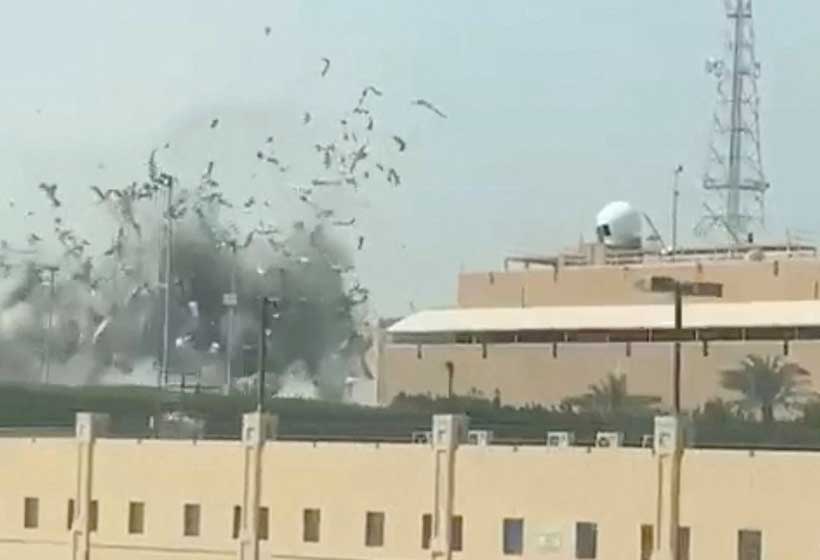
Iran launched missile attacks on several cities in the Arab Gulf on Saturday, causing explosions that frightened residents and disrupted daily life. Countries such as Kuwait, Qatar, the United Arab Emirates, and Bahrain, all with U. S. military presence, reported intercepting these missiles. The UAE noted one death in Abu Dhabi, while fires broke out in Dubai, sending plumes of smoke into the sky.
Iran’s Revolutionary Guards announced that their missiles struck U. S. bases and “occupied territories,” pledging to continue attacks until the enemy is defeated. Following the strikes, leaders from the UAE and Saudi Arabia communicated, stressing the need for restraint and a return to diplomacy. This was significant given the history of tension between the two nations.
Falling debris from intercepted missiles raised safety concerns across the region, with reports of shrapnel landing in Bahrain and cautions issued from Qatar’s authorities. The missile strikes occurred during the holy month of Ramadan, a time when the Gulf is typically quieter, making the violence even more shocking for residents.
Bahrain confirmed that one of its military sites was hit, and there were reports of loud explosions near Abu Dhabi, with residents advised to seek shelter. In Dubai, five explosions were reported, prompting significant disruptions, especially in grocery deliveries. Some suppliers indicated inventory issues, causing concern among shoppers.
Despite the chaos, the UAE government reassured the public that food supplies were adequate and supply chains were functioning normally. They urged people not to panic-buy while confirming that the security situation was stable, and essential services remained operational.
With information from Reuters