


Nepal will head to the polls on March 5 in its first national election since deadly youth-led anti-corruption protests toppled the government of former Prime Minister K.P. Sharma Oli in September.
The unrest, which left 77 people dead and more than 2,000 injured, reshaped the country’s political landscape and energized younger voters. Nearly one million new voters most of them youth have been added to the electoral rolls, bringing the total electorate to about 19 million in the 30-million-strong Himalayan nation.
Voters will elect members to the 275-seat federal parliament. Of those, 165 lawmakers will be chosen through direct constituency contests, while the remaining seats will be allocated under a proportional representation system.
The Main Contenders
At the center of the race is Balendra Shah, the 35-year-old rapper-turned-politician and former mayor of Kathmandu. Running under the banner of the Rastriya Swatantra Party, Shah has emerged as a leading challenger, capitalizing on public anger over corruption and governance failures.
Stay ahead of the geopolitical week.
MD Briefing delivers expert analysis across five global fronts — the Indo-Pacific, energy, geoeconomics, European security, and the Middle East — every Monday morning. Free.
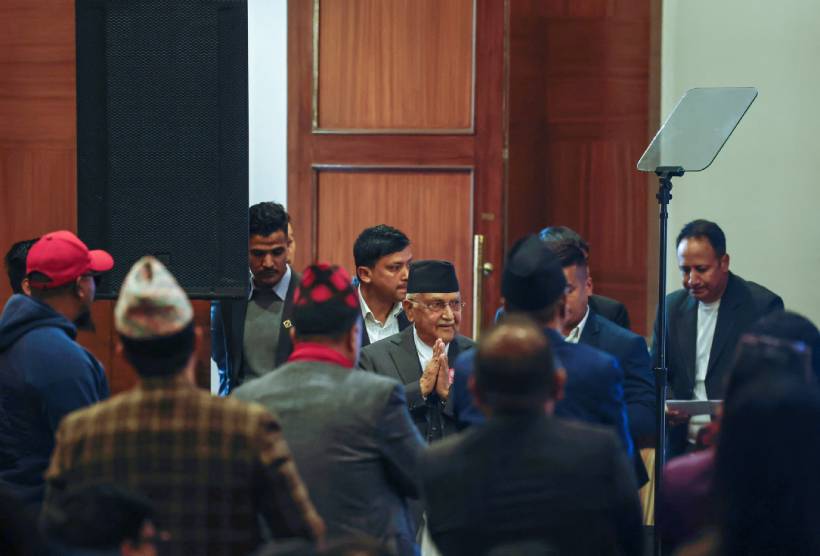
Facing him is Oli, 74, leader of the Communist Party of Nepal (Unified Marxist–Leninist) and a four-time prime minister. Oli is seeking a political comeback after being ousted by the protests. However, he faces an uphill battle to regain support from younger voters who played a pivotal role in his removal.
Other prominent figures include Gagan Thapa of the Nepali Congress, seen as a reform-minded centrist voice, and Pushpa Kamal Dahal, a three-time prime minister who once led a decade-long Maoist insurgency before entering mainstream politics in 2006.
The crowded field reflects Nepal’s fragmented political environment, with 65 parties contesting the election.
What Is at Stake
Corruption and job creation dominate the campaign. Roughly one-fifth of Nepal’s population lives in poverty, and youth unemployment remains high, fueling frustration that boiled over in last year’s protests.
Foreign policy is also a critical issue. Nepal sits strategically between India and China and must balance ties with both powers. India accounts for about two-thirds of Nepal’s international trade, while China makes up roughly 14% and has extended significant loans and infrastructure investments.
Whichever government emerges will need to navigate economic recovery, maintain political stability and manage delicate regional diplomacy.
A Generational Test
This election represents more than a routine transfer of power. It is a test of whether Nepal’s traditional political establishment can withstand the surge of youth-driven reform movements. The addition of nearly one million new voters many mobilized by anti-graft protests could reshape parliamentary arithmetic and challenge entrenched party structures.
For established leaders like Oli and Dahal, the vote is about political survival and legacy. For newcomers like Shah, it is an opportunity to convert protest momentum into governing authority.
The outcome will determine not only who leads Nepal’s next government but also whether the country moves toward political renewal or returns to familiar power dynamics in a region where stability remains fragile.
With information from Reuters.
