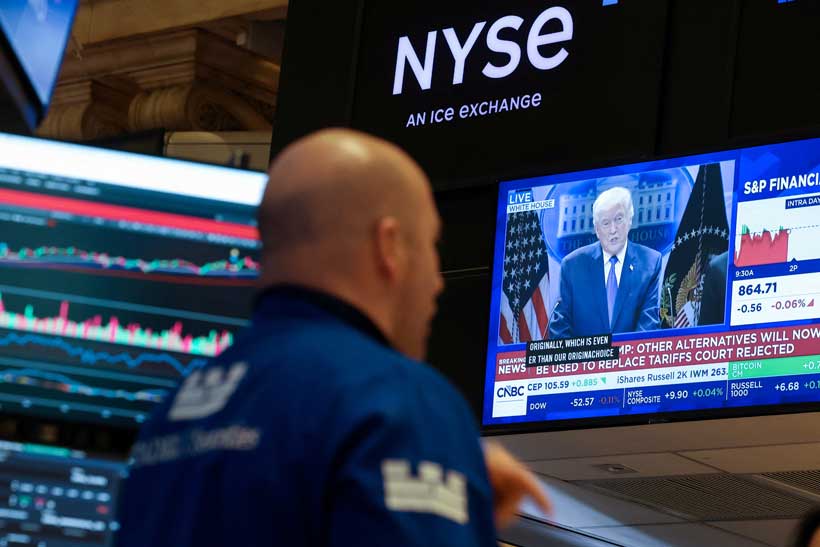
The U. S. Supreme Court has ruled that tariffs imposed by President Donald Trump under an economic emergency law were illegal, amounting to about $175 billion. The court did not provide guidance on how to refund these illegal tariffs, and when asked, Trump mentioned the likelihood of prolonged legal battles.
Tariffs are collected when an importer pays an estimated amount and posts a bond with the Customs and Border Protection agency, with a final determination made later. Importers had attempted to halt this process while the Supreme Court reviewed the case, but their request was denied. Justice Brett Kavanaugh, in a dissenting opinion, highlighted that the ruling could lead to complications in handling refunds, which could be challenging. The case is now back with the Court of International Trade to address the refunds.
Over 1,000 lawsuits for refunds have already been filed by importers, and many more are expected. The court previously ruled that it could instruct the government to reopen final tariff determinations and issue refunds with interest, a power the Trump administration did not contest. To receive refunds, each importer may need to file a lawsuit in the Court of International Trade within two years, raising concerns that smaller businesses might forgo refunds due to the high costs of legal fees.
There is a precedent for handling large-scale refunds, as seen with a 1986 harbor maintenance tax case overseen by the Court of International Trade. Trade experts mentioned that improved recordkeeping by the government could help in determining refunds. However, some companies might not receive refunds if they were not the importers of record, leading to potential disputes over who gets the money. As a result, some companies are selling their potential claims to investors, with warnings that the refund process could take years.
With information from Reuters