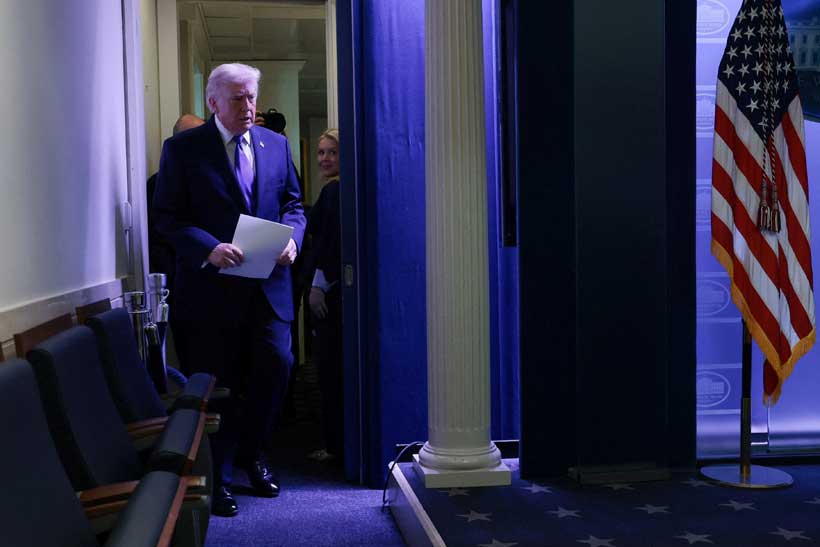
President Donald Trump has escalated tensions between the United States and Iran, prompting concerns about military action amid political pressures related to the upcoming midterm elections. Despite a significant military buildup in the Middle East and plans for potential airstrikes, Trump has not provided a clear rationale to the American people for this aggressive stance, which marks the most direct threat to Iran since the 1979 Islamic Revolution.
Trump’s focus on foreign policy, particularly military action, has taken precedence over domestic issues like the economy, which polls indicate are the primary concern for voters. A senior White House official noted that there is no unified agreement within the administration regarding an attack on Iran, and aides are wary of alienating undecided voters who prioritize economic stability.
Advisers emphasized the importance of focusing on economic achievements during a private briefing, signaling that Trump’s administration is aware of the risks associated with military aggression. There is a fear that a drawn-out conflict could harm Trump’s and the Republicans’ political standing, especially since many in his base are skeptical of foreign military engagements, having supported Trump for his promise to end “forever wars. “
Meanwhile, Republicans plan to campaign on tax cuts and measures aimed at reducing housing costs and prescription drug prices. Trump faces a more complex situation with Iran than he did with Venezuela, where he faced less dissent over military action. If the U. S. goes to war with Iran, it could pose greater challenges due to Iran’s military capabilities.
Trump has repeatedly threatened Iran over its nuclear program, warning that the country needs to negotiate a fair deal. The U. S. has already targeted Iranian nuclear sites, and Iran has threatened severe retaliation if attacked again. Public sentiment is skeptical of entering another foreign conflict, and Trump’s administration struggles to present a clear message that links military action to domestic security and economic stability.
Historically, foreign policy concerns have not been major deciding factors in midterm elections. However, with significant military assets deployed in the region, Trump may feel pressured to take military action unless Iran agrees to his demands, which so far appear unlikely.
The reasoning behind potential military action from Trump has varied. Initial threats were linked to Iran’s crackdown on protests, while more recent claims involve demands for Iran to halt its nuclear program and contemplate regime change. Critics point to a lack of clarity in these threats compared to past war justifications, such as those made by George W. Bush before the Iraq invasion.
Strategists emphasize that midterm voters, particularly independents, will be closely monitoring Trump’s approach to Iran and his justification for military action if it occurs.
With information from Reuters