The Indo-Pacific is a regional flashpoint that could see several potential armed conflicts if missteps are taken and de-escalation and deterrence are not applied. Two conflicts the world has its eyes on are the Taiwan Strait and the South China Sea, both of which have seen more diplomatic and hybrid aggression by China.
Amid other regional conflicts in Latin America and the Middle East that have stretched U.S. force projection thin, allied unity and defense spending to fill key security gaps will become a top priority. Nevertheless, the United States has seen friction with key European partners who have the force projection to backfill key waterways in the Indo-Pacific.
A divergence in unity, mutual understanding of obligations, and lack of coordination could help China bolster its confidence to try to force its will onto Asian allies before Beijing’s window of regional hegemony closes.
The Trump Admin’s Split with London and Paris
Against the backdrop of the Second Trump Administration, the current President of the United States has made a mandate for all NATO members and treaty allies to increase defense spending, which the European member states have agreed to implement. Still, two major diplomatic incidents brought American-European relations to a low point not seen since the Iraq War.
Trump’s push for American control over Greenland, a territory part of the Kingdom of Denmark covered in Article 5 mutual defense, nearly caused a major rift within NATO as Copenhagen and Stockholm dumped several bonds. Trump himself directly warned Europe not to continue with that policy.
Ultimately, through mediation, Trump opted for an agreement of full sovereign base access, which is already a template from the 1951 treaty with Denmark made by former President Harry Truman.
Lastly, Trump’s attacks against NATO member contributions in the Afghan War caused an uproar amongst citizens of European countries, to which Trump’s allies in France and the UK were forced to push back, particularly as the UK and France have made up a heavy bulk of direct NATO-led operations out of the United States.
China’s Potential Calculus
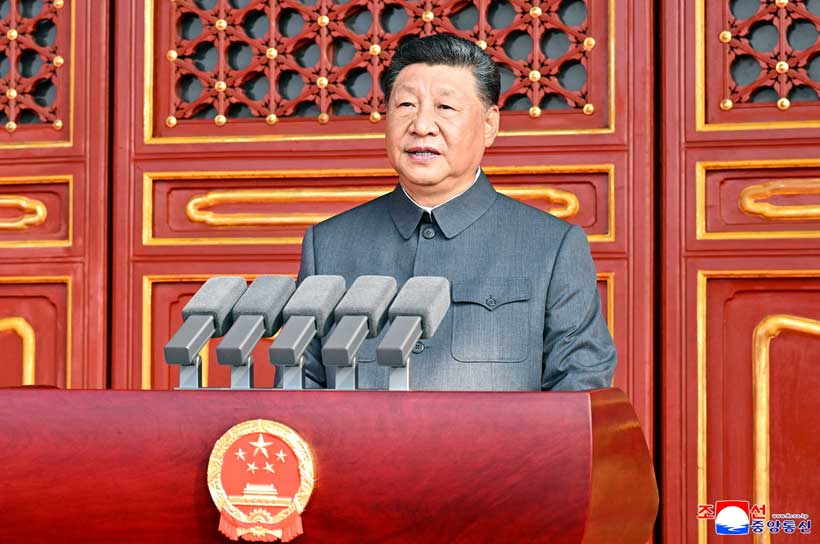
Xi Jinping, the chairman of China’s Communist Party, has made it his mission to unify Taiwan either through coercive diplomacy or military action. During Xi’s decade-long rule, the Chinese navy (PLAN) has rapidly grown and outproduced more naval ships than any other country—America included.
Using America’s overstretched military ventures in the Middle East since 2010, China has dramatically increased hybrid warfare and grey zone activities in the Taiwan Strait and East and South China Seas against Taiwan, Japan, and the Philippines, respectively.
Washington redirected assets to the Indo-Pacific during the Obama Administration’s continued strategy of ‘rebalance to Asia,’ which counters Beijing’s expansion. A major focus of the pivot was enhancing the mutual defense pacts with Indo-Pacific allies, a growing presence of more U.S. forces in the region, and cementing ironclad commitments to counter China’s influence.
Currently, outside of America, countries such as Japan and the United Kingdom have expressed interest in military intervention in a Taiwan emergency, which changes China’s calculus on a closing window. Furthermore, Japan, France, and the U.S. have increased patrols in the South China Sea, further prohibiting the PLAN’s freedom of movement.
Nevertheless, another potential prolonged American military conflict in the Middle East, lack of production in the U.S. Navy, divergence among allies, and the 2026 National Security Strategy that focuses on the homeland could change China’s calculus. Xi could see one last opportunity to militarily advance his ambitions in either the Taiwan Strait or South China Sea with American overextension, as Washington has not been on the same page as its traditional allies lately.
Security Gaps in the Indo-Pacific: France and the UK Backfill
Despite many European allies lacking capabilities or influence to help Indo-Pacific allies deter Chinese aggression, both the United Kingdom and France have a continuous presence in the region that, at times, helps backfill U.S. forces elsewhere.
As mentioned before, the UK is one of the countries that no longer keeps an ambiguous stance regarding Taiwan’s defense against China. The British Armed Forces routinely hold military exercises with Japan and Australia, and London makes up one-third of the AUKUS submarine pact.
Routinely patrolling the Indo-Pacific with their own carrier strike groups, London also engages in soft power acquisitions with the Association of Southeast Asian Nations (ASEAN) to counter Chinese influence. Now, halting the Chagos Archipelago deal with U.S. backing, the UK can enhance cooperation with America in the region.
Outside the United States, France has the second biggest Western reach in the Indo-Pacific due to the number of islands in the region that are part of the country. French Polynesia, New Caledonia, and La Réunion incorporate France’s Exclusive Economic Zone (EEZ), and all three territories hold French bases for force projection.
In 2025, a French carrier strike group conducted joint patrols alongside the Japanese Maritime Self-Defense Forces and the U.S. Seventh Fleet in the Philippine Sea. Concurrently, France’s security and coordination ties with Vietnam in the South China Sea are a blow to Chinese rapprochement.
France is also a security member that counters North Korean maritime smuggling to enforce United Nations sanctions and exported forty patrol vessels to the Philippines, which helps Manila counter the PLAN’s growing naval force.
Amid Naval Shortages, Coordination with Allies Provides Deterrence
China’s military expansion not only coincides with the divergence of U.S. focus in Asia but also with the lack of production in American naval yards. Over the past decade, Washington has failed to meet key production goals, such as littoral combat ships, destroyers, and nuclear submarines.
The Ensuring Naval Readiness Act and SHIPS Act are prominent kick-starts to help revive U.S. naval growth, along with direct support from Asian backers such as Japan and South Korea. Nevertheless, the U.S. will need smoother cooperation with the UK and France, which are not only some of the few NATO members to have force projection but also a foothold in the Indo-Pacific.
Until American naval readiness is at its peak and America’s allies are on the same page as everyone was previously, China will calculate that the next two to three years may be the best time to enact its ambitions in the Indo-Pacific. If the U.S. finds itself intertwined in the Middle East or Latin America again, French and British naval presence in the Indo-Pacific will be needed.
Why American Friction with France and the UK Could Change China’s Calculus in the Indo-Pacific
The Indo-Pacific is a regional flashpoint that could see several potential armed conflicts if missteps are taken and de-escalation and deterrence are not applied.