


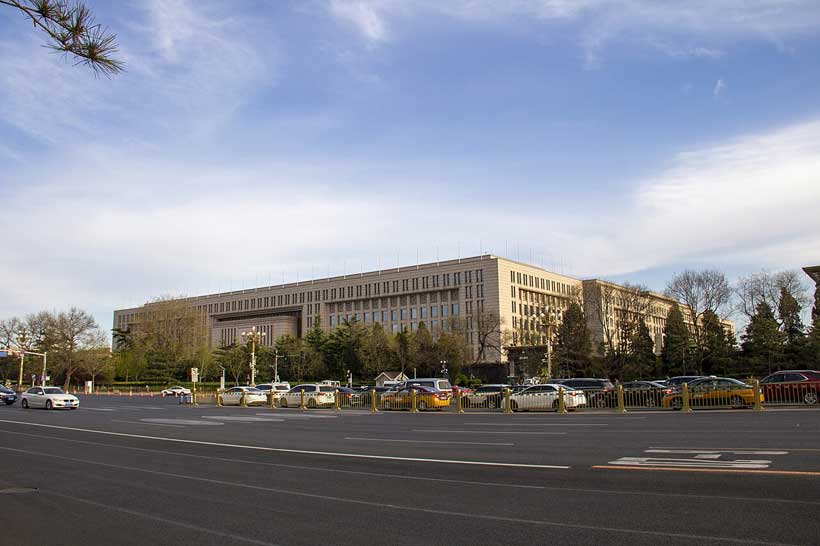
The Ninth Bureau (Bureau 9) of the Chinese Ministry of State Security (MSS) is a high-level intelligence agency focused on counter-espionage. Its role has grown in the Middle East, particularly in Iran and Egypt, to protect China’s economic and strategic interests. The Chinese Bureau of State Security primarily counters Mossad operations by strengthening security coordination with Cairo and Tehran to secure China’s Belt and Road Initiative projects and deploy Chinese defense technology within Egypt and Iran. This aims to reduce the effectiveness of Israeli infiltration of Chinese interests in both countries.
The Ninth Bureau (Bureau 9) of the Chinese Ministry of State Security, which functions as the Chinese intelligence agency known as the “MSS,” is considered one of the most sensitive units within the Chinese Ministry of State Security. Its primary function is to monitor American intelligence and military activities, especially those targeting China and its allies and partners worldwide, particularly in areas of sensitive Chinese influence in the Middle East, such as Egypt and Iran, and to protect Chinese interests in Tel Aviv. Its primary role is to combat foreign espionage and monitor foreign intelligence activities targeting Chinese interests or its strategic partners. Here, the Ninth Bureau of the Chinese Ministry of State Security acts as a technical intelligence shield aimed at fortifying the Egyptian-Chinese partnership against Israeli espionage or sabotage attempts through the Israeli Mossad, with a particular focus on technical and cyber aspects.
The Chinese Ninth Bureau also works to curb Israeli Mossad operations inside Iran by providing close Chinese monitoring of Mossad infiltration into Iran, especially after the Israeli operations against Tehran and its sensitive facilities in 2005. Here, the Chinese Ninth Bureau seeks to support Iranian agencies by exchanging intelligence information and providing advanced technologies to protect defense and nuclear facilities and to prevent the collapse of their security systems that threaten Chinese interests. Following a similar Chinese strategy to counter Israeli intelligence espionage against Chinese interests in Tel Aviv, the Chinese Ninth Bureau works to protect China’s technological and smart investments in Israel, such as the ports of Haifa and Tel Aviv, from Israeli or American counterintelligence penetrations, ensuring the confidentiality of sensitive Chinese technology.
In this context, the Ninth Bureau of the Chinese Ministry of State Security seeks to enhance China’s strategic security in Egypt. The bureau focuses on protecting maritime routes, the Suez Canal, and Chinese logistics projects in Cairo, such as the Suez Canal Economic Zone and TEDA’s projects, primarily by strengthening counter-espionage efforts against Israel in North African countries. Here, the Ninth Bureau specifically targets securing vital Chinese infrastructure through counterintelligence operations to limit any competing Israeli, American, or Western influence that could harm China’s growing influence in the region. This is the same point raised by the Israeli newspaper “Israel Hayom” in a report published in 2025, citing Israeli security sources who expressed concern about joint meetings between high-ranking Egyptian and Chinese officials. These meetings reportedly addressed advanced Chinese arms deals for Egypt, including warships and advanced Chinese air defense systems. The Israeli newspaper, quoting Israeli military and security officials, expressed apprehension that the Egyptian army might diversify its arms sources, particularly from Beijing, as part of a new Egyptian military policy aimed at reducing its dependence on the United States, the traditional arms supplier to the Egyptian army. This reliance stems from US restrictions on certain military exports to Egypt, imposed to ensure Israel’s qualitative military edge in the region. Israeli intelligence, as expressed in publicly published reports in Tel Aviv, fears that Egyptian-Chinese talks and deals are not limited to the arms sector alone but also encompass other areas that deeply threaten Israeli national security. These include joint Egyptian-Chinese military training, most notably the “Eagles of Civilization” joint Egyptian-Chinese exercises and maneuvers from April to May 2025, technological cooperation in electronic warfare and surveillance systems, and the transfer of advanced Chinese military technology to Egypt. Consequently, the Chinese Ninth Bureau is monitoring and countering Israeli Mossad operations in Cairo by strengthening security coordination with Egypt to secure Chinese “Belt and Road” projects in Egypt and providing a defense technology system to prevent Mossad intelligence penetrations in Cairo.
Stay ahead of the geopolitical week.
MD Briefing delivers expert analysis across five global fronts — the Indo-Pacific, energy, geoeconomics, European security, and the Middle East — every Monday morning. Free.
The Ninth Bureau of the Chinese Ministry of State Security plays a significant role in monitoring Israeli Mossad activities against Egypt. This role is highlighted in the following points, according to intelligence and analytical data for 2025 and 2026, through Tracking Israeli Intelligence Infiltration of Egypt: The Ninth Bureau monitors Mossad attempts to infiltrate personnel or institutions cooperating with China in Egypt, especially given the recent increase in military and intelligence cooperation between Cairo and Beijing. The Chinese Ninth Bureau also works on countering technical and cyber espionage of Chinese activities within Egyptian and Iranian territories: The Ninth Bureau contributes to providing the Egyptian side with closed Chinese technologies and systems that are “impenetrable” to Israeli or Western software. This is an approach that China has also begun implementing in other countries, such as Iran, to neutralize Mossad’s technical capabilities. The Ninth Bureau of Intelligence in China is currently focused on protecting Chinese military technology in Egypt, particularly given Egypt’s acquisition of advanced Chinese air defense systems, such as the HQ-9B and J-10C fighter jets.
The Ninth Bureau is tasked with preventing Mossad from accessing the technical details of these weapons or attempting to disable them electronically. This explains Israel’s growing concern regarding this intelligence cooperation between China and Egypt.
The Chinese Ninth Bureau is also working on intelligence sharing with Egypt. Reports indicate a significant shift in the level of coordination between the Chinese Ministry of State Security and the Egyptian General Intelligence Directorate in 2025-2026. Information is being exchanged regarding agent movements and suspicious activities that may aim to destabilize the region or harm shared interests. Here, the Ninth Bureau of the Chinese Ministry of State Security is actively monitoring what is known as “gray warfare” or “gray security” and the private intelligence companies that Mossad might use as cover for its activities in Africa and Egypt.
In this context, the Ninth Bureau of the Chinese Ministry of State Security is conducting extensive operations to counter Mossad’s regional operations and infiltrations in Egypt and Iran. The Ninth Bureau of the Chinese Ministry of State Security (MSS) is waging a silent and comprehensive intelligence war to undermine Mossad operations, particularly in Iran, considering Israeli infiltration a threat to its strategic interests. The Ninth Bureau is working to uncover spy networks and thwart operations launched from neighboring Asian countries against Tehran, all within the framework of protecting Beijing’s regional partnerships. The Chinese Ninth Bureau’s role is focused on countering Mossad within the Middle East, specifically to protect China’s strategic partners, such as Egypt and Iran. Here, the Chinese move, through its Ninth Bureau, aims to support Iran in confronting the deep Israeli penetrations revealed by the 2025 operations. These operations followed Israel’s strikes and targeting of Iranian infrastructure and nuclear reactors due to the increasing Israeli penetration of Tehran. The Ninth Bureau, affiliated with the Chinese Ministry of State Security, monitors and analyzes the activities of the Israeli Mossad and dismantles Israeli spy networks that use neighboring countries as platforms to carry out operations inside Iran.
Beijing views the Mossad’s success in penetrating Iran and its ally Egypt as a direct threat to China’s direct interests. This compels China to intensify its efforts to counter Israeli intelligence, which it refers to in intelligence circles as “countering Pandora’s box of risks.” To this end, the Chinese Ninth Bureau is intensifying its security cooperation with both Egypt and Iran. The Bureau operates within a comprehensive Chinese strategy in Cairo and Tehran to enhance the intelligence security of Chinese partnerships in the Middle East, particularly in Egypt and Iran. In addition to the silent war China is waging against the Israeli Mossad, which aims to contain Israeli intelligence influence and ensure the stability of its economic and political partners in the region.
Generally, the Ninth Bureau in China is an administrative term used to describe units affiliated with various security and government ministries, each with a specific intelligence or protective role. The most prominent of these is the Ninth Bureau of the Ministry of State Security (MSS), also known as the Counter-Dissent and Counter-Espionage Bureau. Its main tasks focus on protecting Chinese personnel by preventing foreign intelligence agencies from recruiting MSS employees or Chinese officials working abroad and securing diplomatic missions by countering surveillance, wiretapping, and infiltration operations that may target Chinese embassies and consulates worldwide. In addition to its significant role in monitoring Chinese students abroad, the Ninth Bureau of the Chinese Ministry of State Security includes a special department dedicated to tracking Chinese students studying abroad to prevent their recruitment or joining democratic organizations opposed to the regime.
The Ninth Bureau of the Chinese Ministry of Public Security (MPS) also works to protect China internally. This bureau is associated with the Central Guard Bureau of China and is responsible for protecting China’s top leadership: playing a major role in securing senior members of the Chinese Communist Party and their families, as well as visiting foreign dignitaries. (Securing sensitive locations): overseeing the security of vital areas where leaders reside or work, such as the “Zhongnanhai compound in Beijing.” As for the (organizational model of the Chinese Ninth Bureau): it was designed based on the model of the Ninth Directorate of the former Soviet “KGB intelligence agency.”
The historical context of the Ninth Politburo of the Chinese Ministry of State Security is highlighted through several factors. In political literature, the term sometimes refers to the Ninth Politburo of the Communist Party of China, elected in 1969 following the Ninth National Congress of the ruling Communist Party of China. This bureau represented the highest executive authority of the party during that historical period. The Ninth Politburo of the Chinese Ministry of State Security is a key intelligence agency specializing in tracking American activity and monitoring US intelligence operations against China. Its role focuses on analyzing and penetrating US intelligence networks and operations and providing strategic reports to decision-makers in Beijing regarding threats and covert activities undertaken by Washington. The Ninth Politburo’s primary function is specifically to monitor, analyze, and counter US intelligence activity both within and outside China, with the aim of protecting Chinese national security by understanding and limiting US espionage capabilities. This falls within China’s strategic context and is part of the escalating geopolitical competition between China and the United States. Beijing is monitoring Washington’s global activities, particularly in areas of direct Chinese influence, where this bureau is believed to play a pivotal role in the counter-espionage war between the two countries.
The Ninth Bureau of the Chinese Ministry of State Security is traditionally known for its focus on counter-espionage and protecting Chinese missions abroad from infiltration. However, recent reports have increasingly highlighted its role in the context of China’s indirect confrontation with Israel. The most prominent aspects of this role include purging Chinese technology and that of China’s allies in the Middle East, such as Egypt and Iran, of Israeli software. In a notable development in early 2026, Chinese authorities, in coordination with intelligence agencies, instructed domestic companies in China to immediately cease using Israeli and American cybersecurity software. Due to concerns about the existence of (backdoors) that would allow the Israeli Mossad or the CIA to infiltrate Chinese infrastructure. This Chinese measure included programs from more than 10 major companies in a significant Chinese intelligence move aimed at thwarting any Israeli espionage attempts through technology supplied to China.
To this end, the Ninth Bureau of the Chinese Ministry of State Security is working to counter Mossad’s regional operations within the Middle East, specifically in Egypt and Iran, as they are the most important regional partners for China’s interests in the Middle East. Intelligence and analytical reports indicate that the Ninth Bureau and Chinese security agencies are closely monitoring Mossad infiltrations in the region, especially in Iran and Egypt, through monitoring Israeli infiltration into Egypt and Iran. China is closely monitoring the extent of Israeli intelligence penetration into Chinese economic interests in Egypt and within sensitive Iranian facilities, considering it a “Pandora’s box of global security risks.” Therefore, China is working to provide indirect intelligence support to Egypt and Iran by strengthening technical cooperation with both countries and other regional states. This cooperation aims to help them uncover and neutralize Israeli and Western intelligence operations that seek to destabilize the region and undermine China’s interests and its Belt and Road Initiative.
The most important aspect remains the role of Bureau 9 of the Chinese Ministry of State Security in securing Chinese assets in Israel. Given the massive Chinese investments in Israeli infrastructure, such as ports, Bureau 9 focuses on ensuring that these projects are not used as platforms for espionage against China or as leverage during crises. It also works to counter counter-espionage against Chinese interests. In Tel Aviv, Bureau 9 protects Chinese employees and students in Israel from recruitment attempts by Israeli security services, particularly the Mossad.
The role of the Chinese Ministry of State Security’s Bureau 9 in Tel Aviv has become increasingly prominent in recent years, particularly following the Gaza War in October 2023. This activity is part of the broader context of China’s stance on Israeli policies. Bureau 9’s operations are part of a more assertive Chinese policy toward Israel since 2024, characterized by strong diplomatic opposition to Israeli military operations and China’s public support for Palestinian rights in international forums. This is further compounded by growing Israeli concerns that Chinese technologies sold to Israel could be used to gather intelligence for Beijing or its regional allies, such as Iran.
Based on the preceding intelligence analysis, we understand the role of the Chinese Bureau 9, specifically as targeting and securing vital Chinese infrastructure through counterintelligence operations in Egypt, Iran, and within Israel itself. This aims to limit any Israeli or Western influence that could undermine China’s growing influence in the region.
