


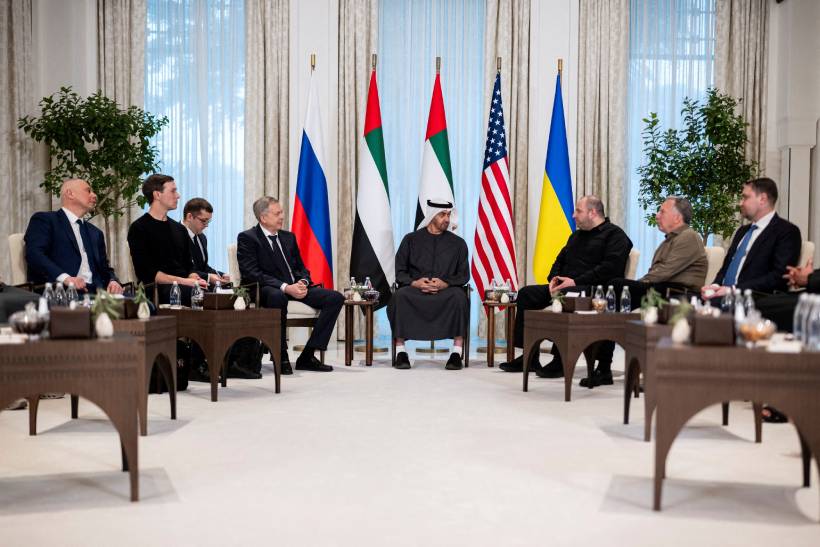
Ukraine and Russia began a second day of U.S.-brokered peace talks in Abu Dhabi on Thursday, aimed at ending Europe’s most destructive conflict since World War II. Both sides described the first day of discussions as productive, focusing on practical steps toward conflict resolution.
Progress Reported by Negotiators
Russian President Vladimir Putin’s envoy, Kirill Dmitriev, said the talks were making “positive movement forward,” including discussions on restoring Russia-U.S. relations through a working group on economic issues. “The more attempts by Europe, particularly Britain, to interfere, the more progress we see,” he added, according to his press service.
Ukraine’s chief negotiator, Rustem Umerov, echoed the positive assessment, describing the talks as “meaningful and productive, focusing on concrete steps and practical solutions.” He said the second day would follow the same format as the first, including trilateral consultations, group discussions, and joint coordination.
Stay ahead of the geopolitical week.
MD Briefing delivers expert analysis across five global fronts — the Indo-Pacific, energy, geoeconomics, European security, and the Middle East — every Monday morning. Free.
Key Issues on the Table
Despite progress in dialogue, major sticking points remain. Moscow demands that Kyiv withdraw its forces from the eastern Donetsk region, including heavily fortified cities that form Ukraine’s core defenses, and seeks control over the Zaporizhzhia nuclear power plant, Europe’s largest, currently under Russian occupation.
Kyiv, however, insists that any settlement should maintain the current front lines and refuses to cede territory unilaterally. Ukraine also demands control of the Zaporizhzhia facility. Analysts note that Russia currently occupies about 20% of Ukrainian territory, including Crimea and parts of the Donbas region, with modest territorial gains of roughly 1.5% since early 2024.
Context and Security Situation
The talks come amid continued military activity, though reports of attacks have been lighter. Heavy Russian airstrikes hit Ukraine overnight on Tuesday ahead of the meetings, while Thursday saw fewer incidents. Kyiv’s mayor reported two injuries from a drone strike in the capital overnight.
Analysis: High Stakes and Diplomatic Pressure
The inclusion of Russian military teams in this round of negotiations marks a departure from previous talks, signaling a potential willingness to discuss security arrangements directly. The U.S., under President Donald Trump, has pushed both sides toward compromise, but deep divisions over territory and nuclear facilities pose significant obstacles.
Observers say that while the talks are a positive step, any meaningful agreement will require careful balancing of Kyiv’s territorial sovereignty with Moscow’s demands, and a mechanism to prevent further escalation, particularly near sensitive infrastructure like the Zaporizhzhia plant.
With information from Reuters.
