


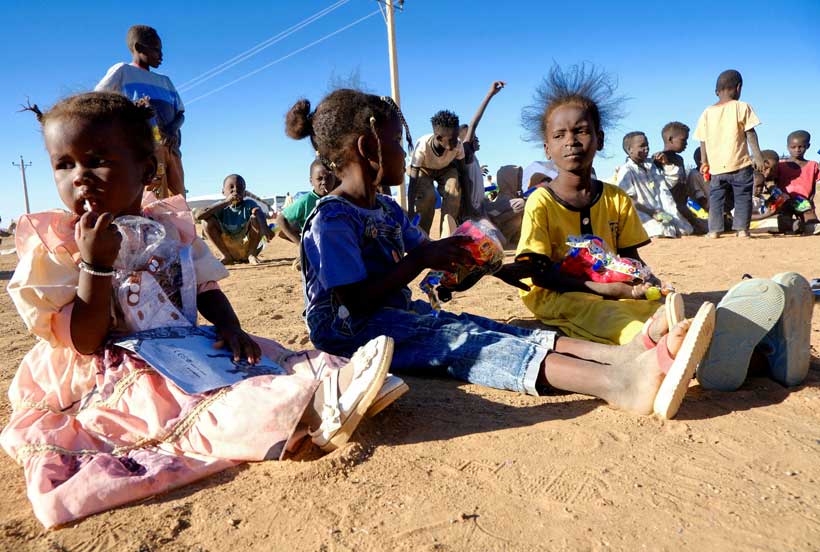
Witnesses report that the Rapid Support Forces (RSF), a Sudanese paramilitary group, have abducted children during attacks in Darfur, including their takeover of al-Fashir in October. The RSF has been at war with Sudan’s army since April 2023 over control of the country, which is rich in mineral resources, arable land, and strategic Red Sea ports. According to interviews conducted by Reuters with more than two dozen witnesses who fled to northern Darfur or eastern Chad, at least 56 children, ranging from two months to 17 years old, were abducted in separate incidents. In some cases, the children’s parents were killed before the abductions, and the RSF allegedly told families the children would be used as slaves or to herd livestock.
Nature of the Abductions
Witnesses described children being taken at gunpoint or after seeing their parents killed. Several recounted that the fighters referred to the children as “falungiat,” a derogatory term, and forced them into labor roles such as tending animals, echoing patterns of slavery perpetrated by the RSF’s predecessor, the Janjaweed militias, during the early 2000s Darfur conflict. The abductions took place both in al-Fashir and along routes to towns like Tawila, where large numbers of displaced people are sheltering. Families who witnessed the kidnappings were often threatened or coerced, and some abducted children were used as leverage for ransom.
Legal and Human Rights Concerns
International law experts say the abductions may constitute unlawful imprisonment, torture, war crimes, and crimes against humanity, and could also amount to enslavement. The International Criminal Court is investigating alleged crimes committed by the RSF in al-Fashir, particularly targeting women, girls, and children. Humanitarian agencies, including UNICEF, noted that while the specific use of children as slaves has not been independently verified, the reports are consistent with broader patterns of grave violations against children in Sudan.
Historical Context
The RSF evolved from the Janjaweed militias, which fought alongside government forces under former President Omar al-Bashir and were accused of genocide in Darfur. During that earlier conflict, children were abducted for domestic labor, livestock herding, or sexual exploitation. Many of the practices now reported mirror those historical abuses, highlighting a continuity in the RSF’s methods of exerting control through fear and coercion.
Stay ahead of the geopolitical week.
MD Briefing delivers expert analysis across five global fronts — the Indo-Pacific, energy, geoeconomics, European security, and the Middle East — every Monday morning. Free.
Implications and Analysis
The abductions underscore the severe humanitarian crisis in Darfur, where tens of thousands have died, famine and disease are widespread, and civilians remain highly vulnerable. Using children as hostages or forced laborers deepens social trauma and may entrench cycles of exploitation and recruitment into armed groups. The RSF’s tactics consolidate its territorial control while undermining governance, complicating any efforts toward peace and reconciliation. Internationally, these actions may intensify scrutiny from the United Nations and the ICC, but enforcement faces significant challenges in the context of ongoing conflict. Analysts warn that without intervention, these violations could become systemic, echoing the atrocities of the past and prolonging instability in the region.
With information from Reuters.
