


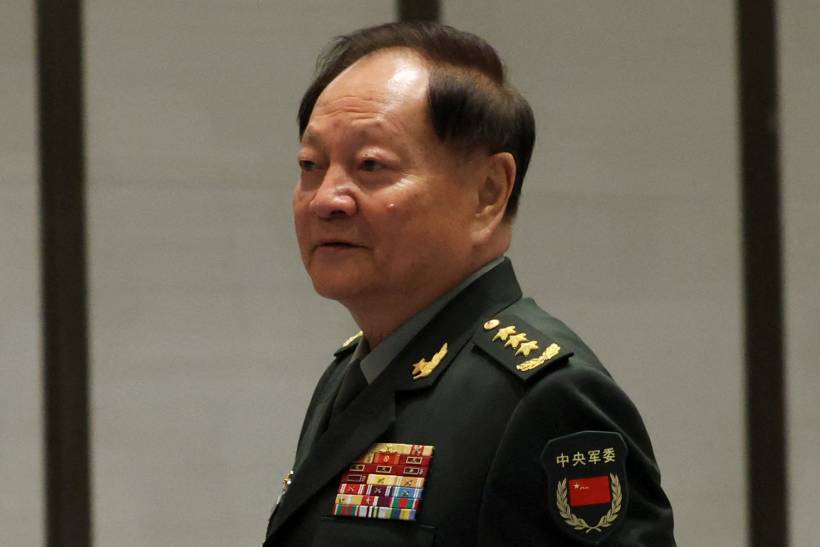
China’s decision to place its most senior uniformed officer under investigation marks a dramatic escalation in President Xi Jinping’s long-running anti-corruption campaign. The probe into General Zhang Youxia, Xi’s long-time ally and vice-chairman of the Central Military Commission (CMC), signals that even personal loyalty and shared revolutionary lineage no longer guarantee protection. For analysts, the move underscores how Xi’s consolidation of power has entered a new and more uncompromising phase.
Why Zhang Youxia’s Fall Is So Significant
Zhang was not just another senior officer. As a fellow “princeling” and veteran of China’s last major war, he embodied continuity, trust, and experience within the People’s Liberation Army (PLA). Xi’s decision to retain him beyond the customary retirement age in 2022 had been widely interpreted as proof of their closeness. His sudden investigation therefore represents a profound political shock, breaking an implicit rule that Xi’s innermost circle was untouchable.
From Anti-Corruption to Absolute Control
Officially, Zhang is accused of “serious violations of discipline and law,” language commonly used in corruption cases. But experts argue that corruption is often a vehicle rather than the true motive. By invoking violations of the “Chairman Responsibility System,” state media framed the issue as one of loyalty and obedience, implying that Zhang may have accumulated influence beyond what Xi deems acceptable. The message is clear: authority in the PLA flows exclusively from Xi, and any deviation—real or perceived—will be crushed.
A Hollowed-Out High Command
The investigation into Zhang, alongside that of another senior officer, Liu Zhenli, has effectively paralysed the CMC, shrinking it from seven members to a shell dominated by Xi himself. This raises serious questions about command-and-control in the world’s largest military. With so many senior officers purged in recent years, the pool of experienced and politically “safe” replacements has narrowed, increasing opacity and centralisation at the very top.
Stay ahead of the geopolitical week.
MD Briefing delivers expert analysis across five global fronts — the Indo-Pacific, energy, geoeconomics, European security, and the Middle East — every Monday morning. Free.
Short-Term Stability, Long-Term Risk
Paradoxically, the purge may reduce China’s appetite for major military action in the near term. Analysts suggest that a depleted and reorganising leadership is unlikely to oversee a complex operation such as an invasion of Taiwan. Large-scale initiatives, joint training, and operational planning may slow as Xi rebuilds the military hierarchy, possibly waiting until the next Party Congress to install a fully vetted leadership team.
Preparing for a More Dangerous Future
Yet this pause should not be mistaken for restraint. The longer-term goal appears to be a PLA that is leaner, more disciplined, and more personally loyal to Xi. Once the leadership is reconstituted, China’s military could emerge more cohesive and potentially more formidable. The crackdown is less about weakening the PLA than about remaking it in Xi’s image.
Personal Analysis
Xi’s move against Zhang Youxia marks a decisive break from factional balancing and personal trust toward pure political control. It reinforces a system where loyalty to the party and ultimately to Xi himself trumps experience, relationships, and even shared revolutionary credentials. In the short run, this creates uncertainty and may dampen China’s capacity for external escalation. In the long run, however, it suggests something more unsettling: a military stripped of internal counterweights and shaped to obey a single centre of authority. “Nobody is safe” is not just a warning to elites it is the operating principle of Xi’s China.
With information from Reuters.
