


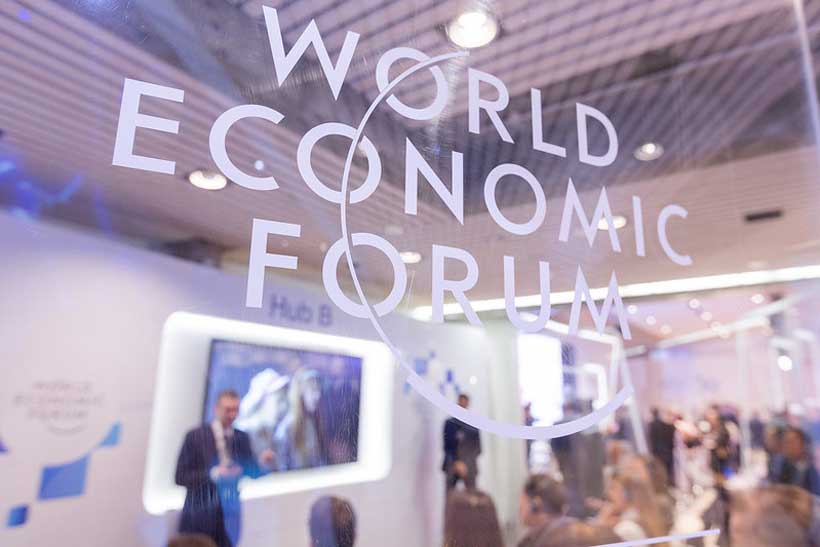
China participated in the World Economic Forum 2026 in Davos, Switzerland (held from January 19 to 23, 2026, under the theme “Spirit of Dialogue”) with a high-level delegation headed by Chinese Vice Premier “He Lifeng”. China, as a major global economic power, participated in the World Economic Forum, focusing on strengthening international cooperation and providing a strong boost to the global economy amidst uncertainties. At the final meeting of the 2026 World Economic Forum in Davos, China emphasized the importance of dialogue and its determination to achieve high-quality growth. China’s active participation in the World Economic Forum was marked by the presence of Vice Premier He Lifeng, who attended the 2026 World Economic Forum Annual Meeting in Davos, Switzerland, from January 19 to 22, 2026. China’s participation focused on several key themes, most notably the call for multilateralism. China emphasized the importance of practicing genuine multilateralism and promoting an open, inclusive, and resilient global economy. China also advocated for growth and stability in the global economy, aiming to provide greater stability and positive momentum to the global economy, which is currently facing uncertainty and weak growth. Furthermore, China supported bilateral cooperation mechanisms during its active participation in the World Economic Forum in Davos, Switzerland. On the sidelines of the forum, Chinese Vice Premier He Lifeng met with Swiss officials to discuss expanding cooperation and achieving mutually beneficial outcomes, particularly on the tenth anniversary of the innovative strategic partnership between the two countries.
China’s strategy at the Davos Forum in Switzerland revolves around several key pillars for confronting geopolitical challenges and supporting the Global South. The most prominent of these is supporting and strengthening multipolarity through China’s pursuit of its vision of a “community with a shared future for mankind” as an alternative to models based on unilateral hegemony. This emphasizes the necessity of building an open and inclusive international system based on justice and equality, rather than confrontational blocs. Furthermore, China’s role in supporting the “Global South” is highlighted, where it emerges as a strategic partner for developing countries. Through initiatives such as the Global Development Initiative and the Belt and Road Initiative, China enhances these countries’ ability to withstand Western and American economic pressures and achieve technological and developmental independence, free from dependency.
At the 2026 Davos Summit in Switzerland, China also seeks to challenge US financial dominance globally. The year 2026 is expected to witness a significant expansion in the internationalization of the digital yuan, such as the e-CNY via platforms like mBridge.
This provides alternative settlement channels that reduce reliance on financial systems dominated by the US dollar, serving as an effective tool to counter sanctions and economic pressures.
Stay ahead of the geopolitical week.
MD Briefing delivers expert analysis across five global fronts — the Indo-Pacific, energy, geoeconomics, European security, and the Middle East — every Monday morning. Free.
Furthermore, at the 2026 Davos Summit in Switzerland, China aims to lead global growth. Estimates at Davos 2026 indicate that China alone contributes 22.6% to global economic growth, thus strengthening its influence in shaping new international economic rules in cooperation with other emerging powers such as India and Indonesia. With China’s commitment to supporting a policy of technological and green dialogue, it is using the Davos platform to showcase its leadership in artificial intelligence and clean energy, emphasizing international cooperation in setting technical standards to prevent Western powers from monopolizing these future sectors. This Chinese role comes at a time when the forum is warning of escalating “geoeconomic confrontations” in 2026, as Beijing attempts to present the “spirit of dialogue” as a tool for stabilizing global supply chains and protecting the interests of developing countries.
To this end, China has been keen to emphasize its global initiatives to serve developing countries of the Global South and the global economy in the face of unilateral American policies and hegemony. China’s participation aligns with its initiatives for global governance, global development, and global security, all of which focus on comprehensive dialogue and cooperation between China, developing countries of the Global South, and all other nations, based on the Chinese principle of a shared future for mankind and mutual benefit for all.
The key economic directions presented by China at the World Economic Forum in Davos were consistent with those it had outlined at previous meetings, such as the “Summer Davos Forum 2025” in Tianjin. Here, China emphasized its focus on a comprehensive global economic transformation, with a particular emphasis on supporting developing countries in the Global South. Its main messages included achieving high-quality development and shifting from a traditional export-led growth model to one based on domestic consumption, advanced manufacturing, and green transformation. Furthermore, China stressed its support for global innovation and artificial intelligence policies through its investment in advanced technologies, such as AI, renewable energy, and electric vehicles, as future growth sectors. China and its political leadership consistently affirmed their firm commitment to an open-door policy and continued integration into the global economy.
Therefore, we understand that China’s role in the World Economic Forum in Davos has been pivotal in shaping global economic dynamics, as Beijing seeks to offer solutions to global challenges while emphasizing the importance of cooperation and dialogue among developing countries of the Global South and all nations, based on the principle of a shared future for humanity, to counter American hegemonic and unilateral policies around the world.
