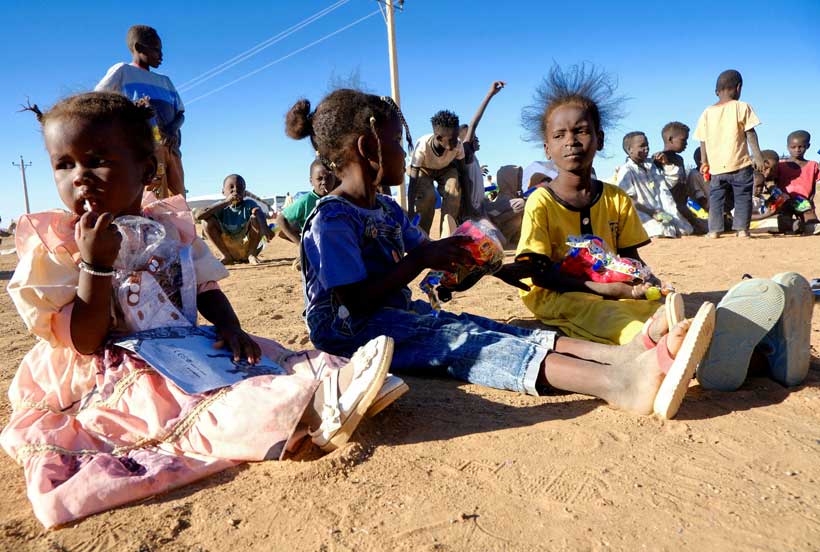
The ongoing war in Sudan is one of the most overlooked conflicts of the 21st century that has implications of spilling over not just on the African continent but on the global stage as well. Susan’s ongoing war is witnessing one of the biggest humanitarian crises today, with upwards of 800,000 to 1 million displaced and seemingly no end in sight to the ongoing battles.
During the autumn of 2025, the Rapid Support Forces (RSF), one of the parties in the civil war, overran El Fasher after a prolonged and intense siege. The aftermath led to severe consequences for the civilian population, evoking comparisons with some of the most tragic events in recent history.
El Fasher has turned into one of the world’s largest graveyards, with an incalculable number of civilians slaughtered, estimated to be in the tens, if not over 100,000, by the RSF paramilitary. Tens of thousands continue to be unaccounted for with no international intervention and empty statements reminiscent of prior global failures from Rwanda.
Fall of El Fasher and Mass Slaughter
The city of El Fasher was besieged by the RSF for 18 months. Their goal was to fully Arabize and partition the Darfur region of Sudan. In late October 2025, the RSF and Janjaweed allies broke through the siege, and the defenses of the Sudanese Armed Forces (SAF) collapsed in the city.
After the immediate capture of El Fasher, the RSF moved to incapacitate any lines of communication. This created a media blackout in the city. What followed was one of the most harrowing massacres of the 21st century.
RSF militiamen went from house to house to find civilians and execute them. The mass killings included humanitarian places of refuge such as hospitals and schools. The RSF’s methods of execution were particularly gruesome or brutal, as militiamen filmed themselves shooting civilians at point-blank range as they begged for mercy and, in some instances, ran over people alive.
Satellite images provided by various think tanks and researchers, such as Vantor, showed the city of El Fasher effectively dead. Furthermore, images of potential mass gravesites and piles of dead were also displayed through satellite imagery.
Scars of Rwanda
The El Fasher massacre not only displays the gruesome nature of the Sudanese Civil War but also unsolved divisions. It is also a haunting reminder of the Rwandan Genocide, which could have been prevented.
In less than two months, over 60,000 to 70,000 residents were killed. To put the mass killing into estimates: at least 1,000 civilians were killed per day. This genocidal mass slaughter occurred at a rate that hasn’t been seen since the mass killings of Tutsis in Rwanda in 1994.
During the Rwandan Genocide, the international community evacuated its citizens and withdrew forces that were needed for deterrence against mass killings, which ultimately repeated again in 2023 when the RSF moved into Khartoum.
Furthermore, the RSF’s affiliation with Janjaweed militias and Russia’s Wagner Group made the paramilitary notorious for its brutality. El Fasher was a safe zone for ethnic Africans whom the RSF and its supremacist allies wanted to ethnically cleanse.
The International Players Behind the RSF’s Rampage
The ongoing Sudanese Civil War is also a quagmire that is drawing in various regional and international actors, who are fueling the conflict and massacres at the expense of Sudanese civilians.
In Africa, the RSF is backed by Eritrea and Ethiopia, as Sudan’s internationally recognized government backed the Tigray People’s Liberation Front (TPLF) against Asmara and Addis Ababa during the Ethiopian Civil War. With Sudan aligned with Egypt, which currently has a longstanding conflict with Ethiopia over the GERD dam, the Ethiopian government is rumored to be sending support to the RSF, akin to how Cairo and Khartoum allegedly supported the TPLF.
Russia’s Wagner Group, now rebranded as the Africa Corps, is also a key backer of the RSF, as the Sudanese paramilitary provides the Russian mercenaries with black-market resources. Alongside oil, Russia fuels its invasion of Ukraine with minerals and gold from Sudanese mines, in which both the Africa Corps and RSF utilize slave labor to extract them.
The involvement of Russian mercenaries has not gone unnoticed, as Ukraine’s own military intelligence (GUR) has sent special forces operatives to combat Wagner/Africa Corps mercenaries in Sudan, which effectively turned the country into a front in the ongoing Russo-Ukrainian War.
The most prominent backer of the Rapid Support Forces is the United Arab Emirates (UAE), which arguably has the greatest vested interests in Sudan. Abu Dhabi wishes to grow its influence in the Arab world and position itself as a regional powerhouse.
Sudan’s rich gold mines and port access are part of the UAE’s endgame, which includes establishing a connecting neighboring bridge in the region. In Yemen, the southern separatists are funded and armed by the UAE, with the Emiratis also supporting the Somali breakaway regions of Somaliland and Puntland. Simultaneously, Khalifa Haftar’s rival, the unrecognized government in Libya, also receives support from Abu Dhabi.
By backing various separatists who are gaining ground in Yemen, Somalia, and Sudan, the UAE looks to have hegemony over the Gulf of Aden. The Red Sea is a major global trading hub.
Policy Recommendations
The international community has repeated many mistakes that have cost the lives of tens, if not hundreds, of thousands of Sudanese civilians, but major global and regional powers have the opportunity to mitigate future El Fasher massacres.
Saudi Arabia reached out to U.S. President Donald Trump to help mediate an end to the war in Sudan. The Saudis can also play a significant role. With Abu Dhabi now challenging Riyadh’s interests in various theaters, the Saudis could try to present a unified regional bloc to counter the UAE-RSF agenda, as other countries like Egypt and Turkey both back the internationally recognized government in Khartoum.
A critical avenue of mitigating future massacres will be maximum pressure on countries that are directly supplying the RSF. During the autumn of 2025, the UK came under pressure to apply a weapons embargo to the UAE due to fears of British weaponry in the hands of the RSF.
Currently, the United States and France maintain strong ties with the UAE, including a military presence in the Emirates. Washington and Paris can use their soft power to reduce support for the RSF in Abu Dhabi. If the UAE continues to inflame tensions, the Emirates largely relies on Western weapons and protection, and an arms embargo could significantly reduce support.
It is now imperative for the international community and global and regional powers to push for an immediate ceasefire, humanitarian aid access, and a cessation of hostilities to avoid a haunting Rwanda 2.0. Rwanda 2.0. As seen with the lack of international oversight, Sudan’s civil war could embroil into something much larger, as seen with Congo post-Rwandan genocide as well.
Scars of Rwanda in El Fasher’s Demise
The ongoing war in Sudan is one of the most overlooked conflicts of the 21st century that has implications of spilling over not just on the African continent but on the global stage as well.