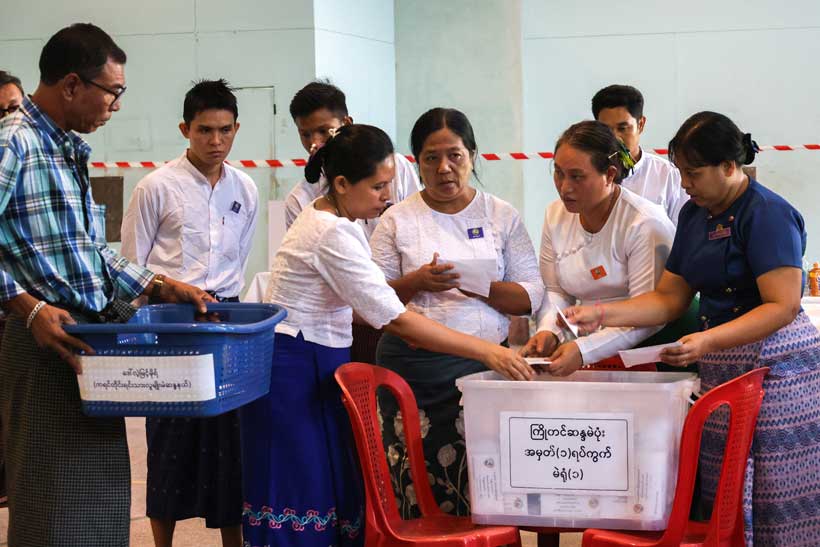
The first round of Myanmar’s general election concluded on Sunday amidst civil war and doubts about its credibility, following a military coup in 2021. The ruling military junta claimed the vote would provide political stability, despite widespread condemnation from the UN, Western nations, and human rights organizations, which argued the election was neither free nor fair. Key opposition figures, including Nobel laureate Aung San Suu Kyi, remain detained, and her National League for Democracy (NLD) party has been dissolved.
The military-backed Union Solidarity and Development Party (USDP), consisting mainly of retired generals, is expected to regain power in these elections, which are designed to maintain military authority. Observers noted that the USDP was notably active during the campaigning period. The 2020 elections had seen an overwhelming victory for Suu Kyi’s NLD, and the USDP was in power before losing control to the NLD.
Reports from various cities indicated significantly lower voter turnout than in previous elections, with many citizens being discouraged from participating. Further election rounds are scheduled for January 11 and 25, covering 265 of Myanmar’s 330 townships, but the junta does not control all these regions. Fighting between military forces and armed groups, along with longstanding ethnic armies, has displaced millions and aggravated the humanitarian crisis in the country.
Junta leader Min Aung Hlaing voted in the capital and answered questions about his ambitions for presidency, stating that the election of a president would follow parliamentary procedures. Despite criticism from the international community, a junta spokesperson remained optimistic about achieving political stability through this election process.
The UN special envoy for human rights criticized the election, saying it does not offer a solution to the current crisis, and called for its rejection. Although the junta admitted that the election faced international backlash, it insisted it would lead to a brighter future for Myanmar.
Compared to previous elections, this election lacked enthusiasm, with low turnout reported even in major cities like Yangon and Mandalay. Some residents mentioned there was no military coercion to vote, though several areas under the influence of local rebel groups boycotted the election entirely. Local reports indicated that many people expressed little interest in participating, highlighting the stark difference from previous electoral contests.
With information from Reuters