


NEWS BRIEF
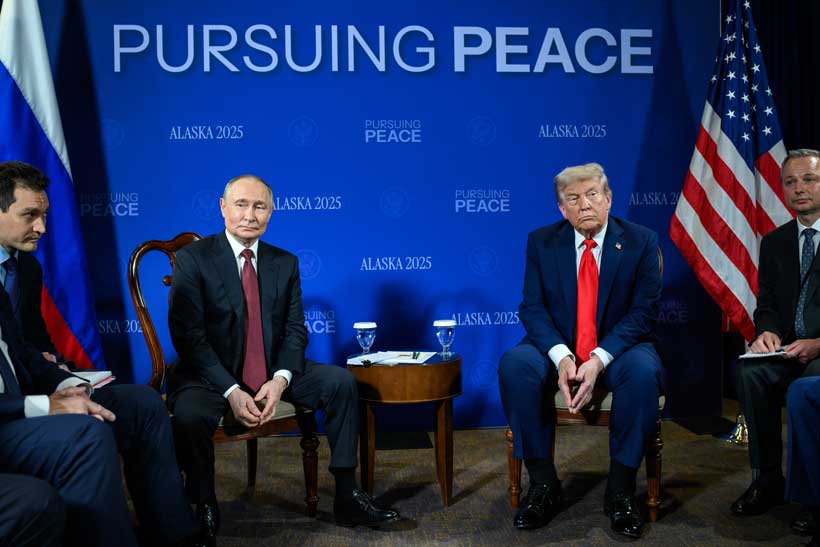
U.S. and Russian officials are set to meet in Florida for high-level talks aimed at ending the war in Ukraine, following separate discussions with Ukrainian and European negotiators. The talks, led by property magnate-turned-diplomat Steve Witkoff and Jared Kushner for the U.S., and Kirill Dmitriev for Russia, seek to narrow gaps in a potential peace deal even as intelligence reports warn that Vladimir Putin remains committed to capturing all of Ukraine.
WHAT HAPPENED
- U.S. and Russian officials will meet in Florida on Saturday for direct negotiations, following U.S.-Ukrainian-European talks on Friday.
- The U.S. delegation is led by Steve Witkoff and Jared Kushner, with possible participation by Secretary of State Marco Rubio.
- Russian envoy Kirill Dmitriev will attend, but no meeting between Russian and Ukrainian negotiators is currently planned.
- U.S. intelligence reports continue to warn that Putin intends to capture all of Ukraine, contradicting public assertions that Moscow is ready for peace.
WHY IT MATTERS
- These talks represent one of the most direct high-level diplomatic engagements between the U.S. and Russia since the war began.
- The involvement of Trump’s inner circle, Kushner and Witkoff, signals a highly personalized, unconventional diplomatic channel.
- Progress on security guarantees for Ukraine remains tentative, with Putin publicly reiterating maximalist territorial demands.
- The meeting tests whether diplomatic outreach can overcome fundamental disagreements on sovereignty, territory, and security.
IMPLICATIONS
- A failed round could harden positions on both sides, leading to renewed military escalation and prolonged conflict.
- Success in securing even limited mutual concessions could pave the way for ceasefire talks, though a comprehensive settlement remains unlikely.
- The U.S.’s role as mediator may strain its alliance with Ukraine if Kyiv perceives Washington pressing for premature concessions.
- Putin’s unwillingness to compromise suggests the talks may serve more to manage, rather than resolve, the conflict ahead of U.S. midterm elections.
This briefing is based on information from Reuters.
