


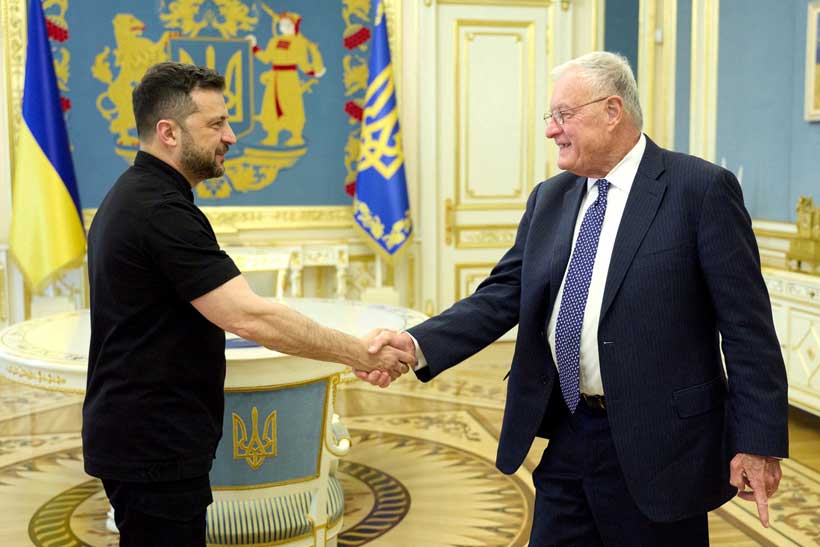
Ukrainian President Volodymyr Zelenskiy resumed peace talks in Berlin with U.S. envoys, including Steve Witkoff and Jared Kushner, following a five-hour session on Sunday. The negotiations come amid Europe’s deadliest conflict since World War Two and focus on ending hostilities, security guarantees, and reconstruction. Ukraine has indicated willingness to drop its NATO membership ambitions in exchange for Western assurances, but key issues, including territorial control and Russian agreement on a ceasefire, remain unresolved.
Why It Matters
The talks coincide with a critical week for Europe, including an EU summit to decide whether frozen Russian assets can underwrite a major loan to Ukraine. The outcome could reshape European security, influence the trajectory of NATO expansion, and determine Ukraine’s sovereignty and territorial integrity. High-stakes negotiations also test Europe’s unity amid criticism from the U.S. over migration, security, and tech regulation.
Key stakeholders include Ukraine and its leadership, Russia and President Vladimir Putin, the United States, European Union leaders and member states, and NATO. Broader regional stability in Eastern Europe, economic reconstruction, and international security guarantees are also on the line.
What’s Next
Negotiators are working on three main documents: a 20-point peace plan, security guarantees for Ukraine, and a reconstruction framework. EU foreign ministers are meeting to agree on new sanctions against Russia, while European leaders continue discussions in Berlin. The coming days will be crucial in determining whether diplomatic breakthroughs can produce a ceasefire or set the stage for further conflict. European and U.S. engagement will be central to shaping Ukraine’s negotiating position and the wider security architecture in the region.
Stay ahead of the geopolitical week.
MD Briefing delivers expert analysis across five global fronts — the Indo-Pacific, energy, geoeconomics, European security, and the Middle East — every Monday morning. Free.
With information from Reuters.
