On 17 November, 2025, the UN Security Council adopted Resolution 2803, endorsing US President Donald Trump’s twenty-point plan for Gaza. The deal promised a ceasefire, an international “Board of Peace,” and a technocratic Palestinian administration. Diplomats in New York spoke of a “historic step.” On paper, Gaza was meant to be moving from war to reconstruction.
Speak to Palestinians in Gaza or in the hills of the occupied West Bank, and the picture looks very different. The language may have changed, but the system that brought them to the edge of destruction is still in place.
In Gaza, a ceasefire has formally been in force since 10 October under Trump’s plan, yet Israeli forces continue lethal raids and tight restrictions on essential aid. Amnesty International now says clearly that Israeli authorities are “still committing genocide” by deliberately inflicting conditions of life calculated to destroy the population, despite the truce. A UN Commission of Inquiry has likewise concluded that Israel’s conduct in Gaza meets the legal test for genocide under the Genocide Convention. A new political framework cannot erase those findings, nor the mass graves and ruined streets that Palestinians live with every day.
While officials in New York debate the “implementation” of the plan, Israel is tightening its grip on the West Bank. In a stark briefing on 14 November, the UN Office of the High Commissioner for Human Rights described masked settlers torching factories, lorries, and homes, attacking farmers, and helping to drive thousands of Palestinians from their communities. The same briefing recorded more than 260 settler attacks in October—the highest monthly figure since 2006—and at least 1,017 Palestinians, including 221 children, killed in the West Bank since October 2023.
Stay ahead of the geopolitical week.
MD Briefing delivers expert analysis across five global fronts — the Indo-Pacific, energy, geoeconomics, European security, and the Middle East — every Monday morning. Free.
For Palestinians, the word “Gazafication” needs little explanation. It means that the model tested in Gaza—siege, bombardment, forced displacement, and long-term dependency—is being applied, slowly but deliberately, to the West Bank. The weapons are not only bombs but also military law, economic strangulation, and the constant threat of settler violence.
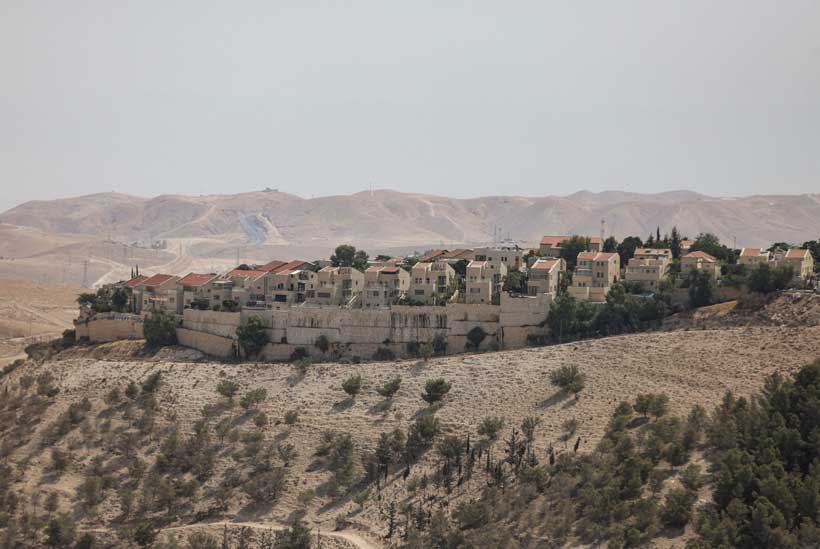
In the villages around new outposts, the pattern is painfully familiar. At first light, while children prepare for school, young settlers walk goats and sheep down from the hill and drive them into Palestinian courtyards and animal pens at gunpoint. They then claim the animals as their own and take them back uphill. When farmers object, it is often they, not the intruders, who face beatings, arrest, or live fire. International volunteers who record these attacks risk deportation. Israeli activists can file complaints, but as one of them put it, “nothing happens, except the outpost gets another road or generator.”
This is not the work of a few rogue extremists. Israeli and international human rights organizations have shown how outposts and settlements form part of a wider strategy of land seizure and demographic engineering. B’Tselem describes settler violence as “an essential part of the state project” that fragments Palestinian territory and blocks real self-determination. Ariel Sharon’s 1999 call to “grab the hilltops” and turn them into “facts on the ground” lives on in the Hilltop Youth, whose legacy is burnt groves, smashed windows, and families pushed off their land.
International law is unambiguous. Forcibly transferring residents within occupied territory is unlawful transfer and a war crime. So too is moving the occupying power’s own civilians into that territory, as the UN human rights office reminded states in November. Yet despite thousands of documented incidents, there is still no serious system for prosecuting individual settlers or the ministers who incite them.
Alongside Palestinian villagers stand small teams from unarmed civilian protection groups. They talk quietly of a “low-level war”: night raids, arbitrary arrests, livestock theft, and the shooting of guard dogs to terrorize families. Their work is to log number plates, film attacks, and, when possible, stand between armed settlers and frightened children. One volunteer recalls being pelted with stones by a teenage settler during a Jewish holiday near an outpost. He left with a serious injury; his Palestinian neighbors had no option to leave at all.
Middle East Monitor’s readers do not need persuading that any just peace must include the restoration of Palestinian rights—the Right of Return, an end to occupation, and a viable state with Jerusalem as its capital. What recent months have shown, however, is how easily words like “peace plan” and “stabilization force” can be used to entrench, rather than dismantle, a system of domination and apartheid.
If there is one clear lesson from Gaza and the West Bank, it is that silence from powerful states invites more violence. When the Security Council endorses a plan that leaves the machinery of genocide and ethnic cleansing intact, it signals to settlers, generals, and ministers alike: carry on. Breaking that cycle will require more than statements. It means ending military support for Israel, backing serious investigations at the International Criminal Court, and putting Palestinian voices at the center of decisions about their own future.
Otherwise, Gazafication will not remain a warning. It will become a map—followed, step by step, to erase a people, one village, one hilltop, one family at a time.