


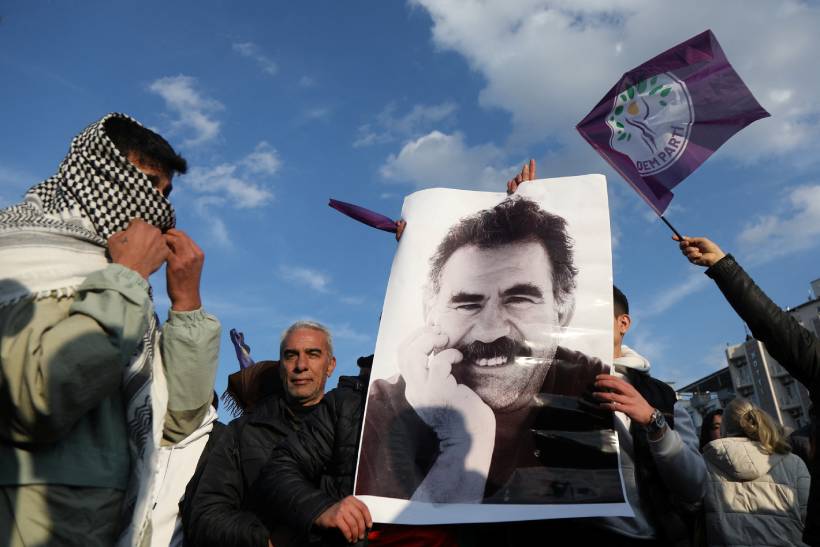
After 26 years in prison, Abdullah Ocalan, the imprisoned leader of the Kurdistan Workers Party (PKK), has emerged as a central figure in Turkey’s bid to end a four-decade-long insurgency. In an unprecedented move, three Turkish lawmakers visited Ocalan at Imrali prison in the Marmara Sea to discuss the PKK’s announced disarmament and disbandment. This follows the PKK’s symbolic burning of weapons in July and the withdrawal of fighters from Turkey, which has brought PKK attacks to a halt. Ocalan’s enduring authority over the group underscores his indispensable role in the peace process, despite his imprisonment since 1999 for treason and separatism.
A DELICATE BALANCING ACT
The peace process requires careful coordination between multiple actors: the Turkish government, Ocalan himself, the active PKK leadership in northern Iraq, and Ocalan-aligned forces in northern Syria. Erdogan has largely remained in the background but has endorsed the parliamentary visits, framing them as accelerating the “elimination of terrorism.” Analysts note that Erdogan may also have political motives, including courting Kurdish support ahead of possible early elections or constitutional reforms.
The May video call transcript between Ocalan and PKK figures offers insight into his influence. Ocalan initiated the call himself, urged the PKK to disband, and emphasized the need for legal and political groundwork to facilitate the reintegration of fighters into Turkey. The transcript also shows PKK leaders expressing skepticism about the state but reaffirming their loyalty to Ocalan, highlighting both his authority and the cautious trust in Ankara’s promises.
POLITICAL AND SOCIAL CHALLENGES
Despite the progress, achieving lasting peace remains complicated. Erdogan’s pro-Kurdish critics and many ordinary Kurds are skeptical of his willingness to enact reforms that enhance Kurdish rights, particularly after years of legal crackdowns on pro-Kurdish politicians. Thousands of Kurds have been jailed, and dozens of mayors and parliamentarians unseated, though the crackdown has paused during the peace talks. The involvement of ultranationalist allies such as Devlet Bahceli, who has endorsed Ocalan’s central role, demonstrates the political tightrope Erdogan must navigate to satisfy multiple constituencies.
Stay ahead of the geopolitical week.
MD Briefing delivers expert analysis across five global fronts — the Indo-Pacific, energy, geoeconomics, European security, and the Middle East — every Monday morning. Free.
OCALAN’S INFLUENCE AND CONDITIONS
Ocalan’s jail conditions have reportedly improved, allowing him some interaction with PKK-linked inmates, access to books and television, and visits from his lawyers. His personal determination to see a democratic resolution of the Kurdish issue remains unchanged, according to his legal team. This resilience, combined with his symbolic and practical authority over the PKK, ensures that he remains the linchpin of any credible peace process.
WHAT’S NEXT
Implementation of the peace plan will require concrete steps, such as legal frameworks to facilitate the return of PKK fighters from northern Iraq and integration into Turkish civil life. Erdogan’s government may also need to consider releasing pro-Kurdish politicians and easing restrictions on Kurdish political activism to secure broader public support. The success of the peace process will depend on Ankara’s ability to balance nationalist sentiment, Ocalan’s authority, and the trust of Kurdish communities wary of past betrayals.
ANALYSIS
Ocalan’s re-emergence as a key negotiator illustrates a paradox in Turkish politics: the person once regarded as the ultimate terrorist is now essential to achieving a “terror-free Turkey.” The process highlights how entrenched conflicts often require engagement with long-excluded actors, no matter how controversial. Erdogan’s cautious facilitation suggests a pragmatic streak, but his political motives particularly the potential electoral gains from Kurdish support could both accelerate and jeopardize the talks. The peace process will likely remain fragile, contingent on legal reforms, PKK compliance, and the Kurdish population’s perception of fairness and security. Ocalan’s personal authority and strategic acumen remain decisive, but the long-term success of the process will ultimately depend on whether Ankara can convincingly translate dialogue into lasting political and social change.
With information from Reuters.
