


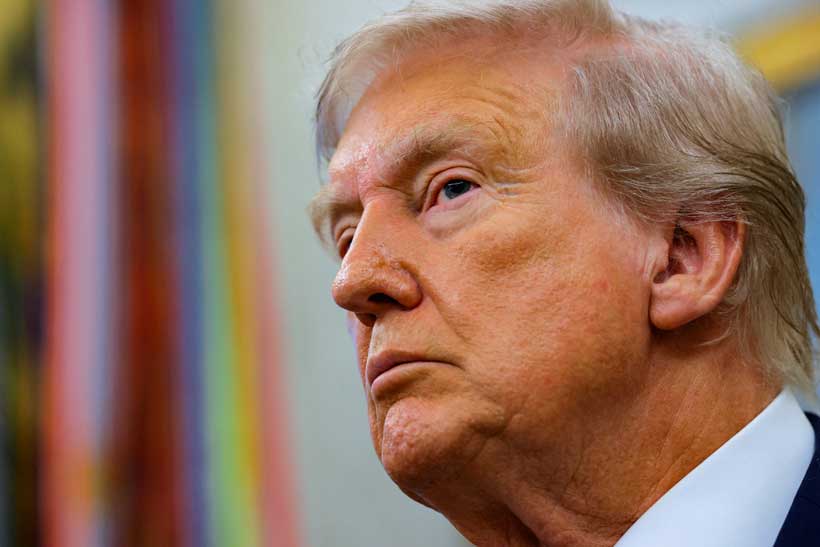
As the U.S. government shutdown enters its fourth week, President Donald Trump has ensured that military personnel, border agents, and law enforcement officers continue to receive their salaries, even as hundreds of thousands of civilian federal employees remain unpaid. This selective approach to funding highlights Trump’s broader political strategy one that places immigration control and national security above other areas of governance. Traditionally, all federal workers are affected equally during shutdowns, but Trump’s method marks a sharp departure from that precedent.
Key Issues
The central controversy lies in Trump’s decision to channel available funds toward agencies aligned with his political priorities, such as the Department of Homeland Security, the military, and the FBI’s field agents, while leaving civilian departments in limbo. Critics argue this creates a two-tiered workforce one favored for its security function, the other neglected despite handling essential public services like social security, IT infrastructure, and air traffic control.
The administration’s redirection of unused or discretionary funds to pay select employees has also raised constitutional questions. Under U.S. law, only Congress has the authority to allocate federal spending. Experts warn that Trump’s unilateral action could undermine this balance of power and set a precedent for future executive overreach.
Why It Matters
The shutdown pay policy offers insight into Trump’s governing philosophy. It shows a willingness to politicize the federal workforce by rewarding employees tied to his central themes of border security and law enforcement, while sidelining civilian workers who maintain nonpartisan, administrative, and social programs. This approach risks eroding the morale and unity of the federal service, fostering resentment between agencies, and damaging the perception of neutrality in government institutions.
Stay ahead of the geopolitical week.
MD Briefing delivers expert analysis across five global fronts — the Indo-Pacific, energy, geoeconomics, European security, and the Middle East — every Monday morning. Free.
Economically, the shutdown is hurting consumer spending and delaying vital public services. Politically, it deepens divisions in Washington, reinforcing Trump’s combative stance toward Democrats and bureaucratic institutions he has long accused of inefficiency or bias.
Reactions have been divided. Civilian workers describe the decision as “divisive” and “disrespectful,” especially those missing paychecks despite being required to work. Unions representing federal employees have condemned the selective pay structure but have stopped short of taking legal action, fearing it would disrupt pay for those still receiving checks.
National security and defense personnel, while grateful for the continued pay, have expressed discomfort at the inequality it has created among colleagues. Legal and political experts, such as Princeton’s Julian Zelizer and George Washington University’s Sarah Binder, warn that the move blurs the line between lawful fiscal management and unconstitutional manipulation of federal funds.
The White House, however, has defended the move, blaming Democrats for the shutdown and framing Trump’s decision as necessary to maintain security and national readiness.
Implications
Trump’s shutdown pay plan risks long-term institutional damage. It fractures the federal workforce, eroding trust between civilian and security sectors. The decision signals to employees that their job security and compensation may depend on political alignment rather than merit or function. This politicization could lead to reduced efficiency, higher attrition, and a loss of nonpartisan professionalism across federal agencies.
Economically, the shutdown delays public services and reduces spending power among federal employees, adding strain to local economies. Diplomatically, it projects instability in U.S. governance, raising doubts among allies about Washington’s ability to maintain administrative continuity during political disputes.
Analysis
Trump’s selective funding strategy embodies his broader leadership style transactional, combative, and symbolic. By ensuring pay for the military and immigration agents, he reinforces his image as a “law and order” president while using the shutdown as leverage against Democrats. However, this approach also reveals the fragility of U.S. institutions when executive power is used to divide rather than unify.
In prioritizing security over service, Trump turns the shutdown into a test of political loyalty. It may rally his base but undermines the apolitical character of federal administration a cornerstone of American democracy. If unchecked, such tactics could normalize future shutdowns as tools of partisan coercion rather than moments of negotiation, deepening distrust in government and weakening its overall capacity to serve the public.
With information from Reuters.
