


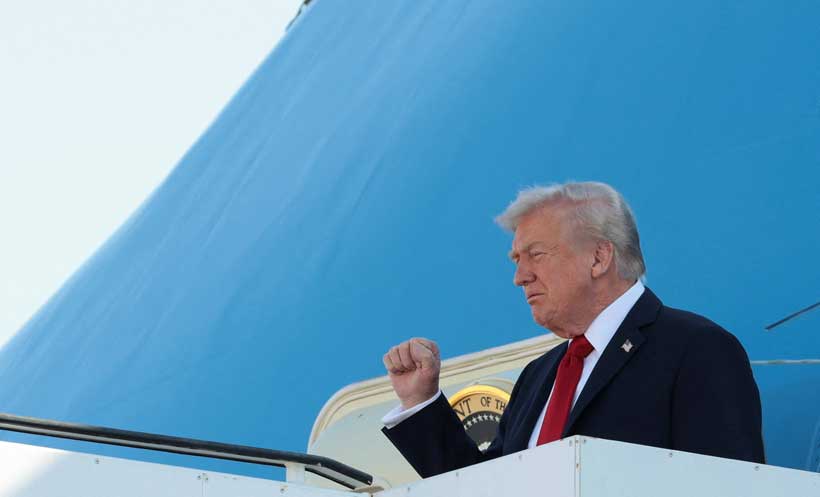
U.S. President Donald Trump secured a major diplomatic milestone with the ceasefire and hostage-release agreement between Israel and Hamas a deal hailed as a breakthrough in a war that has reshaped the Middle East. The accord, signed in Egypt, came after two years of conflict that saw devastating civilian tolls and mounting regional instability. Trump’s challenge now lies in ensuring Israel’s long-term cooperation particularly from Prime Minister Benjamin Netanyahu, whose political survival depends on appeasing Israel’s powerful right-wing factions.
Trump’s success in convincing Netanyahu to accept the framework marks a rare diplomatic victory for Washington, achieved through both political leverage and personal persuasion. However, the road ahead remains fraught, as the plan’s vague terms and the deep mistrust between Israel and Hamas threaten to unravel the fragile progress.
Key Issues
While Trump’s 20-point peace plan calls for Hamas to disarm and play no role in governing Gaza, the group has avoided publicly committing to those provisions. Analysts warn that this ambiguity initially useful in securing signatures could now complicate implementation.
Meanwhile, Netanyahu’s governing coalition is showing cracks. Hardline allies such as National Security Minister Itamar Ben-Gvir and Finance Minister Bezalel Smotrich have denounced the deal, arguing that it rewards Hamas without ensuring Israel’s security. Their opposition could push Netanyahu to harden his stance or even abandon aspects of the accord to maintain political control.
Stay ahead of the geopolitical week.
MD Briefing delivers expert analysis across five global fronts — the Indo-Pacific, energy, geoeconomics, European security, and the Middle East — every Monday morning. Free.
The inclusion of a provision that leaves open the possibility of a future Palestinian state also poses a challenge. Many Israelis remain opposed to the idea, particularly after Hamas’s October 2023 attack, creating a political risk for Netanyahu as elections approach next year.
Why It Matters
The U.S.-brokered deal represents Washington’s most ambitious attempt yet to reshape Middle Eastern diplomacy under Trump’s second administration. Its success or failure will determine whether the U.S. can sustain credibility as a peace mediator after decades of faltering efforts.
Moreover, Trump’s ability to manage Netanyahu could influence Israel’s broader regional relations, including its standing with Arab states that signed onto the deal in reliance on Washington’s assurances. If Israel backtracks, those states may hesitate to pressure Hamas into compliance, imperiling the agreement’s stability.
Donald Trump: Seeking to cement his reputation as a global peacemaker while balancing U.S. political and strategic interests.
Benjamin Netanyahu: Facing domestic political turmoil and pressure from far-right partners threatening to fracture his coalition.
Hamas: Testing the limits of the ceasefire while maneuvering to retain influence in post-war Gaza.
Arab States: Particularly Qatar and Egypt, who helped broker the truce and now bear responsibility for enforcing its terms.
U.S. Allies: European and regional partners watching whether Trump can deliver a sustainable peace after years of regional upheaval.
What’s Next
The coming months will test the resilience of Trump’s deal. Israel’s internal politics could determine whether the ceasefire holds or collapses under pressure from Netanyahu’s right-wing base. Hamas’s willingness to comply with disarmament or lack thereof may also push Israel toward renewed military action.
Meanwhile, Arab governments are likely to monitor Washington’s ability to keep both parties accountable before committing further to Trump’s broader Middle East peace architecture. If the Israeli leader’s political survival instincts outweigh diplomatic pragmatism, Trump’s landmark deal could unravel as quickly as it came together.
With information from Reuters.
