


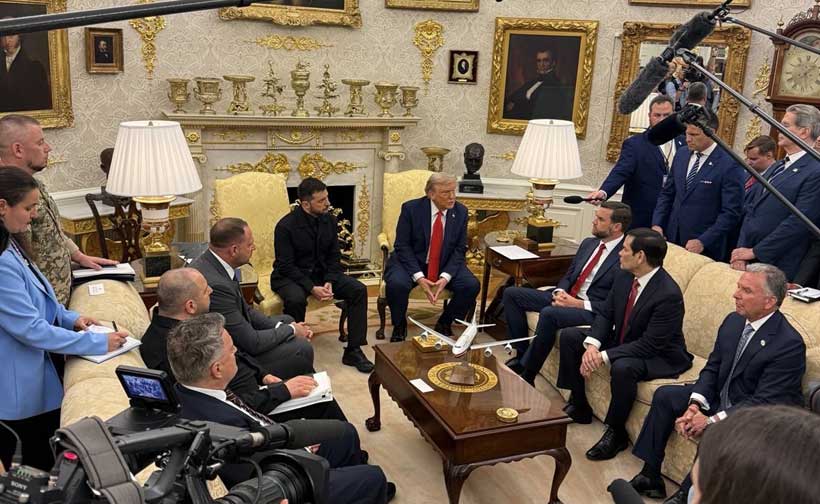
U.S. President Donald Trump has taken observers by surprise with remarks supporting Ukraine’s goal of reclaiming all territory occupied by Russia. The comments, made on Truth Social, mark a sharp rhetorical departure from his earlier position, where he suggested Kyiv might have to cede land to Moscow to end the conflict. Just last month, Trump had rolled out a warm welcome for Vladimir Putin in Alaska, leaving European allies wary of U.S. intentions. Now, his sudden pivot has sparked both cautious optimism and deep suspicion about Washington’s long-term role in the war.But at the same time
Why It Matters
Since Russia launched its full-scale invasion on February 24, 2022, the United States has been Ukraine’s single largest supplier of military aid and financial support through and through. A shift in Washington’s stance could profoundly alter the balance of the war and put unprecedented pressure on Europe to fill the gap. Trump’s comments, while supportive in tone, lacked commitments to policies,continuing his same old pattern of “strategic uncertainty.” This ambiguity has already had an impact on markets, for instance, European defence stocks rose on expectations of increased spending, while Ukrainian bonds fell, highlighting investor unease about Kyiv’s economic future.
United States
Trump’s new rhetoric allows him to appear tougher on Russia while avoiding deeper U.S. entanglement. For domestic politics, it projects strength without committing resources. His strategy reinforces the long-standing demand that Europe take greater responsibility for its own defence. Yet the ambiguity leaves allies uncertain whether his support for Ukraine is genuine or tactical.
Europe (EU and NATO allies) welcomed Trump’s words but at the same time are well aware of the forthcoming implications. Germany’s Johann Wadephul stressed that not all EU states have delivered on their promises to Kyiv, urging Europe to “step up.” If Washington retreats, the burden will fall squarely on Europe to provide both financial backing and military aid, an intimidating task gives divisions within the bloc and uneven defence spending.
Stay ahead of the geopolitical week.
MD Briefing delivers expert analysis across five global fronts — the Indo-Pacific, energy, geoeconomics, European security, and the Middle East — every Monday morning. Free.
For Kyiv (Zelensky’s administration), Trump’s statement acts like a double-edged sword. While it is encouraging to hear U.S. backing for full territorial restoration, the absence of clear commitments makes Ukraine skeptical. Kyiv is increasingly reliant on European aid, but without U.S. leadership, its ability to sustain the war effort would not last longer and might collapse.
Russia (Putin’s government), undoubtedly Moscow stands to benefit most from uncertainty and division among Western allies. If Trump distances the U.S. from Ukraine, Russia can exploit reduced transatlantic unity to strengthen its military and diplomatic position. Putin may also view Trump’s unpredictability as leverage in future negotiations.
Markets and Investors responded immediately to the signals. Defence stocks in Europe rose as investors anticipated increased European military spending. Meanwhile, Ukrainian bonds dropped, reflecting doubts about the country’s economic stability if U.S. support wanes. Investors remain sceptical that Europe alone can sustain Ukraine financially and militarily.
What Can Happen Next
Europe is already moving to increase defence spending and has supplied Ukraine with advanced air defence systems, partly funded through NATO mechanisms. But filling the U.S. gap will not be easy. Trump’s comments suggest he may be looking for an “off-ramp” positioning himself as a peace-broker while shifting responsibility onto Europe and Russia. Analysts warn that his stance could shift again with a single call to Putin, leaving Europe constantly second guessing whether Washington is worth relying.
For now, the message is clear, Europe must prepare to shoulder more of the burden, both militarily and financially, in Ukraine’s war effort. The uncertainty surrounding U.S. policy may shape not only the future of the conflict but also the strength of Western unity in the face of Russian aggression.
With information from Reuters
