


NEWS BRIEF
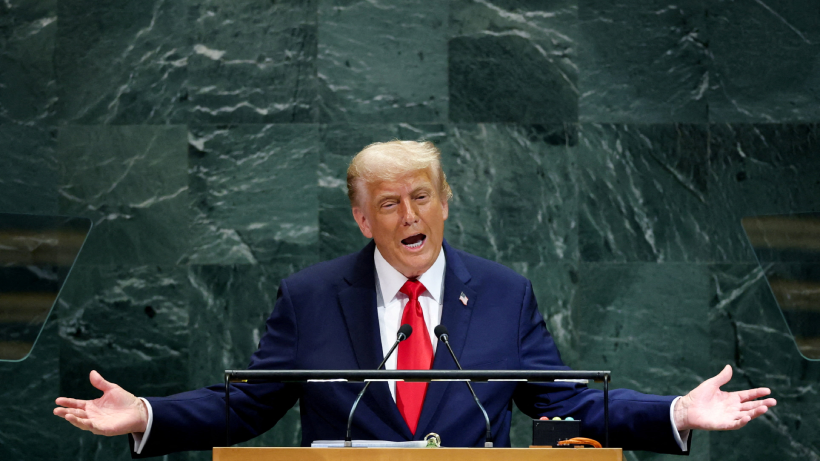
U.S. President Donald Trump delivered a wide-ranging speech at the UN General Assembly, warning Russia of potential tariffs if it continues its war in Ukraine while rejecting global moves toward Palestinian statehood. The address also included sharp criticism of climate change efforts, which he called a “con job,” and attacks on UN migration policies, reflecting his America-first approach to international diplomacy.
WHAT HAPPENED
- Trump threatened to impose “powerful tariffs” on Russia if it refuses to work toward ending the war in Ukraine, urging European nations to join the measures.
- He rejected growing international recognition of a Palestinian state, arguing it would reward Hamas for “atrocities” committed against Israel.
- The president criticized UN-supported migration policies, claiming Europe has been “invaded by illegal aliens,” and promoted his administration’s restrictive border measures.
- Trump dismissed climate change efforts as a “con job” and urged world leaders to focus on traditional energy sources and strong borders.
WHY IT MATTERS
- The threats against Russia represent Trump’s most direct economic warning to Moscow over the Ukraine war, though he has yet to implement specific measures.
- His rejection of Palestinian statehood aligns with Israel’s position but places the U.S. at odds with numerous allies who recently recognized Palestine.
- The speech signals a continued shift away from multilateral cooperation on climate change and migration, key UN priorities.
- Trump’s criticism of the UN itself reflects his administration’s skeptical approach to international institutions and agreements.
IMPLICATIONS
- Trump’s tariff threat could strain U.S.-Russia relations further if implemented, though European participation remains uncertain.
- The U.S. position on Palestinian statehood may deepen divisions with Arab partners and European allies.
- Trump’s dismissal of climate action may discourage international cooperation and slow progress on emissions reductions.
- Continued U.S. criticism of the organization could weaken its authority and funding support from other member states.
This briefing is based on information from Reuters.
