


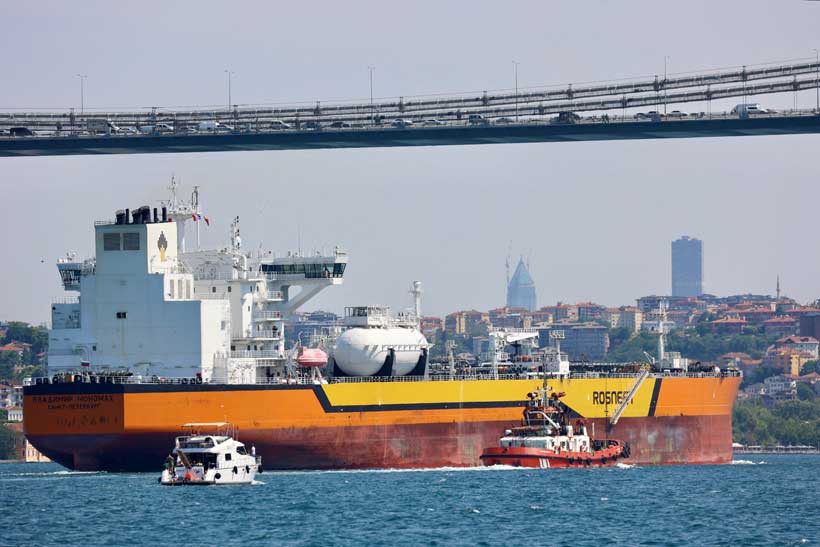
The pressure from US and EU sanctions is starting to feel less like distant geopolitics and more like a real squeeze on India’s daily life. These sanctions weren’t written with India in mind, but their fallout is landing right in our energy sector, the place we can least afford disruption.
Look at what’s happening with Nayara Energy. It’s one of the country’s major private refiners, part-owned by Russian investors, which instantly makes it a target in this standoff. After the EU tightened its rules, Saudi Aramco and Iraq’s SOMO, two suppliers India has counted on for decades, just stopped sending crude to Nayara. In August, shipments went from millions of barrels a month to zero. For a company used to steady streams of Iraqi and Saudi oil, that’s not just a hiccup, it’s a rupture.
When you strip the jargon away, what this means is refinery slowdowns, less fuel in the system, and prices that edge upward. And in India, higher fuel costs don’t stay limited to the pump. They creep into bus fares, taxi rides, vegetables at the market, and electricity bills. Energy is the backbone of the economy, and if that backbone stiffens or snaps, everyone feels it.
Some experts are blunt: India is getting boxed in. Washington and Brussels have extended their campaign against Moscow into the arteries of other economies, and we’ve become collateral damage. It’s not that India has been reckless, it has always played a balancing act. Buying oil from Russia when it’s cheap and available, keeping ties with Middle Eastern suppliers, staying open to American energy when the price is right. That mix kept us relatively secure. But the sanctions are making the juggling act harder to pull off.
Stay ahead of the geopolitical week.
MD Briefing delivers expert analysis across five global fronts — the Indo-Pacific, energy, geoeconomics, European security, and the Middle East — every Monday morning. Free.
The criticism is that India is trying to have it both ways, trading with Russia while also courting the West. But that’s just the reality of being a huge, growing country with massive energy needs. Pragmatism drives the decisions more than ideology. And when the choice is between upsetting a foreign capital or keeping domestic energy prices under control, most governments, not just India’s, will pick the latter.
What’s frustrating is how quickly our options are narrowing. Saudi Arabia and Iraq didn’t just cut off Nayara because of business preferences. It’s clear they felt pressure from Washington and Brussels. That’s what modern coercion looks like: no threats at the border, just contracts drying up quietly behind closed doors.
The risk is this keeps escalating. If more suppliers join in, India could be looking at deeper shortages and sharper price spikes. The fallout wouldn’t just be economic; it could spill into the political arena if people start feeling the pinch in their daily lives. We’ve seen before how inflation, especially food and fuel inflation, can sour public mood faster than any other policy issue.
For now, India will probably double down on Russian imports because they’re still flowing and often cheaper. But that can’t be the only answer forever. If the sanctions net widens, those supplies may be harder to secure too. Long term, this might push India to invest more aggressively in renewables or domestic oil production. That shift is happening already, but let’s be honest, it’s not fast enough to cover the shortfall we’re facing right now.
The irony is striking. By trying to isolate Russia, the West is also putting stress on India, the very country it calls an important partner in Asia. That may be a short-term miscalculation, but if energy insecurity slows India’s growth, the long-term damage could be bigger than anyone bargained for.
Sanctions are supposed to be sharp instruments, carefully aimed at the guilty party. What we’re seeing looks more like a hammer, and India’s economy is taking the hits. Whether this turns into just another rough patch or a deeper crisis depends on how far the West pushes, and how quickly India finds its footing.
