


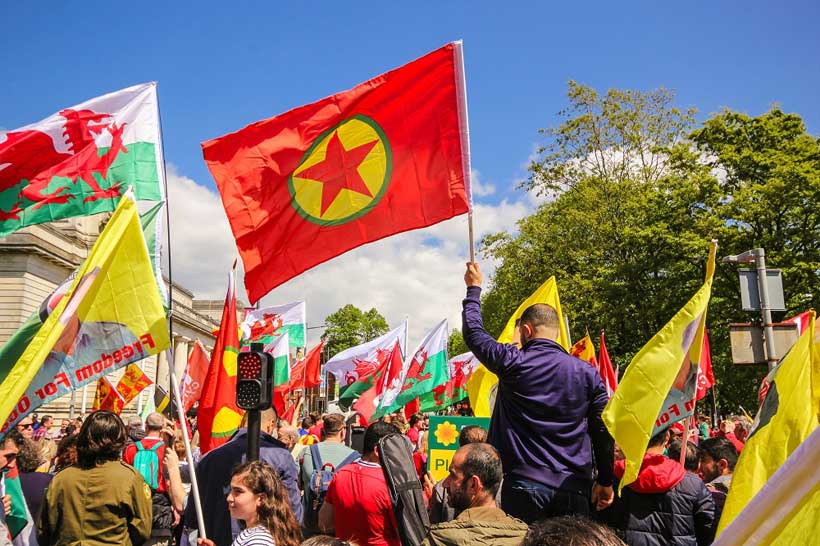
The long and bloody saga of the Kurdistan Workers’ Party (PKK) has seemingly reached a pivotal juncture with the organization’s long-anticipated announcement of its dissolution and the formal cessation of its armed struggle against the Turkish state. This development, a potential watershed moment in one of the world’s most protracted and lethal insurgencies, has been met with cautious optimism from Ankara, which views it as a crucial stride towards a “terror-free Turkey.” However, while the cessation of violence is undeniably a welcome prospect after four decades that have claimed over 40,000 lives, a closer examination reveals that the path to genuine and lasting reconciliation between the Turkish state and its Kurdish population remains fraught with uncertainties and unanswered questions. The dissolution of the PKK, while symbolically significant, may not automatically translate into the resolution of the underlying grievances that fueled its emergence and sustained its violent campaign for so long.
The roots of the PKK’s emergence lie in decades of systematic suppression of Kurdish identity and culture by the Ankara government. Founded in 1978 by Abdullah Öcalan, the Marxist-Leninist organization initially sought an independent Kurdistan for the approximately 15 million Kurds within Turkey’s borders. The armed campaign that commenced in 1984, targeting state infrastructure and security forces, was a direct response to this perceived systemic oppression. While the PKK’s methods and its designation as a terrorist organization by several international actors are unequivocally condemnable, understanding its origins is crucial to comprehending the depth and complexity of the Kurdish issue in Turkey. The shift in the PKK’s objectives after Öcalan’s capture in 1999, from outright independence to greater autonomy and cultural rights within Turkey, indicated a potential pathway for political resolution, yet the subsequent collapse of the 2015 peace process, exacerbated by the Syrian civil war, demonstrated the fragility of such efforts.
The current announcement of dissolution, prompted by a call from the still-influential imprisoned leader Abdullah Öcalan, arrives at a complex juncture. Turkey’s increasing military pressure on PKK strongholds in northern Iraq, coupled with its expanding influence in Syria, has undeniably constricted the group’s operational capabilities and worn down its forces. Furthermore, the Turkish government’s potential interest in consolidating Kurdish support ahead of future elections and a possible constitutional amendment suggests a pragmatic, albeit potentially self-serving, motivation for welcoming this development. Similarly, the threat posed by PKK activity in northern Iraq to Turkey’s ambitious trade corridor project underscores the economic incentives for seeking a resolution. These converging factors have likely contributed to the PKK’s decision to formally end its armed struggle, recognizing the shifting regional dynamics and the diminishing returns of continued violence.
However, the declaration of dissolution is the first step on a potentially arduous journey. The modalities of the dissolution process, including the crucial aspects of weapons collection and destruction, as well as the oversight mechanisms, remain unspecified. The fate of the PKK militants themselves, particularly those entrenched in the mountainous regions of northern Iraq and northeastern Syria, is also unclear. Will they be offered amnesty, reintegrated into society, or potentially relocated to third countries? The lack of transparency surrounding these critical details breeds skepticism and raises concerns about the practical implementation and the long-term viability of this initiative.
Stay ahead of the geopolitical week.
MD Briefing delivers expert analysis across five global fronts — the Indo-Pacific, energy, geoeconomics, European security, and the Middle East — every Monday morning. Free.
Moreover, the history of failed peace processes between Turkey and the PKK casts a long shadow over the current announcement. The collapse of the 2015 ceasefire, fueled by regional instability and a lack of sustained political will on both sides, serves as a stark reminder of the deep-seated mistrust and the formidable obstacles that lie ahead. The current initiative, seemingly sparked by a message from a long-imprisoned leader and occurring amidst ongoing military operations, lacks the robust framework and the comprehensive political dialogue that are essential for building lasting peace. The fact that the initial hint of this initiative came from Devlet Bahçeli, Erdoğan’s nationalist coalition partner, raises questions about the depth of commitment within the Turkish government to addressing the fundamental grievances of the Kurdish population.
The PKK’s assertion that it has “completed its historical mission” and advanced the Kurdish issue through the “democratic process” is a significant statement. It suggests a recognition that the armed struggle has reached its limits and that a political pathway is now deemed the most viable means of achieving Kurdish aspirations. However, the nature of this “democratic process” and the extent to which the Turkish state is genuinely willing to engage in meaningful dialogue and reforms that address Kurdish cultural and political rights remain critical uncertainties. The mere cessation of armed conflict, without tangible steps towards addressing the underlying issues of identity, language, and political participation, risks creating a fragile and temporary truce rather than a durable peace.
In conclusion, the PKK’s announcement of its dissolution marks a potentially significant turning point in the decades-long conflict with Turkey. The cessation of armed violence offers a glimmer of hope for a region scarred by immense suffering. However, to herald this as a definitive end to the conflict and the dawn of a “Turkey free of terror” would be premature. The numerous unanswered questions surrounding the implementation of the dissolution, the fate of PKK militants, and, most importantly, the Turkish state’s commitment to addressing the root causes of the Kurdish issue necessitate a cautious and critical perspective. While the guns may have fallen silent, the path to genuine reconciliation requires more than just the dismantling of an armed group; it demands a fundamental shift in political will, a commitment to inclusive dialogue, and concrete steps towards addressing the long-suppressed aspirations of Turkey’s Kurdish population. The precarious dawn of this new era holds the potential for lasting peace, but only if it is accompanied by genuine efforts to heal the wounds of the past and build a future based on mutual respect and equality.
