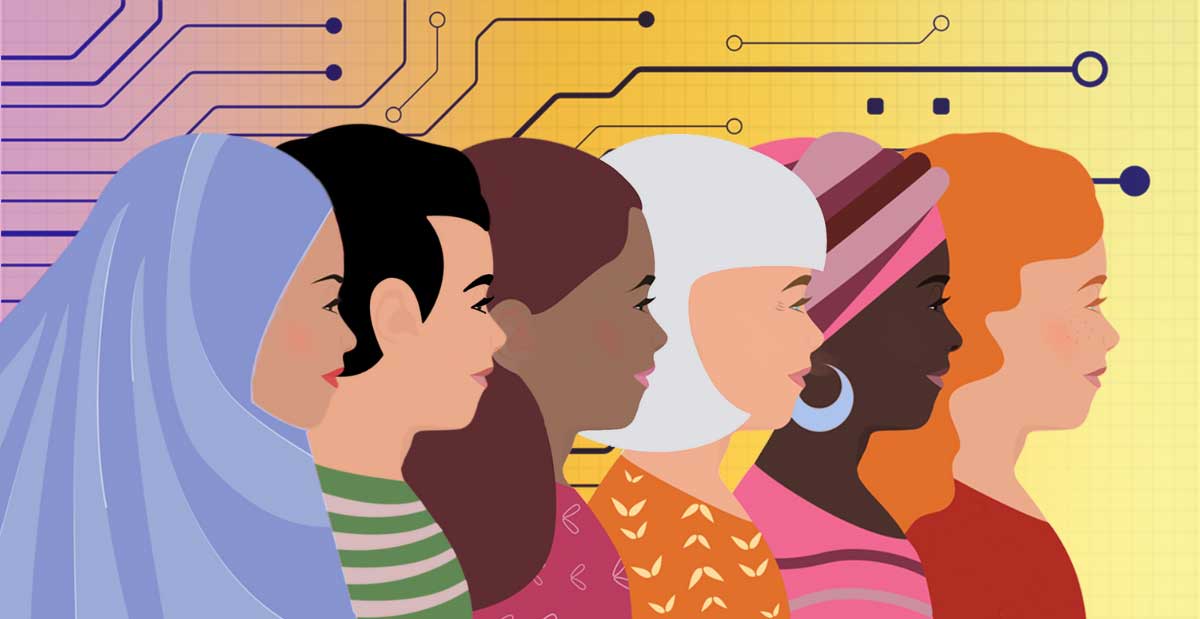
The absence of women in senior leadership roles is a critical and multidimensional issue that needs to be addressed as the socio-cultural landscape of Pakistan changes. Despite ongoing discussions surrounding the gender gap, its enduring presence poses a significant threat to the fabric of Pakistan’s society. This article deals with this contentious matter to shed light on women’s various challenges when striving to acquire leadership positions. It also analyzes various frameworks and laws to make women in leadership roles the norm rather than the exception in Pakistani society.
Gender equality and equitable access are undermined because so few women in Pakistan hold high political offices. It has been a problem in politics, corporate, and societal spheres for a long time that women are underrepresented in positions of power. While significant advancements in many areas, including politics, healthcare, and education, are still insufficient to address the systemic issues that have persisted for decades. Legal measures have been implemented to encourage more women to run for office, yet women continue to encounter discrimination in many sectors. In the following sections, we’ll go into more detail on the significance of women in leadership roles and the potential advantages to society at large.
Women’s representation in authoritative positions promotes social progress and intercultural understanding. Their representation in positions of power challenges preconceived notions and encourages leaders to consider alternative perspectives. Policies and initiatives resulting from such a plethora of views are more inclusive than exclusive. Women in positions of power can promote gender parity, advancements in education and healthcare, and economic development. Benazir Bhutto’s two terms as Prime Minister of Pakistan (1988–1990 and 1993–1996) is an excellent case. She addressed critical societal issues during her presidency and proved that women can effectively lead a country. While she was in charge of Pakistan, improvements were made in areas such as education, healthcare, and the status of women. Benazir Bhutto’s groundbreaking achievements inspire women in Pakistan and beyond to pursue positions of power. This demonstrates why society must have women in positions of authority.
Women’s leadership positions are associated with significant economic growth. A country’s productivity and competitiveness improve when more women work full-time and assume leadership positions. They enrich a community with diverse perspectives and practices and contribute to the growth of an inclusive and culturally receptive environment. This is the engine that propels economic advancement. Former German chancellor Angela Merkel illustrates how gender inclusivity at the highest echelons can bolster economic growth. She was crucial in stabilizing the European Union and assisting Germany with its financial woes during her tenure. Because of this, Germany now boasts one of Europe’s strongest economies. Again, she demonstrated how having women in leadership benefits economic development through her approach to inclusive government and emphasis on innovation and sustainability.
Stay ahead of the geopolitical week.
MD Briefing delivers expert analysis across five global fronts — the Indo-Pacific, energy, geoeconomics, European security, and the Middle East — every Monday morning. Free.
Gender equality and societal advancement both need to empower women economically. When women have equitable opportunities in the workplace, they can take charge of their lives, provide for their families, and shatter stereotypes about being a woman.
When women have positions of authority, they can advocate for policies that benefit the economy in the long run and inclusive economic growth. Economic development, social justice, and environmental sustainability are all bolstered by gender balance. These measures, which result in more equitable and sustainable development, are frequently prioritized by women in positions of power. An example of a program that benefits both men and women is the Benazir Income Support Program (BISP), established in Pakistan under Benazir Bhutto’s leadership. Aiding in the fight against poverty, BISP provides cash grants to low-income women. Women in positions of power are more inclined to back initiatives like this because they see the potential for long-term good for society.
Having women in positions of authority can improve a state’s international image and facilitate better relations with other nations. They take a more collaborative and diplomatic approach towards international relations and diplomacy than aggressive ones. Malala Yousafzai, a teenage Pakistani activist, rose to international prominence after the Taliban attempted to kill her for advocating for girls’ access to education. Her efforts were well-praised and helped improve Pakistan’s global reputation. The influence Malala has demonstrated just how significant women leaders can be in international affairs.
While the gender disparity in Pakistan’s top positions remains significant, positive changes have been made in several fields and communities in recent years. More and more women are assuming leadership roles in the nation’s universities, hospitals, and non-governmental organizations (NGOs). The number of women serving in government has increased partly because of legal reforms that make it easier for them to enter the political arena. Despite their relative insignificance, these developments represent a positive trend toward maximizing women’s leadership potential. Recognizing and addressing the issues that impede women’s advancement in other sectors of Pakistani society is essential.
A comprehensive strategy is required to ensure women in Pakistan are given meaningful leadership responsibilities. The government should prioritize education and do what it can to ensure that all children, regardless of gender, have equal access to quality institutions of higher learning. More individuals need to join up, and the curriculum itself has to be improved so that it more effectively promotes gender parity. Equal participation is crucial to a country’s development, and public awareness campaigns should work to dispel harmful perceptions and encourage people of all backgrounds to get involved. Legislative measures must be enacted to end workplace bias and ensure that women have equal opportunities. Pakistan should incentivize private-sector organizations that encourage gender diversity by recognizing and rewarding those who work to advance women in leadership roles. Women should also be encouraged to participate in peace discussions because they are essential to the peace negotiation in Afghanistan. This is due to their crucial role in promoting growth and stability. Pakistan can progress toward becoming a society where women in leadership roles are the norm rather than the exception if all of these initiatives are carried out.
Women in positions of leadership should be the norm in Pakistan. This calls for reforms in education, the legal system, the workplace, and the government structures. For the sake of the country’s development and prosperity, this dramatic shift is crucial. Recent progress in several areas bodes well, but more effort is needed generally. A Pakistan where women hold most positions of power would be more democratic, prosperous, and equitable.