
Energy News
IRENA and UN-Habitat Join Efforts to Accelerate Global Energy Transition in Cities
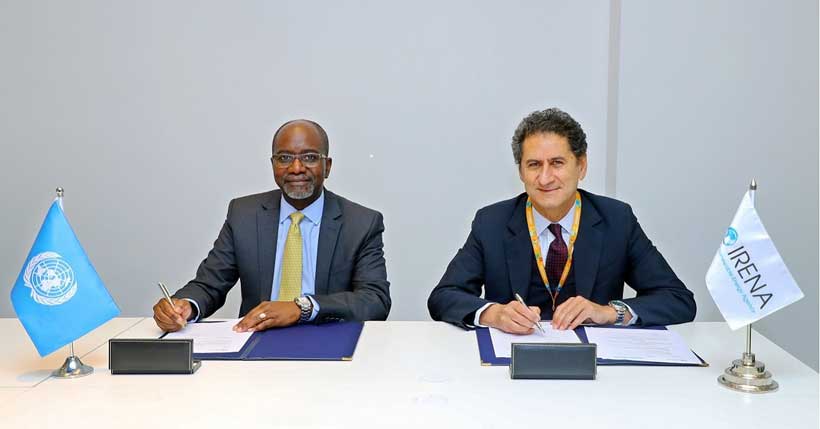
The International Renewable Energy Agency (IRENA) signed a memorandum of understanding (MoU) today with the United Nations Human Settlements Programme (UN-Habitat), to cooperate on sustainable energy in the context of urban development. IRENA’s studies show that cities are responsible for 65 per cent of global energy demand and the Intergovernmental Panel on Climate Change data shows cities are responsible for 71-76 per cent of energy-related carbon dioxide emissions.
As such, high-level cooperation to support municipal governments in their
energy transition is crucial.
Signed by IRENA Director-General Francesco La Camera and UN-Habitat Deputy
Executive Director Victor Kisob during the Tenth Session of the World Urban
Forum (WUF10) in Abu Dhabi, United Arab Emirates (UAE), the MoU will see the
two organisations work to advance the role of cities in the global energy
transformation whilst promoting cleaner, low-carbon urbanisation.
“Cities are the engines of modern economic growth, supporting prosperity and
opportunity, and are also a source of significant energy demands and of carbon
emissions,” said IRENA Director-General Francesco La Camera. “In the pursuit of
climate and sustainable development goals, municipal governments have an
opportunity to strengthen policy frameworks that can help cities shift to
renewable energy use. Cities can significantly contribute to the achievement of
global energy transformation objectives and this partnership will help
accelerate that process.”
IRENA and UN-Habitat have been working together for several years by sharing
expertise in different occasions. Commenting on this, UN-Habitat Deputy
Executive Director Victor Kisob said: “The signing of this MoU is one of the
many testaments of UN reforms to advance synergy and partnership. We are
happy to strengthen our partnership with IRENA for a more sustainable energy future.”
The cooperation agreed upon by the MoU covers among others the exchange of
relevant information, expertise, and viewpoints in order to realise potential
synergies, enhance public dialogue, and implement common positions. Under
this MoU, both IRENA and UN-Habitat hope to be at the forefront of the global
efforts to achieve sustainable urban development.
Energy News
15 Actions to Maximise Socio-economic Gains of Africa’s Energy Transition
Fundamental to providing reliable, affordable and sustainable electricity access to all, renewable investments at scale can contribute to supporting Africa’s sustained economic growth, strengthening local value chains and promoting the creation of local jobs. In order to deepen this topic, RES4Africa Foundation, the International Renewable Energy Agency (IRENA) and the United Nations Economic Commission for Africa (ECA) developed their first joint report Towards a prosperous and sustainable Africa: maximising the socio-economic gains of Africa’s energy transition, presented today in occasion of the European Union-Africa Business Forum.
Building on the knowledge and experience of the three organisations, the study is a comprehensive analysis of the job and socioeconomic impact of clean energy investments in the African continent, combining the views and experiences of leading international institutions active in supporting development, sustainable economic transition and renewable energy development in emerging economies. The report opens with a review of the socio-economic gains of sustainable energy access in Africa, followed by an assessment and quantification of the socio-economic potential of Africa’s energy transition in line with maintaining the global temperature increase under 1.5 °C. The third chapter explores the role of private sector actors in supporting the sustainable transformation of Africa’s energy systems and its socio-economic progress. The report closes with a series of recommendations at the institutional, policy, financial, and business levels to accelerate investments in clean energy technologies and maximise local value creation.
“Representing only 2% of global renewable energy capacity added in the last decade, Africa is not only missing the opportunity to ensure access to affordable, reliable, and clean energy to all, but also benefits from the wider positive socio-economic impact of renewable energy development” said Roberto Vigotti, RES4Africa’s Secretary General “With this joint effort, RES4Africa, IRENA and UNECA provide an overview of the future of Africa’s socio-economic prosperity, identifying the opportunities that Europe and Africa have to ensure a sustainable future leaving no one behind.”
“Africa has a lot to offer to and benefit from the global energy transition as laid out by IRENA’s 1.5°C Scenario. With tremendous potential of renewables and human resources, Africa’s shift to clean, modern energy is set to achieve substantial gains in GDP, employment, and human welfare. IRENA is ready to stand with Africa to put actions in motion by facilitating stronger international cooperation to mobilise political and financial support,” added Francesco La Camera, IRENA Director-General.
United Nations Under-Secretary-General and Executive Secretary of the ECA, Vera Songwe, stated that “Our energy transition goals in African must be aligned with the development aspirations of member States. We must ensure investment in infrastructure that allows for manufacturing and value creation in green energy technologies, while availing de-risking instruments to member States to mitigate the cost of investment in energy projects.”
Energy News
2022 IRENA Youth Forum: Global Youth Gather to Spur Action on Energy Transition
Young leaders from around the world issued a clear call for action at the 2022 IRENA Youth Forum. Held under the theme ‘Youth-led solutions to accelerate the energy transition and achieve climate objectives’ on the sidelines of the recently concluded 12th Assembly of IRENA, over 400 young energy leaders gathered virtually and called on organisations, governments, private sector, academia and civil society to take urgent action to ensure that the energy transition is led by the youth.
Addressing young delegates in his opening keynote, IRENA Director-General Francesco La Camera, said: “As we come together today to hear and learn about concrete actions and innovative solutions from and for youth, I encourage you to continue embodying these ideals in your actions. IRENA is with you at every step of the way.”
Emphasising the role of young people in combating climate change, Mariam bint Mohammed Almheiri, UAE Minister of Climate Change and the Environment, said in her welcoming remarks, it is clear by now that the youth’s involvement and leadership play a pivotal role in realising a just and inclusive sustainable energy transition. “Collectively and individually, your innovations will help develop renewables that accelerate the energy transition and put the world on a path to meet climate targets. Our promise to you is that we will have the highest levels of youth participation in delegations to the COP28 that the UAE will host,” the minister added.
Opening the 3rd edition of the Forum, moderator Lydia Sanz Lozano, introduced the panel with a strong statement: “Today we represent youth from all around the world. As we gather here to talk about the power of renewable energy and to promote an inclusive energy transition for all, our goal is to bring together young voices. We not only bring urgency to the climate debate but also bring solutions and the willingness to cooperate as stakeholders.”
The Forum featured a presentation on the outcome of the Global Youth Energy Outlook report by Student Energy, a youth-led international organisation empowering young people to accelerate the sustainable energy transition. Sharing outcomes from the report, Helen Watts, Senior Director of Global Partnership, Student Energy, pointed that the majority of youth respondents want their country to reach net zero emissions by 2030. “While more and more countries set net zero targets for 2050 or 2100, it is clear their youth want their countries to decarbonise faster with immediate action to bend the curve on emissions,” she added.
Despite the barriers that the youth face, they continue to provide creative sustainable energy solutions and strive for a more sustainable future. Citing one such example, Esther Wanza, Field Operations Coordinator, RAYNOW Energy shared a start-up success story in implementing a 3 Kw solar PV project with 2.5 kW storage that enables a health centre in Kenya to see more than 60 patients a day. “The project is something to smile about,” she said.
The Forum also discussed the need to invest in skill development in the renewable energy sector. “We have enough solar, wind and biomass to power Africa but we lack the trainers that can pass this knowledge on to the younger generations. Skill development needs to be up-scaled in order to make young people employable, especially in the renewable energy market,” Victoria Edeha-Anthony, Founder of D’Young Energy and Youth Sustainable Energy Hub Representative, pointed out.
In a special video message addressing the Forum, Shamma bint Suhail Faris Al Mazrui, UAE Minister of Youth, said education is key to addressing climate change as it can encourage the youth to change their attitudes and behaviour and can help them to make informed decisions. “Education must become more relevant to the biggest challenge our world is facing right now. Everything we learn must be seen through the eco lens,” she said.
In his closing remarks, Ibrahim Togola, President of Mali-Folke Center Nyetaa, stressed the need for a stronger government policy framework. “Regulations hold the key to accelerate energy transition. Governments across the African continent and many other developing countries are working towards drafting robust policy frameworks to increase the generation of renewable energy.”
Young leaders welcomed the realisation of the youth initiatives announced by IRENA for 2022, including the launch of the Global Council on Enabling Youth Action for SDG7, a training programme for young climate and energy leaders, launched in response to the request of the Youth4Climate Pre-COP in Milan, and educational activities, including teacher training support.
Energy News
Europe: electric car sales surpass diesel
In a milestone for the environment, Europeans purchased more electric cars than those powered by diesel last month. According to recent data, over 20 per cent of new cars sold in Europe and the United Kingdom (UK) in December 2021 were electric. Meanwhile, the sale of diesel vehicles in the European Union (EU) slipped below 19 per cent.
While many developed nations have pledged to phase out petrol and diesel vehicles in the next 20 years to reduce greenhouse gas emissions, the transition will be more complicated in developing countries where old imported cars are often the most affordable option. A 2020 report by the United Nations Environment Programme (UNEP) found that the three largest exporters of used vehicles – Europe, Japan and the United States exported 14 million used light-duty vehicles worldwide between 2015 and 2018.
We spoke to Rob de Jong, head of the Sustainable Mobility Unit at UNEP, to find out more about the rise in electric vehicle sales and what can be done to support this transition globally.
What could the increase in electric vehicle sales mean for Europe in regards to air pollution and emissions reductions?
Rob De Jong (RDJ): This trend shows that consumers are keenly interested in shifting to cleaner vehicles due to a combination of factors. The first is economic incentives. Electric vehicle subsidies were (and often still are) very high at several thousands of dollars per vehicle, although governments are slowly reducing these subsidies as they become more mainstream.
Second, diesel vehicle sales have continued to decline since we discovered that actual emissions were much higher than we thought – after some manufacturers were caught cheating on emissions tests. Meanwhile, the sale of electric vehicles globally has doubled every year, with the highest growth rates in Europe. The leader is Norway, where 80 per cent of all new vehicles are currently being sold are fully electric.
This has massive benefits for pollutant and climate emissions as diesel vehicles are a leading contributor to small particulate emissions pollution, so-called PM 2.5, which has major health impacts. In contrast, electric vehicles have no tailpipe and therefore no exhaust emissions. Air pollution and the climate change characteristics of the electricity source are also critical factors.
What kind of regulatory framework and infrastructure helped Europe to reach this goal?
RDJ: Many European countries used subsidies for new and used electric vehicles, whilst others set dates in the near future for the complete phase-out of petrol vehicles (for example, UK 2030). Most countries have introduced a network of charging stations, allowing for fast charging of electric vehicles, and some cities banned the entry of old diesel vehicles in their city centres. Awareness campaigns have also helped to inform consumers.
The introduction of electric vehicles goes hand in hand with the decarbonization of the electricity grid – more electricity is generated from renewable sources such as wind and solar, making electric vehicles more and more climate-friendly. At the same time, manufacturers are rapidly increasing the number of electric models available in the market. A few years ago, only a few models were available. Today, almost all major brands have multiple electric vehicle models. Some brands have set a date after which they will only sell electric vehicles, and they are getting cheaper, while specifications such as range are improving.
Can developing countries aspire to do the same, or must they follow a different pathway?
RDJ: To achieve the targets of the Paris Agreement, we have to switch to zero-emissions mobility worldwide. We should not forget that we also need to better design our cities and promote walking, cycling, and public transport. In 2050 globally, two out of three vehicles will be found in low- and middle-income countries (LMICs), so we must also include LMICs in shifting to zero-emissions mobility. We can’t afford for developed countries to switch while developing countries continue using fossil fuel vehicles.
There are many good reasons for LMICs to make the shift. It is predicted that the number of vehicles in LMICs will grow by 1 billion by 2050. So, we can still avoid a major increase in fossil-fueled vehicles by putting in place the right measures. Building local manufacturing capacity for e-mobility, such as manufacturing and assembling electric motorcycles locally, can also create green jobs. A relatively large share of the climate emissions of some LMICs come from the transport sector, so introducing zero-emission e-mobility will be key to achieving national climate targets.
In addition, LMICs have the highest urbanization rates – cities are growing rapidly. Switching to low- and no-emissions mobility now can help prevent major air pollution in many megacities. As cities around the world have shown – fixing this later is much more difficult -and costly- than preventing it in the first place.
How is UNEP helping countries make the shift to e-mobility?
RDJ: UNEP is implementing a major global programme to support LMICs in joining the global switch to zero-emissions e-mobility. Largely funded by the Global Environment Facility (GEF), UNEP’s Global Electric Mobility Programme is supporting more than 50 LMICs by developing policies and standards, accessing financing, and developing local industry. It also provides technical support, creates regional platforms with suppliers and financiers, and implements regional training programmes.
-
Eastern Europe4 days agoImaging the day after a Russian conquest of Kyiv: Not a pretty picture
-
Americas3 days agoHow the Democratic Party deceives its own voters, in order to further-enrich billionaire mega-donors
-
South Asia3 days agoAfghanistan’s Chaos: Pakistan’s Narration status
-
International Law3 days agoYearnings For Immortality: World Politics, Realpolitik and Power Over Death
-
Russia4 days agoAn increasingly complex Russia-Ukraine conflict
-
East Asia3 days agoAncient Sino-Arabian Cultural Communication: Highlighting the Tang Dynasty
-
Middle East3 days agoHezbollah’s Lasting Grasp of Lebanon
-
East Asia3 days agoChina should take a more proactive role in Russia-Ukraine negotiation
