



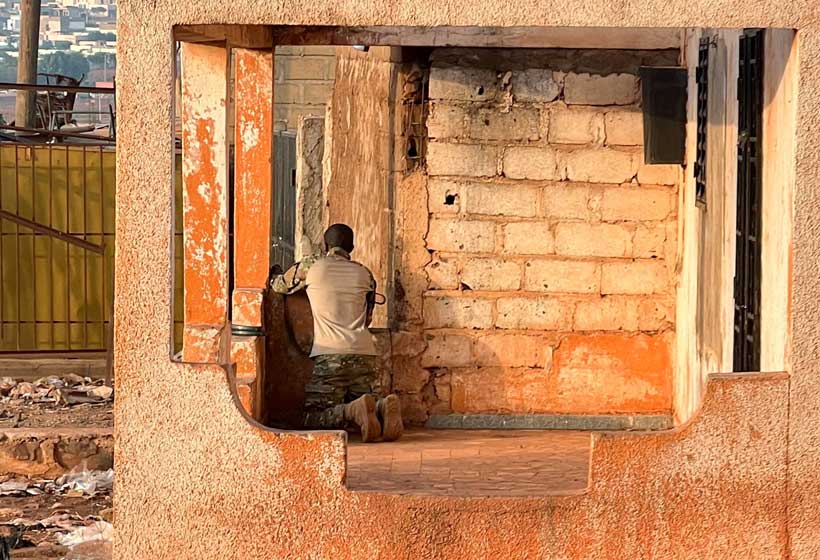
On Saturday, an alliance of al Qaeda-linked militants and Tuareg separatist rebels attacked multiple sites in Mali, killing the country’s defense minister, targeting the capital’s airport, and forcing Russian soldiers out of a desert town over a thousand kilometers away. This coordinated offensive showcased a new level of cooperation between the JNIM group, affiliated with al Qaeda, and the Tuareg rebels, who are striving for an independent state in northern Mali. The attack demonstrated their ability to strike crucial locations and highlighted vulnerabilities in Mali’s military government.
Experts noted that the attack, which included a car bomb that killed Defense Minister Sadio Camara, created a power vacuum and risked igniting a wider national crisis. Even though Mali’s military government claims the situation is under control, its leader, Assimi Goita, has not been seen or heard from since the attacks. Analysts believe the offensive has exposed significant intelligence failures in Mali and the limitations of its partnership with Russia. Although the militants seem to be prioritizing internal consolidation and political gains in Mali rather than striking abroad, their actions could lead to a broader threat if their ambitions change.
The roots of the conflict trace back to 2012 when Tuareg separatists and al Qaeda-linked groups took control of parts of Mali, leading to a French military intervention. Over time, the Islamists regrouped and extended their control, leading military regimes in Mali, Burkina Faso, and Niger to expel international forces and seek help from Russia. However, Islamist groups have tightened their siege around Bamako, controlling fuel supplies and operating freely on the city’s outskirts.
The recent attacks were described as extensive and required significant planning and logistics, aimed at disrupting the military’s command structure. With attacks spread across various towns, including military bases under siege, the insurgents left Mali’s security forces stretched thin. The Tuareg group, the Azawad Liberation Front (FLA), successfully raised its flag in Kidal, reversing government gains made earlier in 2023 with Russian support.
Mali’s reliance on Russian military assistance, primarily provided by troops linked to Wagner and other Russian military units, has not prevented recent setbacks. Russian officials claimed that they repelled the attacks; however, there are reports of Russian troops withdrawing from Kidal, indicating growing challenges in their operations.
The alliance between the FLA and JNIM marks a shift from their previous tactical rivalry. Although they are coordinating attacks, they pursue different political goals; the FLA seeks to establish a secular state while JNIM follows an Islamist agenda. This partnership reflects a pragmatic approach allowing for shared resources, but it remains unstable due to underlying discord.
Experts suggest that JNIM is attempting to adopt governance methods similar to those seen in Syria, which could help them gain local support. There are calls for international dialogue, as analysts believe that a military solution to this ongoing conflict is unlikely to succeed.
With information from Reuters
