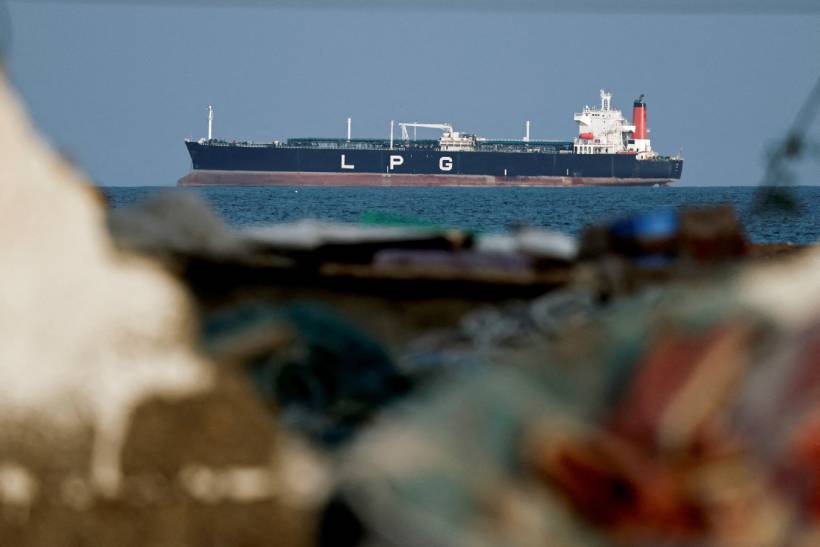
The Strait of Hormuz has rarely been spoken about outside of emergency language: naval escorts, insurance rates, oil prices, missile ranges, LNG disruption and freedom of navigation. We should have the former, but we need the latter as well. Framing the issue through that vocabulary is necessary but insufficient. It frames the Gulf through the lens of crisis management while the fundamental challenge is one of regional order. Hormuz is more dangerous than its narrow dimensions because geography and distrust mutually reinforce one another. Accessible maritime passages can always be monitored, escorted and defended. They cannot be made permanently secure if the politics around them remains structured by exclusion, coercion and strategic suspicion. What should really happen when Hormuz closes is not a question of whom the Gulf should turn to for its next security umbrella, but how the Gulf can build order on something other than deterrence alone.
Why this matters beyond the region Hormuz poses a narrow geopolitical challenge but its implications are broader, which the International Energy Agency helpfully explains with facts: The Strait of Hormuz is one of the world’s most important oil transit chokepoints. An estimated 20 million barrels per day of crude oil and oil products flowed through the Strait in 2025, amounting to approximately 25 percent of global seaborne oil trade. Most of these volumes (around 80 percent) are headed to Asia. There is sufficient capacity on alternative pipelines through Saudi Arabia and the United Arab Emirates to redirect some exports around the Strait, but not enough to make up for a significant portion of lost volumes should Hormuz be shut down.
The gas picture is similar. You can find the same factsheet at the IEA and see that approximately 93 percent of Qatar’s and 96 percent of the UAE’s LNG exports pass through Hormuz, together accounting for about 19 percent of global LNG trade. Even the U.S. Energy Information Administration recognizes that the geostrategy runs both ways, estimating that around one-fifth of global LNG trade transits Hormuz as of 2024. It also correctly notes that 83 percent of that gas was bound for Asian markets. Hormuz is therefore not just another Middle Eastern security challenge. It is a pricing mechanism for the global economy, an Asian fuel artery, and a test case of whether military deterrence can substitute for diplomatic dysfunction.
The old order’s weakness
Stay ahead of the geopolitical week.
MD Briefing delivers expert analysis across five global fronts — the Indo-Pacific, energy, geoeconomics, European security, and the Middle East — every Monday morning. Free.
For years, Gulf security was defined by an accepted division of labour: America’s military primacy; Gulf producers’ energy exports; Asian economies’ dependence on that energy; Europe’s concern about price volatility; and Iran as a problem to deter, sanction or contain. This was not a recipe for peace. It was a recipe for armed stability. Until recently, stability trumped all else. The United States still possesses by far the most capable military force in or near the region, but that hardly makes Washington an uncontested political authority. Gulf states have pursued other partnerships, China is now commercially indispensable, India’s energy imports have grown substantially, and Iran has realised that it does not need to win a military showdown to raise the costs of the status quo for others. This is the fundamental asymmetry that Hormuz presents. Military superiority can give one side control of the sea and airspace, but even limited disruption by the weaker party can threaten shipping, increase insurance rates, alarm markets and force external powers into costly response postures. Deterrence can limit escalation, but it cannot address the political incentives to weaponise disruption in the first place.
Asia is a much bigger player than before
The biggest change, of course, is that the Gulf is no longer America’s security problem. It is Asia’s energy exposure problem. China, India, Japan and South Korea benefit from American military protection just as much as anyone. But they are also going to be far more exposed should that protection prove insufficient over the long term. That should matter to European diplomacy because it changes the fundamental logic of crisis management. Asian states can no longer simultaneously accept reliance on secure Gulf energy flows and yet treat Gulf security as someone else’s strategic responsibility. Beijing faces the most challenging tightrope here. It has important economic relationships with Iran and the Gulf monarchies, a direct interest in stable and reasonably priced energy markets, and rising diplomatic pretensions. Yet China has not taken Washington’s place as the region’s military protector. Nor does it appear willing to develop that kind of defence presence anytime soon.
The gap between Washington’s security footprint and Beijing’s economic influence could become one of the defining dilemmas of this new order. Gulf states will try to leverage both. Iran will see opportunities to drive a wedge between them. Asia’s consumers will want stability without commitments. The end result will not be multipolar benevolence. It will be a more congested and less disciplined strategic landscape. Europe’s problem is not direct exposure Europe does not import as much Hormuz oil or gas as Asia. But its indirect exposure is just as significant. Energy markets are a global system. Any major shock to Gulf exports will affect prices, shipping routes, inflation expectations, industrial production costs and political confidence well beyond the recipients of an oil or LNG cargo. This is where the fashionable debate about European “strategic autonomy” often falls short. European sovereignty over its own energysupply does not make it immune to energy disorder. And energy independence from Russia does not immunise Europe from the geopolitics of maritime trade, LNG, fertilizers, petrochemicals, critical minerals or industrial inputs.
Europe can still be strategically vulnerable if it depends on trade routes that someone else can disrupt. Energy security, for that reason, requires external diplomacy as well as domestic markets. Europeans need more than emergency purchasing talks and price interventions. They need an external energy-security diplomacy that links maritime security with regional de-escalation, industrial resilience and political engagement both with Gulf producers and Asian consumers. Europe cannot diversify its way into security and it cannot substitute domestic fossil fuels for geopolitical strategy. What sort of diplomacy? The answer should not be to de-militarise Gulf security. That would be naïve. Freedom of navigation needs to be monitored. The UN Convention on the Law of the Sea still provides a useful legal foundation. Iranian submarines should not be immune from naval surveillance just as Iranian surface ships should not be immune from air reconnaissance. But we should not delude ourselves into thinking that legal foundations and naval battle groups are a substitute for political order. A durable architecture for de-escalation and dialogue would have four parts.
The region needs a permanent maritime deconfliction framework. It should include Iran, the GCC states, Iraq and any other external stakeholder with sufficient economic or military capacity to defend their interests in the region. This framework would not mean trust, recognition of each other’s claims or political friendship. It would mean the establishment of communication channels, incident prevention protocols, and emergency procedures designed to prevent tactical disagreements from spinning out of control. Consumers should have a formal seat at the table. China, India, Japan, South Korea and the EU should not subcontract their energy security exposure entirely to Washington. Strategic vulnerability is as much a basis for diplomatic responsibility as it is a fear of overcommitment. A formal consumer contact group could facilitate crisis communication, market transparency and joint pressure against disruptive actions without taking the form of a military alliance. Sanctions, energy flows, and maritime security are linked issues. Processing them as separate lines of policy may make bureaucratic sense. It does not match the strategic reality.
Iran’s cost-benefit calculations, Gulf export security, insurance rates, spare production capacity and broader market confidence all influence each other. Regional governments need greater agency. Beyond their bilateral ties with Washington (and in some cases Beijing), Gulf governments need to invest in regional solutions, dialogues, and institutions. They cannot continue to alternate between relying on American protection, Chinese trade, European markets, and half-hearted Iranian diplomacy. For regional order to be more than crisis-based it must offer them more by way of collective agency. Escaping the tyranny of geography The reason Hormuz matters so much is that chokepoints don’t care about your military hardware or hosting practices. A navy can go a long way towards helping you control a waterway. It cannot, by itself, help you order a region. Sanctions can hurt adversary economies. They cannot, by themselves, incentivize predictable behaviour.
Diversifying energy supplies can reduce your exposure. But it cannot change geography. Geography still matters. The world has never been fully globalised, and it never will be. Globalisation has not ended geopolitics. It has made some geographic points more politically valuable and more strategically vulnerable than ever before. The Strait of Hormuz is one of those points. After Hormuz we should stop and ask ourselves not who can best ensure the Strait remains open the next time around. We should ask who can create the political conditions where threatening, closing or militarizing Hormuz is a less useful policy tool. If the answer is still nobody, the next crisis should not be treated as a surprise. It is being developed in real-time by the absence of diplomacy.