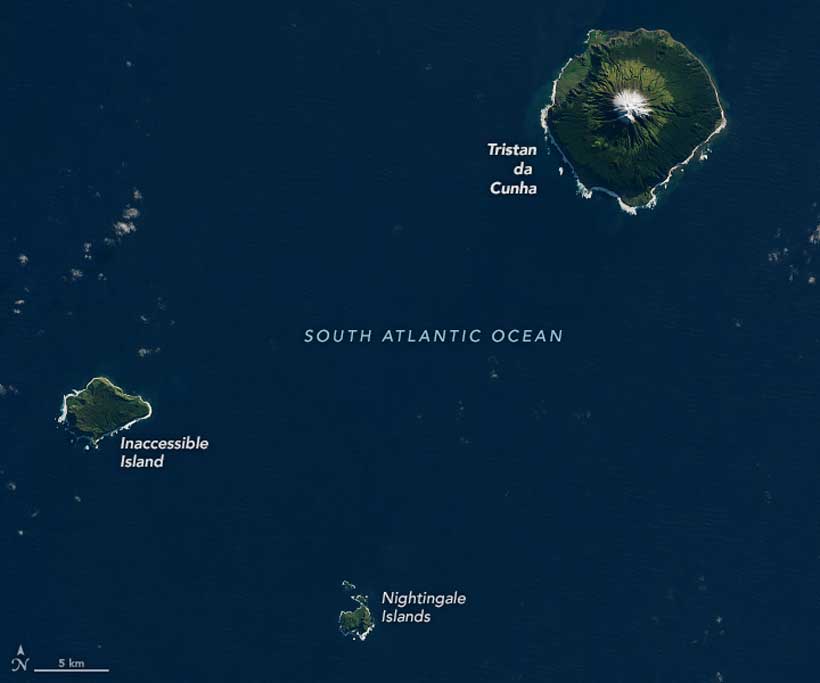
The UK health security agency reported a new suspected case of hantavirus in a British national on the remote island of Tristan da Cunha. Authorities are working to trace passengers from the luxury cruise ship MV Hondius, which stopped on the island on April 15, and their close contacts. Tristan da Cunha is the only inhabited island in a volcanic archipelago, part of the British overseas territory of Saint Helena, Ascension, and Tristan da Cunha. As of May 2026, 216 people live in its settlement, Edinburgh of the Seven Seas, mostly descended from 19th-century settlers. The island is known for its extreme remoteness, with the nearest land, St Helena, located about 2,400 km away, making it accessible only by sea.
The economy of Tristan da Cunha relies on subsistence farming, fishing, the sale of stamps and coins, and limited tourism. Tourism focuses on nature excursions, particularly hikes around the volcano Queen Mary’s Peak. The community operates on principles of equality, with communal land ownership and regulated stock levels to prevent wealth differences. Foreigners cannot buy land or settle on the island.
With information from Reuters