


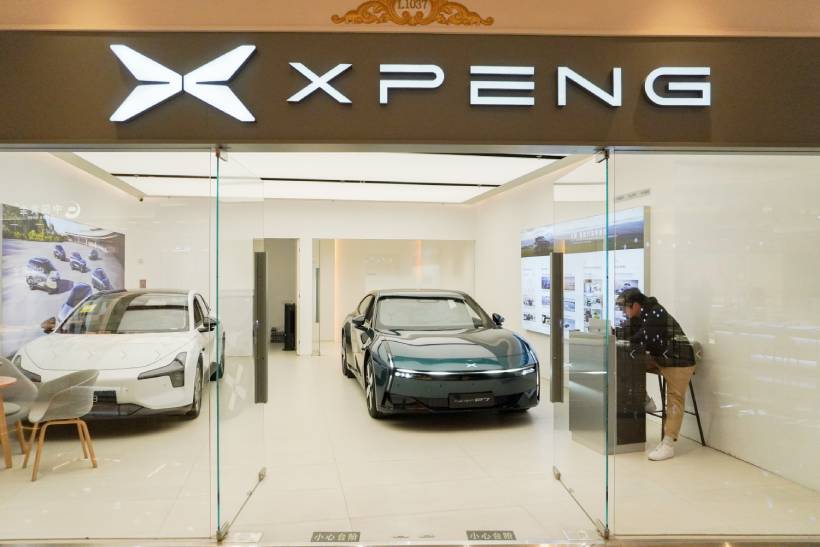
Chinese EV maker Xpeng is positioning itself beyond traditional automobiles, aiming to become a multi sector mobility and robotics company. The announcement comes amid intensifying competition in the global EV space and growing interest in next generation transport technologies such as autonomous driving, urban air mobility, and humanoid robotics.
Its ongoing collaboration with Volkswagen reflects a broader trend of cross border partnerships, where legacy automakers and newer EV firms combine capabilities to stay competitive.
Flying Cars Move from Concept to Commercial Timeline
Xpeng’s plan to begin full scale production of flying cars by 2027 marks a significant shift from experimentation to commercialization.
The company has already received over 7,000 pre orders, largely within China, indicating early domestic demand. Initial deliveries are expected to begin as early as late 2026, contingent on regulatory approval from aviation authorities.
Stay ahead of the geopolitical week.
MD Briefing delivers expert analysis across five global fronts — the Indo-Pacific, energy, geoeconomics, European security, and the Middle East — every Monday morning. Free.
The key challenge is not technological feasibility alone, but regulatory clearance, safety validation, and infrastructure readiness. Urban air mobility requires an entirely new ecosystem, including air traffic management systems and designated flight corridors.
Robotaxis and Global Testing Strategy
Xpeng is also accelerating its autonomous mobility ambitions. Robotaxi testing is set to begin in Guangzhou, with plans to expand testing globally by 2027.
The company expects to produce hundreds to thousands of robotaxis within the next 12 to 18 months. This indicates a phased rollout strategy: controlled testing, limited deployment, and eventual scaling through partnerships.
This aligns with broader industry efforts where autonomy is seen not just as a feature, but as a standalone mobility service business.
Humanoid Robots as the Next Growth Engine
Perhaps the most ambitious element of Xpeng’s strategy is its investment in humanoid robots. Initial use cases will be customer facing roles such as reception and sales.
However, the long term vision is far more expansive. The company expects its robotics division to surpass its automotive business within 10 to 20 years. This projection is based on the assumption that humanoid robots will find widespread applications across industries and daily life.
If realized, this would represent a fundamental shift from hardware centric mobility to AI driven service ecosystems.
Expanding Global Footprint
Xpeng already operates in around 60 international markets, with overseas sales contributing roughly 10 percent of volume and 15 percent of revenue.
The company aims to generate over half of its revenue from outside China within the next decade. This reflects both ambition and necessity, as domestic competition intensifies and global markets offer higher growth potential.
Partnerships, including its work with Volkswagen, are likely to play a key role in navigating regulatory environments and scaling internationally.
Strategic Analysis
Xpeng’s roadmap reflects a deliberate attempt to diversify across three interconnected domains:
- Electric vehicles as the foundation
- Autonomous mobility as a service layer
- Robotics as a long term scalability play
The flying car initiative, while attention grabbing, remains the most uncertain due to regulatory and infrastructure barriers. In contrast, robotaxis and humanoid robots, though still challenging, are more likely to see incremental adoption.
The emphasis on partnerships signals a pragmatic approach. Rather than competing head on in every market, Xpeng is positioning itself as a flexible collaborator.
Conclusion
Xpeng is not just expanding its product lineup; it is redefining its identity. By investing simultaneously in flying vehicles, autonomous systems, and robotics, the company is betting on a future where mobility, automation, and AI converge.
If even part of this strategy succeeds, Xpeng could evolve from an EV manufacturer into a major technology platform player. However, execution risks remain high, particularly in areas where regulation, infrastructure, and public acceptance lag behind innovation.
With information from Reuters.
