


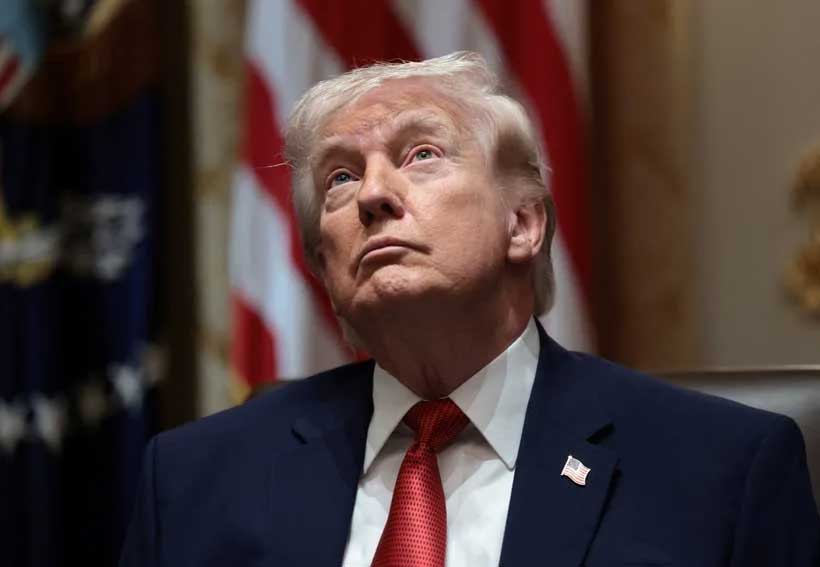
Immigration remains a central and polarizing issue in United States politics, particularly under the leadership of Donald Trump. Since returning to office in 2025, Trump has pursued an aggressive deportation campaign, framing it as essential to border security and law enforcement.
While the policy initially drew broad support, recent polling suggests shifting public sentiment as enforcement measures intensify and their social consequences become more visible.
Poll Findings
A recent Reuters Ipsos poll indicates that Trump’s deportation strategy may carry political costs for the Republican Party ahead of the upcoming midterm elections.
According to the survey, 52 percent of respondents said they are less likely to support candidates who back Trump’s deportation policies, compared to 42 percent who said they are more likely to support such candidates.
Stay ahead of the geopolitical week.
MD Briefing delivers expert analysis across five global fronts — the Indo-Pacific, energy, geoeconomics, European security, and the Middle East — every Monday morning. Free.
The gap is even more pronounced among independent voters, a key electoral group. Around 57 percent of independents expressed a preference for candidates opposing the deportation approach, while only 32 percent favored those aligned with Trump.
Declining Approval
Public approval of Trump’s handling of immigration has also declined over time. Early in his presidency, around half of Americans approved of his performance on the issue. That figure has now dropped to approximately 40 percent.
This shift follows a year marked by highly visible enforcement actions, including large scale detentions and controversial incidents involving civilians. Such developments appear to have influenced public perception and contributed to growing unease.
Enforcement Trends
Recent data suggests that while enforcement remains intense, there has been a slight reduction in arrests compared to peak levels. Immigration authorities reported just over 1,000 arrests per day in early March, down from nearly 1,300 per day in December, though still significantly higher than early 2025 levels.
Despite this decrease, most Americans do not perceive enforcement as less aggressive. At the same time, a large majority indicated that a softer approach would be viewed positively.
Public Opinion on Immigration
The poll reveals a nuanced public stance on immigration. Strong majorities support border security and the enforcement of immigration laws. However, there is also widespread support for providing pathways to legal status for certain undocumented migrants.
Approximately 76 percent of respondents said that migrants with jobs and no criminal record should be allowed to remain in the country through legal means.
This dual perspective reflects a broader tension between enforcement and integration in U.S. immigration policy.
Divisions Within the Republican Party
The issue is also exposing divisions within the Republican Party. While many lawmakers continue to support Trump’s hardline approach, some have advocated for more balanced policies.
For example, Maria Elvira Salazar has promoted legislation aimed at granting legal status to certain undocumented immigrants while maintaining strong border controls. Her position has faced criticism from more hardline members of her party.
These internal disagreements highlight the challenge Republicans face in reconciling political strategy with shifting public opinion.
Analysis
The poll findings suggest that Trump’s deportation policies, while central to his political identity, may become a liability in competitive elections. The erosion of support among independents is particularly significant, as this group often determines the outcome of midterm contests.
The data also points to a broader disconnect between policy intensity and public preference. While Americans generally favor secure borders, they appear less supportive of highly aggressive enforcement tactics, especially when these result in visible social harm.
For Republicans, this creates a strategic dilemma. Aligning closely with Trump may energize the party’s base but risks alienating moderate and independent voters. Moving toward a more balanced approach, however, could provoke internal divisions and weaken party cohesion.
The issue is further complicated by external pressures, including rising fuel prices linked to global conflicts, which may influence voter priorities and perceptions of government performance.
Ultimately, immigration is likely to remain a defining issue in the midterm elections. The extent to which Republicans can adapt their messaging and policy approach in response to shifting public sentiment may play a critical role in determining their electoral prospects.
With information from Reuters.
